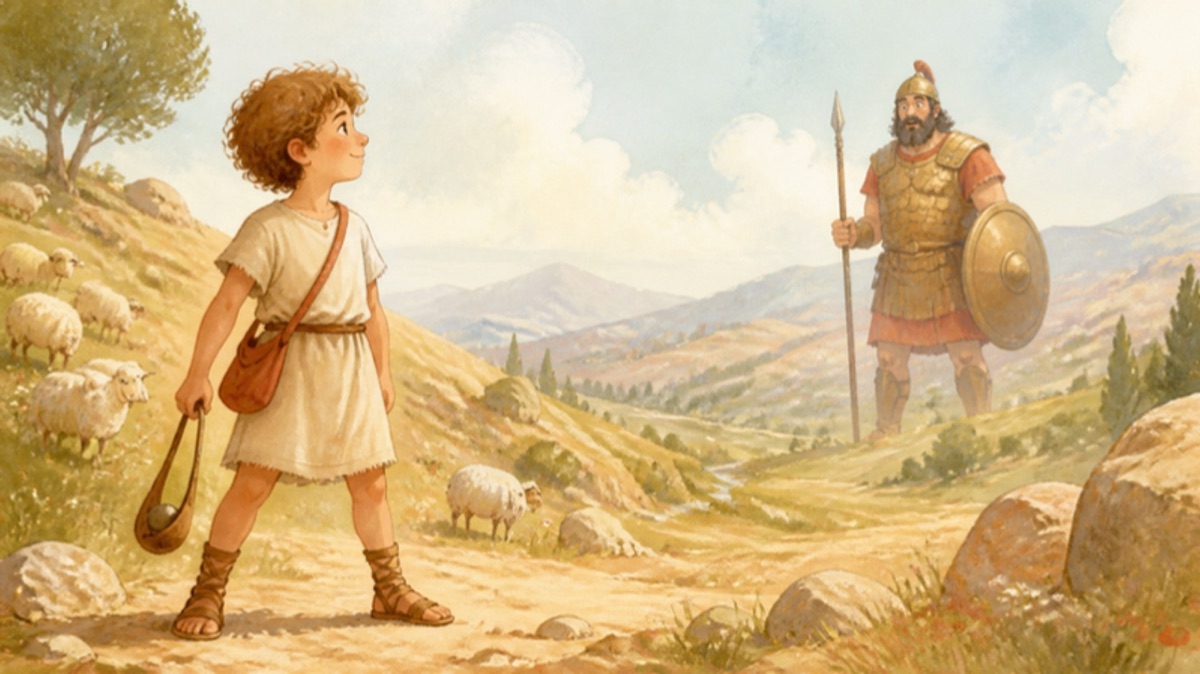
David and Goliath: The Bible Story for Kids (With Questions to Talk About)
David and Goliath retold for ages 3–8 — the original passage in 1 Samuel 17, a bedtime-length version, three questions to talk about, and what the story means in the Bible.
The whole notebook
35 articles, newest first. Or browse by section:

David and Goliath retold for ages 3–8 — the original passage in 1 Samuel 17, a bedtime-length version, three questions to talk about, and what the story means in the Bible.

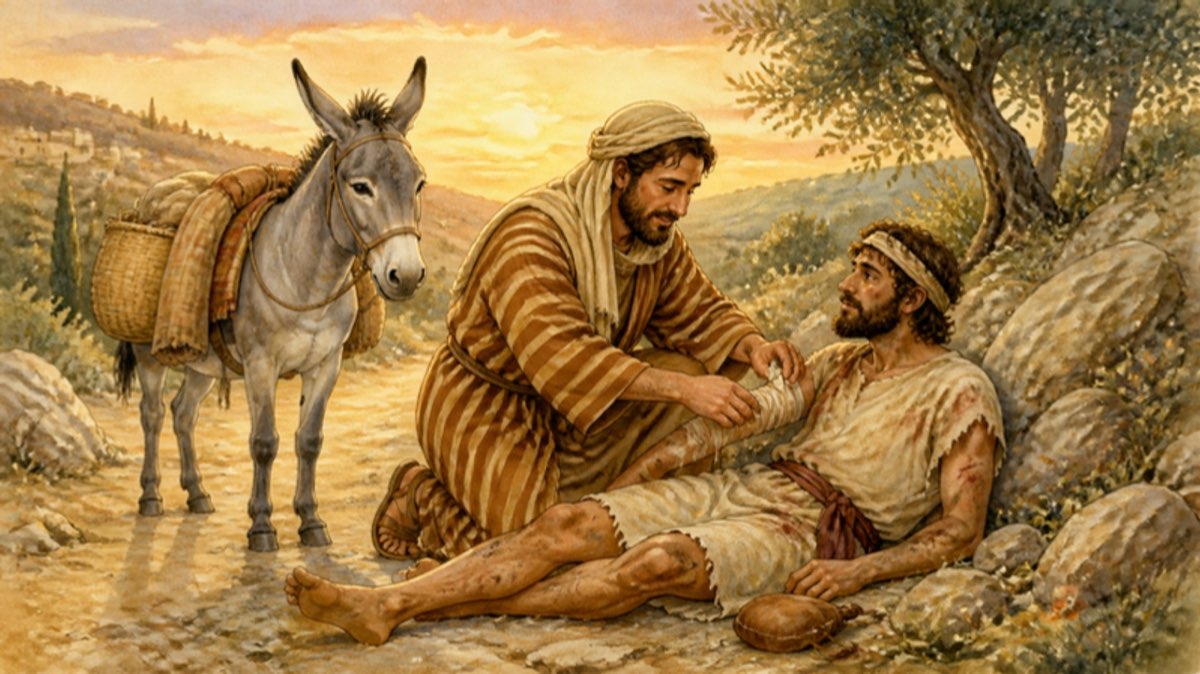
The parable of the Good Samaritan retold for ages 3–8 — the original passage in Luke 10, a bedtime-length version, three questions to talk about, and what the story means in the Bible.
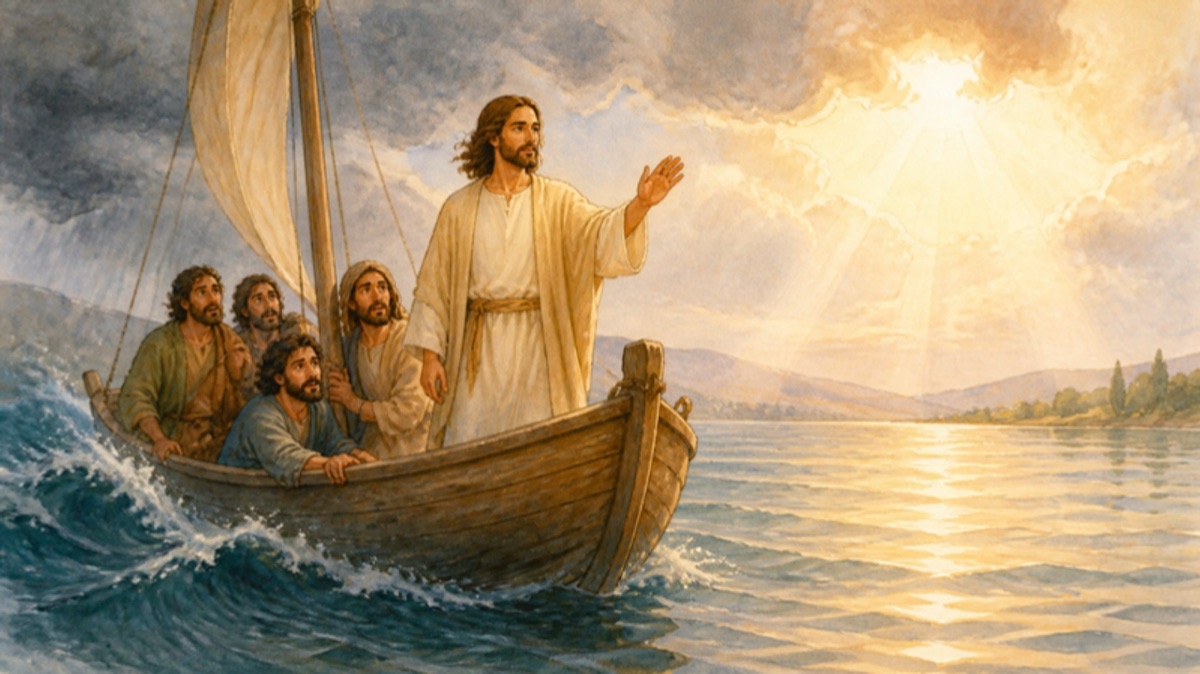
Jesus calming the storm retold for ages 3–8 — the original passage in Mark 4, a bedtime-length version, three questions to talk about, and what the story means in the Bible.
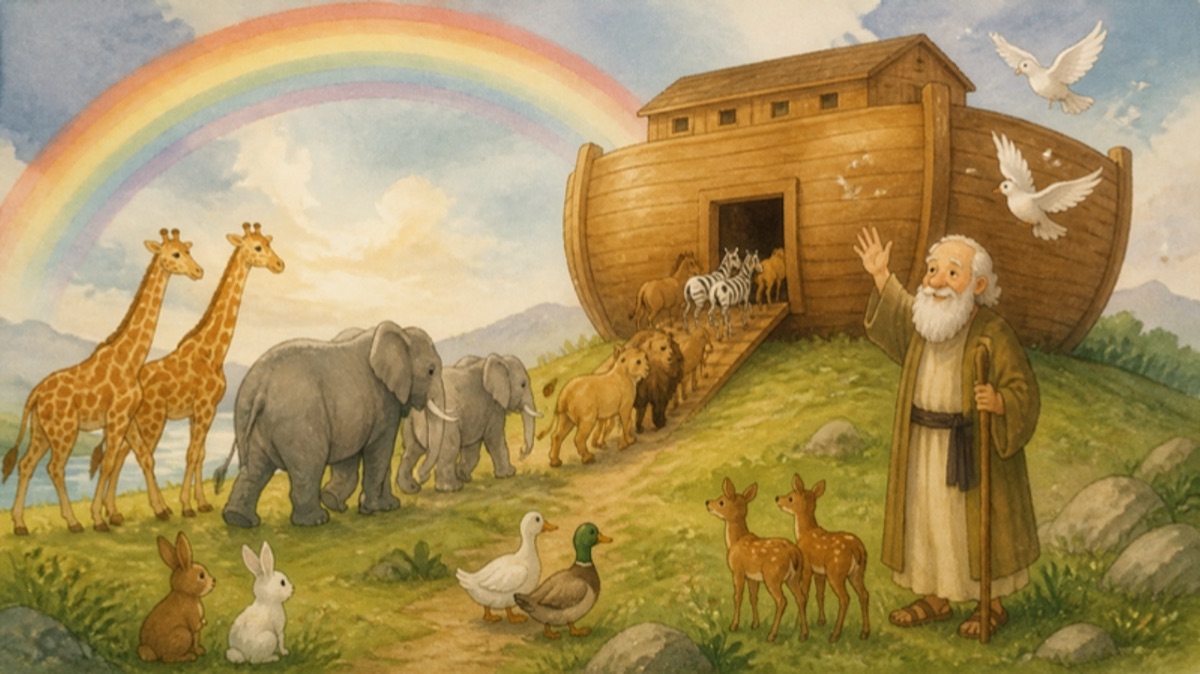
The story of Noah's ark retold for ages 3–8 — the original passage in Genesis 6–9, a bedtime-length version, three questions to talk about, and what the story means in the Bible.

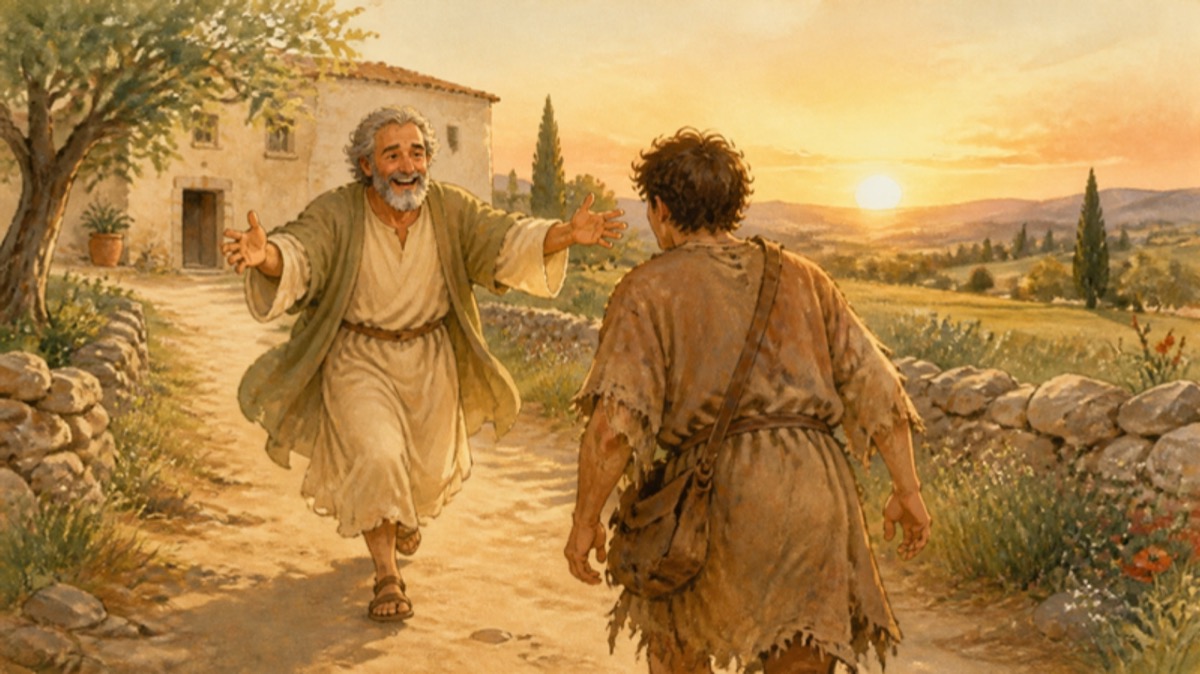
The parable of the prodigal son retold for ages 3–8 — the original passage in Luke 15, a bedtime-length version, three questions to talk about, and what the story means in the Bible.

What the Easter accounts actually report — the women at the tomb in Matthew 28 and Luke 24, the disciples who thought it was 'nonsense,' Paul's early creed in 1 Corinthians 15:3-6 — and why Christians say the whole faith stands or falls on that Sunday.

What the Bible actually asks when it says 'forgive' — Matthew 18's unforgiving servant, Luke 17's repeat offender, Ephesians 4:31-32, Romans 12:19 — and the difference between forgiving, trusting, and reconciling.

Notes from someone who started from zero: which book to open first (Mark), why Genesis-to-Revelation stalls in Leviticus, what 2 Timothy 3:16 and Acts 17:11 say reading is for, and a plan that survives a toddler.

The Bible never uses the word, but Elijah under the broom bush, Psalm 42, Psalm 88, Jeremiah 20, and Paul in 2 Corinthians 1 describe it. What those passages say — and what they don't.

A devotion on 2 Corinthians 12:9 that reads the whole passage: Paul's reluctant boasting, the vision fourteen years earlier, the thorn in the flesh and the guesses about what it was, the prayer God refused, and what “my grace is sufficient” meant — with a practice and prayer many Christian moms use.

A short devotional on Psalm 46:10 for seasons when prayer feels unanswered — with Job 23, Psalm 13, Psalm 22, Habakkuk 1, and Elijah's gentle whisper in 1 Kings 19 for company.

A daily devotion built on Psalm 46 — the whole psalm, not just “Be still” — with its setting, what the Hebrew “be still” actually means, the refrain the Sons of Korah repeat, Isaiah 30:15 and Philippians 4:6-7 alongside it, and a short practice and prayer many Christian moms use.

Eight healing prayers many Christians use, each tied to the passage behind it — James 5:14-16, Psalm 103:2-3, Jeremiah 17:14, Matthew 8:2-3, Mark 5:34, 2 Corinthians 12:8-9 — with honest notes on what each text promises and what it doesn't.

Ten short morning prayers many Christian moms use, each built on the verse it echoes — Psalm 5:3, Psalm 143:8, Lamentations 3:22-23, Mark 1:35, Numbers 6:24-26 — with notes on what each passage actually says.

What Jesus actually taught about prayer in Matthew 6 and Luke 11 — the closed door, the warning about babbling, the Lord's Prayer line by line — plus the tax collector's seven-word prayer and Romans 8:26 for when you have no words.

What Romans 8:28 actually says, who Paul wrote it to, what 'work together for good' means in Greek, and what it does not promise — one curious mom's study notes.

Ephesians 6:10–18 piece by piece: Paul writing under Roman guard, the Isaiah passages the armor comes from, why the key word is 'stand,' and what each piece meant to a first-century reader.

Galatians 5:22–23 in context: the fight Paul was having with the Galatian churches, why 'fruit' is singular, what each of the nine words means, and why reading it as a to-do list gets it backwards.

Psalm 23 line by line: David the real shepherd, what 'the darkest valley' is in Hebrew, why the psalm switches from 'he' to 'you,' and the second picture most people miss — God as host.

John 3:16 word by word: the night conversation with Nicodemus it comes from, what 'so loved' and 'one and only Son' mean in Greek, and what the verse does not say.

Thirty Bible verses about faith (NIV) with notes on what each one meant where it was written — Hebrews 11:1's definition, a father's “help me overcome my unbelief,” Peter sinking, Thomas doubting — and how faith and doubt sit together in the text.

Thirty short Bible verses (NIV) — most under fifteen words — grouped for mornings, fear, tiredness, and trust, each with a line on where it comes from and why it's worth memorizing, plus the shortest verse in the Bible.

Twenty Bible verses about healing (NIV), each placed in its setting — Jeremiah's own prayer, the woman who had bled for twelve years, James's instructions for the sick, Paul's unanswered request — with notes on what Christians agree and disagree about.

Forty Bible verses about love (NIV) in three groups — God's love, loving one another, and marriage, family, and friendship — each with a note on its setting, from 1 Corinthians 13's letter to a divided church to Ruth's promise to her mother-in-law.

Twenty-five Bible verses about anxiety and worry (NIV), each with a short note on who said it, to whom, and why it fits a worried mind — from Philippians 4:6-7 and 1 Peter 5:7 to the psalms David wrote on the run.

Thirty Bible verses about death, grief, and loss (NIV) with notes on their settings — Jesus weeping at a tomb, Paul writing to a church whose members had died, a psalm by Moses — plus the verses most often read at funerals.

Fifty Bible verses about strength (NIV) sorted by the kind of hard time — exhausted, afraid, sinking, needing to keep going — with a note on each one's setting, from the Song of Moses to Paul's thorn, and what Philippians 4:13 actually meant.

The five passages that actually address divorce — Deuteronomy 24, Malachi 2, Matthew 5 and 19, Mark 10, 1 Corinthians 7 — and how Christians read the 'exception clause,' abandonment, and abuse.

There is no Halloween verse. What Christians actually argue about is Deuteronomy 18, Romans 14, 1 Corinthians 10, and Philippians 4:8 — plus the holiday's tangled history from Samhain to All Hallows' Eve.

Jesus named one sin that 'will not be forgiven' — in a very specific argument with the Pharisees. What Matthew 12 and Mark 3 actually say, and why worrying about it is itself a good sign.

What the Bible actually says about Christians dating or marrying non-Christians: 2 Corinthians 6:14 in context, 1 Corinthians 7:39's “he must belong to the Lord,” the Old Testament's reasons, Ruth as the exception, and where Christian traditions land.

The Bible never says whether pets go to heaven — but it says a lot about animals: the breath of life in Genesis, God's covenant with every creature, Ecclesiastes' open question, Isaiah's wolf and lamb, and every creature praising in Revelation. Here is what the texts and the commentaries actually say.

What the Bible actually says about the moment of death, the time between death and resurrection, heaven, hell, and the new creation — from Luke 23:43 and 2 Corinthians 5:8 to 1 Thessalonians 4 and Revelation 21.

The Bible mentions tattoos exactly once — Leviticus 19:28, in a list that also bans trimming your beard and mixing fabrics. What that verse meant, what the New Testament adds, and where Christians land.

What the Bible says about alcohol, passage by passage: wine as a gift in Psalm 104 and at Cana, the warnings in Proverbs 23 and Ephesians 5:18, Paul's advice to Timothy, the Nazirite vow, Romans 14 on not causing others to stumble — and why Christian traditions still disagree.