
“Just forgive.” Two words, said kindly, at church, to someone who had been badly betrayed by a family member — and she told me they hurt more than the betrayal did, because they made forgiveness sound like a light switch. She wanted to know whether the Bible actually describes it that way. I read the passages. It doesn’t.
The Bible’s forgiveness passages are more specific — and more realistic — than the slogan. Jesus tells a story about a debt. Paul lists what to get rid of and what to put in its place. And the texts draw a line between letting go of the wrong and pretending it didn’t happen.
The word itself
The Greek verb usually translated “forgive” in the Gospels is aphiēmi (Blue Letter Bible, G863), and its basic meaning is “to send away” or “let go” — the same verb used for canceling a debt or releasing someone. That’s the picture behind Jesus’ most famous teaching on the subject.
Matthew 18: the debt
Peter opens with a question that assumes there’s a limit:
Then Peter came to Jesus and asked, “Lord, how many times shall I forgive my brother or sister who sins against me? Up to seven times?” Jesus answered, “I tell you, not seven times, but seventy-seven times. — Matthew 18:21-22 (NIV)
Seven was already generous by the standards of the day; Enduring Word notes that the rabbis commonly taught three. “Seventy-seven” (some translations, “seventy times seven”) is a number you can’t keep track of. The point isn’t arithmetic. It’s that counting is the wrong activity.
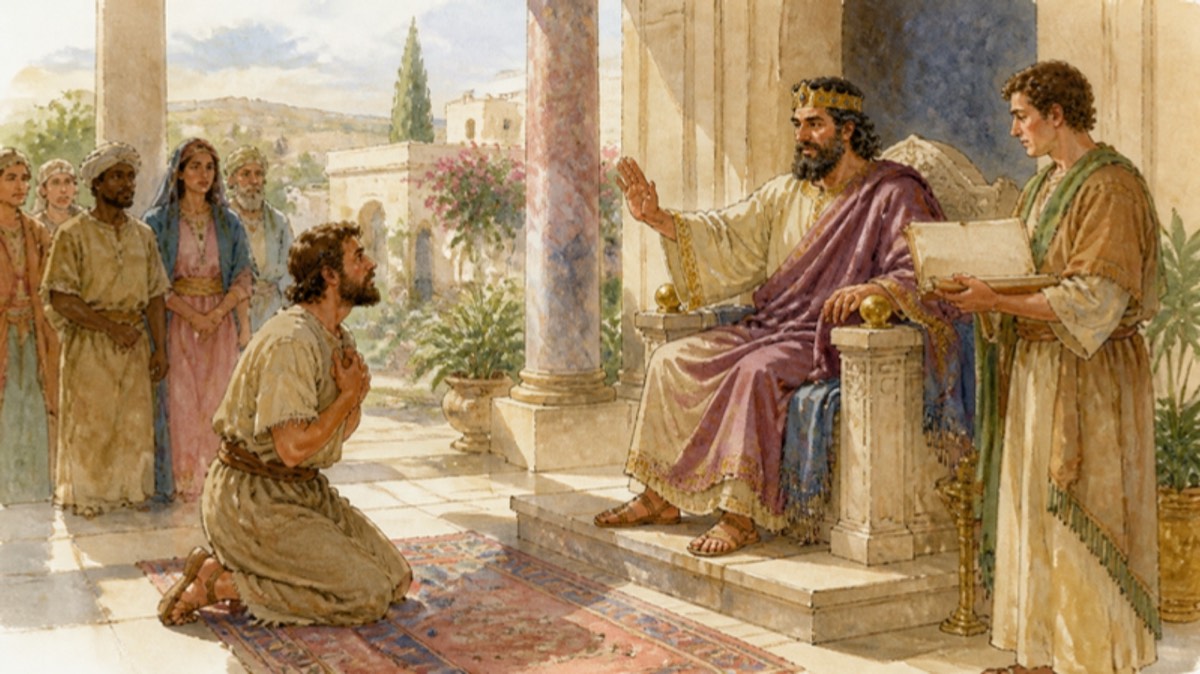
Then the parable. A servant owes his king ten thousand talents — a sum so large it’s meant to be absurd — and is forgiven everything. He walks out and grabs a fellow servant who owes him a hundred denarii, a few months’ wages, and has him jailed.
“Then the master called the servant in. ‘You wicked servant,’ he said, ‘I canceled all that debt of yours because you begged me to. Shouldn’t you have had mercy on your fellow servant just as I had on you?’ — Matthew 18:32-33 (NIV)
And the ending, which is the hard part:
“This is how my heavenly Father will treat each of you unless you forgive your brother or sister from your heart.” — Matthew 18:35 (NIV)
The Lord’s Prayer says the same thing in a line — “forgive us our debts, as we also have forgiven our debtors” — and Jesus adds a comment right after it: “if you do not forgive others their sins, your Father will not forgive your sins” (Matthew 6:15, NIV). The logic in every commentary I read is the same: a Christian forgives because she has been forgiven something larger. That’s not an argument that works on someone outside the faith, and I’m not pretending it does. But it’s the actual engine of the command, and it’s worth knowing that it isn’t “be nice.”
What the Bible does not mean by forgiveness
This was the part my friend needed. Three distinctions that the sources make and the slogan skips:
Forgiveness is not saying it didn’t matter. Romans 12:19 tells Christians not to take revenge but to “leave room for God’s wrath, for it is written: ‘It is mine to avenge; I will repay.’” Read plainly, that’s a transfer of the case, not a dismissal of it. The wrong is still wrong; the file moves to a different desk.
Forgiveness is not the same as reconciliation. Luke 17:3-4 has Jesus say “if they repent, forgive them” — repentance and restored relationship go together there. But Mark 11:25 (“if you hold anything against anyone, forgive them”) and Ephesians 4:32 say nothing about the offender’s response, and on the cross Jesus prays for people who are mocking him:
Jesus said, “Father, forgive them, for they do not know what they are doing.” And they divided up his clothes by casting lots. — Luke 23:34 (NIV)
GotQuestions keeps both sides. Its page on forgiveness is stricter than the slogan: “Forgiveness, properly understood, involves repentance on the sinner’s part,” and the command “does not mean we ignore sin”; it means Christians are “always willing to forgive when given the opportunity.” Its page on “forgive and forget” handles the unrepentant case: “The offender may not desire forgiveness and may not ever change, but that doesn’t negate God’s desire that we possess a forgiving spirit.” Put together: the forgiving posture is yours to hold alone; the restored relationship takes two people.
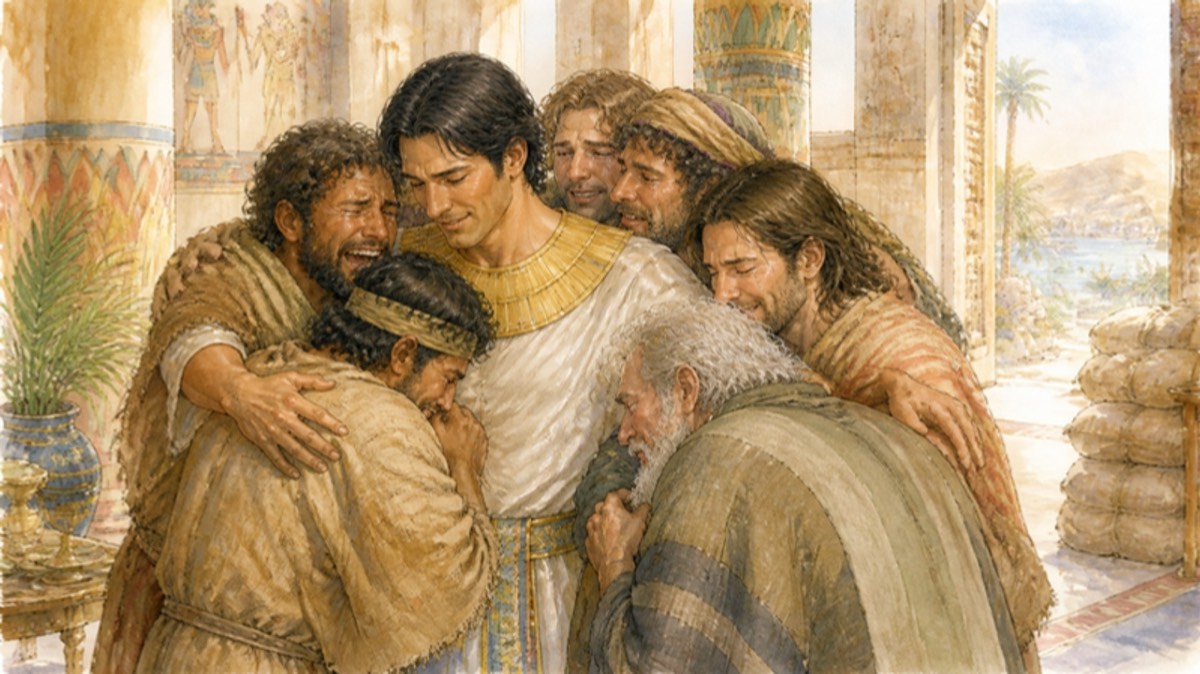
Forgiveness is not trust. Joseph is the Old Testament’s great example. His brothers sold him into slavery; years later, as ruler of Egypt, he tells them:
You intended to harm me, but God intended it for good to accomplish what is now being done, the saving of many lives. — Genesis 50:20 (NIV)
But read Genesis 42-44 first: before that reunion, Joseph tests his brothers for a long time to see whether they’ve changed. Forgiveness and wisdom about the relationship ran in parallel. If the person who hurt you is still dangerous, nothing in these passages tells you to hand them the keys again.
What it looks like in practice: Ephesians 4
Paul gives the clearest “how”:
Get rid of all bitterness, rage and anger, brawling and slander, along with every form of malice. Be kind and compassionate to one another, forgiving each other, just as in Christ God forgave you. — Ephesians 4:31-32 (NIV)
Enduring Word’s commentary on Ephesians 4 notes the structure: a list of things to remove, then a list of things to put in their place. Bitterness isn’t just suppressed; it’s replaced. Colossians 3:13 is the compact version: “Forgive as the Lord forgave you.”
From the commentaries and from the Christian women I’ve talked to, the practical sequence looks like this:
- Name the debt honestly. Forgiveness that minimizes the wrong isn’t forgiveness; it’s denial. Joseph said “you intended to harm me” out loud.
- Decide to release it — and expect to decide again. “Seventy-seven times” covers forgiving the same person for the same thing when it comes back at 2 a.m.
- Hand the justice part over. Romans 12:19. This is where Christians pray; it’s also where some people file a police report. The two aren’t opposites.
- Pray for the person, if you’re a Christian. Jesus commands it (Matthew 5:44). Several women told me this was the step that changed their own feelings, slowly.
- Decide separately about trust and contact. Reconciliation may come, may be partial, or may not be safe. Luke 17:3 — “if they repent” — gives Christians explicit permission to wait for that.
The lighter burden
The slogan version of forgiveness asks the victim to do all the work. The biblical version asks the victim to let go — the literal word — and moves everything else onto God’s desk or onto the offender’s repentance. That’s a heavier theology than I expected and, oddly, a lighter burden. My friend said the thing that finally helped was reading Genesis 42-50 straight through and realizing Joseph took years, tested everyone, cried in private more than once, and still gets called the model of forgiveness. “If he counts,” she said, “I might.”
Sources and further reading
- BibleGateway — Matthew 18:21-35 (NIV), Ephesians 4:25-32 (NIV), Genesis 50:15-21 (NIV)
- Enduring Word — Matthew 18 commentary, Ephesians 4, Romans 12, Genesis 50
- GotQuestions — What does the Bible say about forgiveness? and Does “forgive and forget” come from the Bible?
- Blue Letter Bible — Matthew 18:21 with study tools and the lexicon entry for aphiēmi (G863)
Questions moms ask
Does the Bible say I have to forgive someone who isn't sorry?
Does forgiving mean I have to trust them again or stay in the relationship?
What if I've decided to forgive but still feel angry?
Scripture references in this article
Each reference opens the full passage on BibleGateway (NIV).



Little helps for everyday faith
Start with a few quiet minutes.

Behind the notes
Hi, I'm Vega.
I'm a curious mom in Taiwan reading the Bible and writing down what I learn. I'm not a Christian — I grew up Buddhist — but after watching my aunt and the moms around me lean on these words through hard years, I wanted to understand why they carry so much weight. Every verse is quoted from the ESV or NIV and every interpretation links to a public commentary. I'm still learning; if you spot an error, tell me.
A little more about me