The True Meaning of Easter: Beyond the Eggs and Bunnies
What the Easter accounts actually report — the women at the tomb in Matthew 28 and Luke 24, the disciples who thought it was 'nonsense,' Paul's early creed in 1 Corinthians 15:3-6 — and why Christians say the whole faith stands or falls on that Sunday.
My kids get the eggs and the chocolate from their school friends, and every spring one of them asks what the holiday is for. I could explain Buddha’s birthday. I could not explain Easter beyond “Jesus came back to life,” which I’d absorbed from cartoons. So I read the four accounts and the oldest Christian summary of them.
Easter is the claim at the center of Christianity: that Jesus was executed on a Friday and alive again on Sunday. The accounts are short, they contradict the expectations of everyone in them, and Paul says plainly that if the claim is false, Christianity is pointless.
Friday: the execution
I won’t retell the trial and crucifixion in detail; the Gospels do it in Matthew 26-27, Mark 14-15, Luke 22-23, and John 18-19, and the Good Friday page from GotQuestions walks through the day hour by hour. The points that matter for Sunday: Jesus was publicly executed by Roman soldiers, confirmed dead, and buried in a known tomb belonging to a council member, Joseph of Arimathea, with a stone rolled over it and (in Matthew’s account) a guard posted. Nobody in the story expected anything else to happen. His followers went home.
Saturday: nothing
The Gospels say almost nothing about Saturday, which was the Sabbath. Luke 23:56 says the women “rested on the Sabbath in obedience to the commandment.” Christians sometimes call it Holy Saturday; for the people in the story it was simply the day after a funeral. I find the silence of that day more convincing than anything the writers could have put in it.
Sunday: the tomb
Matthew’s version:
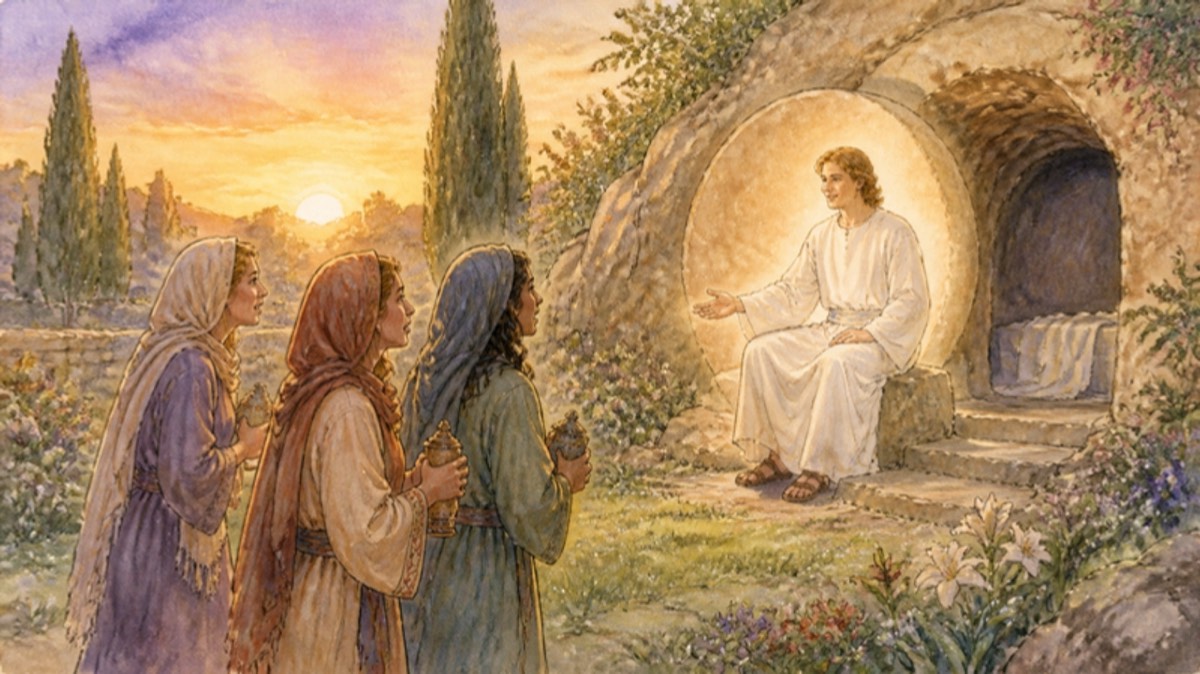
The angel said to the women, “Do not be afraid, for I know that you are looking for Jesus, who was crucified. He is not here; he has risen, just as he said. Come and see the place where he lay.
— Matthew 28:5-6 (NIV)
Luke’s:
In their fright the women bowed down with their faces to the ground, but the men said to them, “Why do you look for the living among the dead? He is not here; he has risen! Remember how he told you, while he was still with you in Galilee:
— Luke 24:5-6 (NIV)
Two details stand out to me. First, the witnesses are women — Mary Magdalene in all four Gospels, with others — in a culture where that would not have helped the story’s credibility. Second, the apostles didn’t believe them:
But they did not believe the women, because their words seemed to them like nonsense.
— Luke 24:11 (NIV)
That evening, per John:
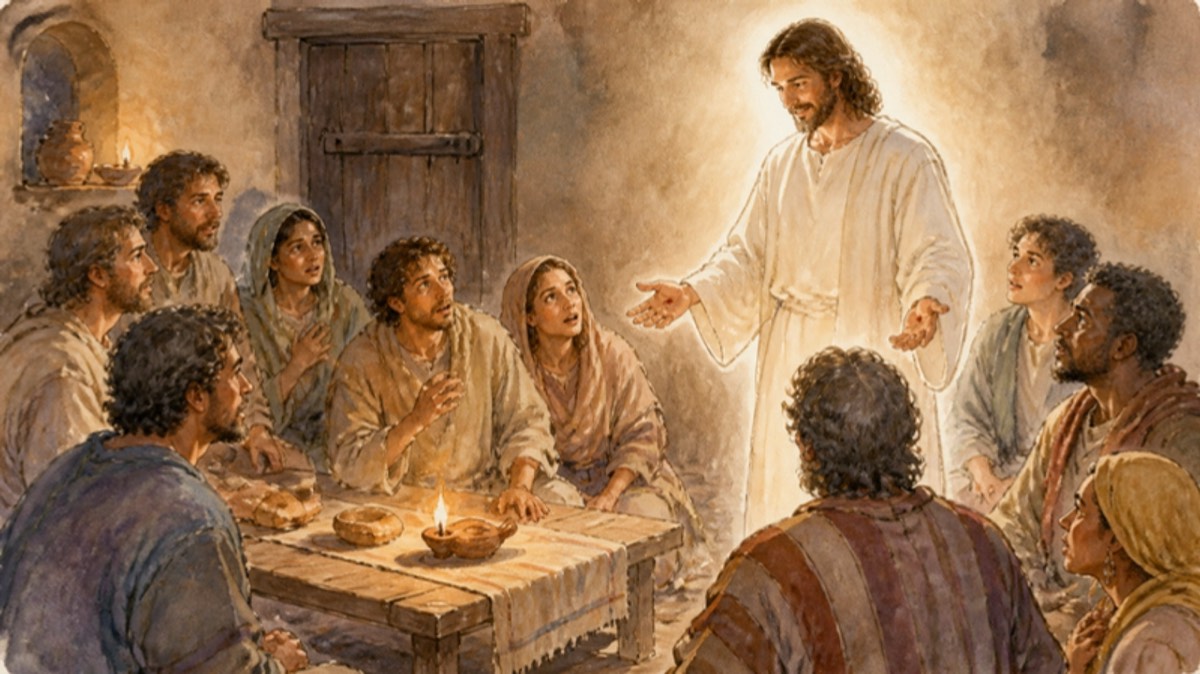
On the evening of that first day of the week, when the disciples were together, with the doors locked for fear of the Jewish leaders, Jesus came and stood among them and said, “Peace be with you!”
— John 20:19 (NIV)
Doors locked for fear. The people the story says saw him were hiding, not hoping.
The oldest summary: 1 Corinthians 15
The earliest written account of Easter isn’t a Gospel; it’s a creed Paul quotes in a letter, and which he says he “received” — meaning it’s older than the letter itself:
For what I received I passed on to you as of first importance: that Christ died for our sins according to the Scriptures, that he was buried, that he was raised on the third day according to the Scriptures, and that he appeared to Cephas, and then to the Twelve. After that, he appeared to more than five hundred of the brothers and sisters at the same time, most of whom are still living, though some have fallen asleep.
— 1 Corinthians 15:3-6 (NIV)
“Most of whom are still living” is the line that stopped me: Paul is telling his readers that witnesses can be asked. GotQuestions calls the resurrection “attested to by hundreds of eyewitnesses (1 Corinthians 15:3-8),” and Enduring Word’s commentary on the chapter builds its whole case on this passage: “without resurrection, sin isn’t truly paid for, the dead in Christ have perished forever, and faith is futile.”
Then Paul makes the stakes explicit:
And if Christ has not been raised, our preaching is useless and so is your faith.
— 1 Corinthians 15:14 (NIV)
And if Christ has not been raised, your faith is futile; you are still in your sins.
— 1 Corinthians 15:17 (NIV)
I appreciated this as an outsider. Paul doesn’t say “the resurrection is a beautiful metaphor for new beginnings.” He says that if it didn’t happen, pack up. That’s a falsifiable claim, and GotQuestions’ page on why the resurrection matters walks through what Christians think hangs on it.
What Christians say it changed
Three things, drawn from the passages the Easter sermons use:
Death. “But Christ has indeed been raised from the dead, the firstfruits of those who have fallen asleep” (1 Corinthians 15:20, NIV). “Firstfruits” is a harvest word: the first of a crop, with more to follow. Christians read their own deaths through that word — see the notes on what happens when you die.
The present, not just the future. Romans 8:11 says the same Spirit “who raised Jesus from the dead” lives in believers now. Peter calls it “new birth into a living hope through the resurrection of Jesus Christ from the dead” (1 Peter 1:3, NIV). The claim is that Easter is a power source for Tuesday, not only a promise about the end.
Jesus’ credibility. Luke’s angel says “Remember how he told you.” The Gospels record Jesus predicting his death and resurrection several times (Mark 8:31, 9:31, 10:34), and GotQuestions’ page on why the resurrection matters makes this its second point: it “validates who Jesus claimed to be” and “authenticated His own claims that He would be raised on the third day.” If it happened, everything else he said gets a hearing. Acts 2:32 is the apostles’ whole sermon in one line: “God has raised this Jesus to life, and we are all witnesses of it.”
How Christian families keep the day
What my kids’ friends’ families actually do, which is more than egg hunts:
Read one account aloud on Sunday morning. Luke 24:1-12 takes two minutes.
Keep Friday. Many churches hold a Good Friday service in the dark; several moms told me skipping it makes Sunday thinner.
The eggs stay, in their place. Most families I know see no conflict. GotQuestions is sterner: its meaning-of-Easter page calls eggs and bunnies, if that’s all the day is, “a faint and feeble shadow of the real meaning of Easter… as empty as a plastic egg.” A shadow, not a sin — but a shadow.
Say the old greeting. “He is risen.” “He is risen indeed.” It’s older than any of the decorations.
The version my daughter liked
I told them Easter is the day Christians say Jesus came back from the dead, that his friends didn’t believe it at first either, and that the first people to see the empty tomb were women nobody listened to. My daughter liked that last part. So did I.
For a hard day
These are one curious mom's study notes, not pastoral counsel or medical advice. If today is heavier than a verse can carry, please reach out to your pastor, a licensed counselor, or your doctor — and if you're in crisis in the US, call or text 988.
Questions moms ask
What is Easter actually about?
The Christian claim that Jesus of Nazareth, executed by crucifixion on a Friday, was raised bodily on the following Sunday. The four Gospels each report the empty tomb and appearances (Matthew 28, Mark 16, Luke 24, John 20-21); Paul in 1 Corinthians 15:14 says that without it 'our preaching is useless and so is your faith.'
Who found the empty tomb first?
Women, in all four Gospels — Mary Magdalene is named in each. Luke 24:11 records that when they told the apostles, 'their words seemed to them like nonsense.' Enduring Word's commentary on Matthew 28 opens with 'the women finding the empty tomb' and stresses that the angel announced Jesus 'has risen — not merely resuscitated like Lazarus, but resurrected in a new, eternal body.'
Why Good Friday and why 'Easter' Sunday?
Good Friday marks the crucifixion; GotQuestions describes it as 'traditionally celebrated as the day of Jesus' crucifixion,' often with a subdued evening service. GotQuestions' Easter Sunday page notes the day 'is sometimes called Pascha, a word derived from the Hebrew pesach, meaning Passover,' since Jesus was killed at Passover; its meaning-of-Easter page relates the English word to 'east' and the sunrise.
Scripture references in this article
Each reference opens the full passage on BibleGateway (NIV).
I'm a curious mom in Taiwan reading the Bible and writing down what I learn. I'm not a Christian — I grew up Buddhist — but after watching my aunt and the moms around me lean on these words through hard years, I wanted to understand why they carry so much weight. Every verse is quoted from the ESV or NIV and every interpretation links to a public commentary. I'm still learning; if you spot an error, tell me.