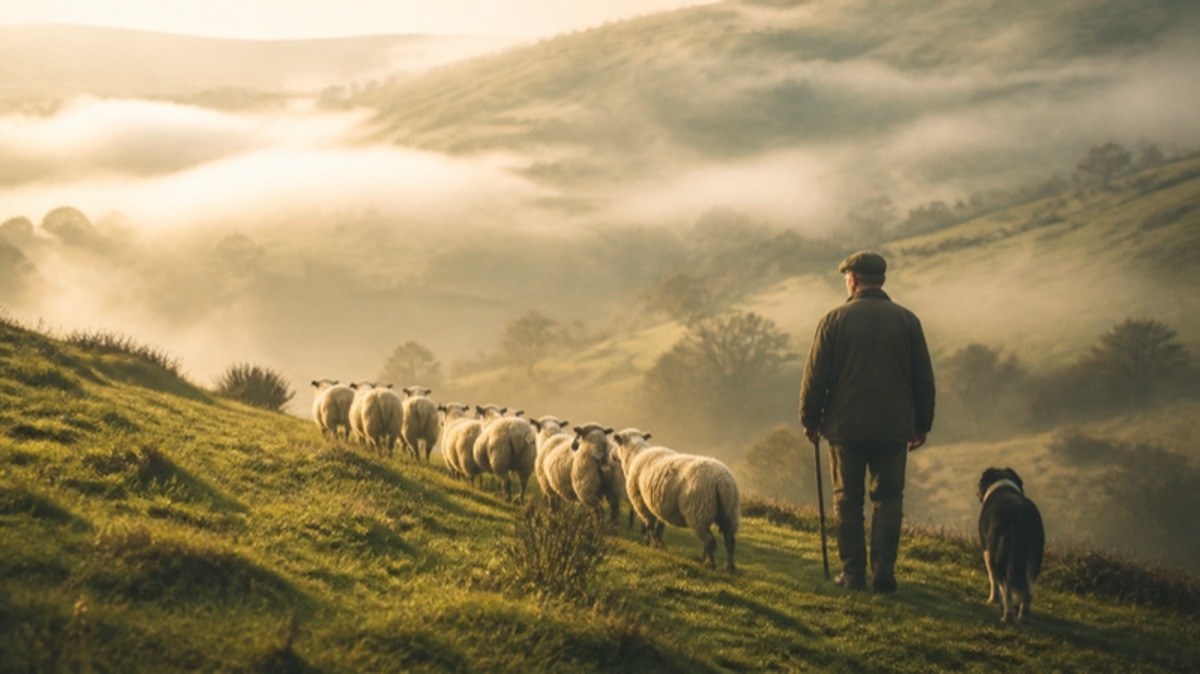
“The Lord is my shepherd; I shall not want.”
Psalm 23 is six verses long and most Americans can recite at least the first line. I came to it as a non-Christian who kept hearing it at funerals and wanted to know why. Reading it slowly, with a couple of good commentaries open, I found two surprises: the writer was a literal shepherd, and the psalm is not one picture but two.
The psalm
The Lord is my shepherd, I lack nothing. He makes me lie down in green pastures, he leads me beside quiet waters, he refreshes my soul. He guides me along the right paths for his name’s sake. Even though I walk through the darkest valley, I will fear no evil, for you are with me; your rod and your staff, they comfort me. You prepare a table before me in the presence of my enemies. You anoint my head with oil; my cup overflows. Surely your goodness and love will follow me all the days of my life, and I will dwell in the house of the Lord forever. — Psalm 23:1–6 (NIV)
Who wrote it, and why a shepherd
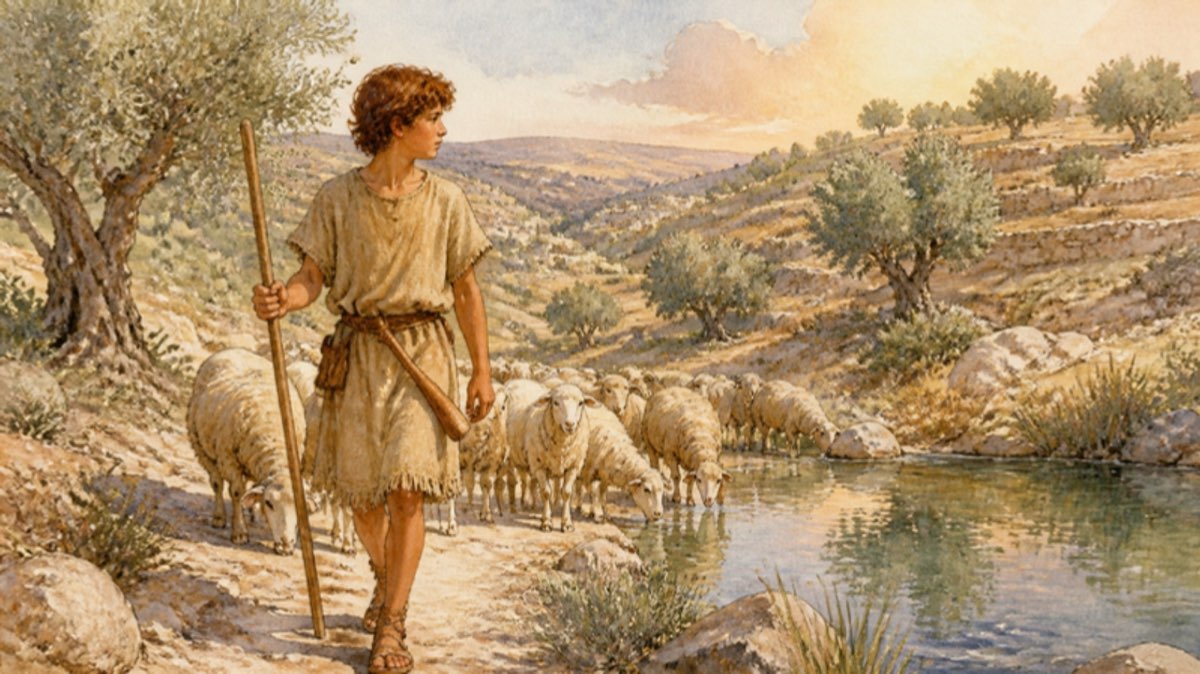
The heading in the Hebrew text is “A psalm of David.” Before David was Israel’s king he kept his father’s sheep, and he described that job without any romance: “When a lion or a bear came and carried off a sheep from the flock, I went after it, struck it and rescued the sheep from its mouth” (1 Samuel 17:34–35, NIV). Enduring Word says most commentators take Psalm 23 as “a psalm of David’s maturity, but with vivid remembrance of his youth as a shepherd,” and quotes Spurgeon: it was “written by David, probably when he was a king. He had been a shepherd, and he was not ashamed of his former occupation.”
Two pieces of background changed how I read it. First, in the ancient Middle East, calling a king a “shepherd” was normal; Enduring Word quotes G. Campbell Morgan: “In all Eastern thought … a king is a shepherd.” Second, the actual job was low status. The commentary quotes James Boice: “a shepherd’s work was considered the lowest of all works. If a family needed a shepherd, it was always the youngest son, like David.” So when David calls God his shepherd, he is saying the God of Israel has taken the youngest-son job for him personally. Derek Kidner, also quoted there, calls it “the most comprehensive and intimate metaphor yet encountered in the Psalms,” because unlike a king or a rock, “the shepherd lives with his flock and is everything to it: guide, physician and protector.”
Two pictures, not one
Enduring Word titles the psalm “The LORD Is My Shepherd and My Host,” and that split is the key to its structure:
- Verses 1–4: God as shepherd. Pastures, water, paths, a valley, a rod and staff.
- Verses 5–6: God as host. A table, oil for the guest’s head, an overflowing cup, a house to live in.
The scene changes from an open hillside to a dinner table. If you only know the shepherd half, verse 5 sounds strange (why would a sheep sit at a table?). It makes sense once you see the second allegory begin.
Verse by verse
“I lack nothing” (v. 1). The older wording is “I shall not want.” Enduring Word reads it two ways at once: “All my needs are supplied by the LORD” and “I decide to not desire more than what the LORD, my shepherd gives.” A statement and a commitment in four words.
“He makes me lie down in green pastures” (v. 2). Sheep, it turns out, are picky about resting. The commentary passes on Phillip Keller’s observation from A Shepherd Looks at Psalm 23 that sheep will not lie down if they are afraid, if there is friction in the flock, if they are bothered by flies or parasites, or if they are hungry. Rest happens “because the shepherd has dealt with fear, friction, flies, and famine.” As a mom, I read that list and thought: that is the bedtime routine.
“He refreshes my soul” (v. 3). The ESV and KJV say “restores.” Kidner’s note, quoted in Enduring Word, is that the word “may picture the straying sheep brought back.” Not just rested; retrieved.
“The darkest valley” (v. 4). This is the famous “valley of the shadow of death.” The Hebrew is צַלְמָוֶת (tsalmaveth), which Blue Letter Bible defines as “death-shadow, deep shadow, deep darkness,” used of extreme danger and of the place of the dead. The NIV went with the sense, “darkest valley.” Enduring Word makes three observations I liked: it is a valley (hemmed in), it is a shadow (not the thing itself), and David walks through it, “not his destination or dwelling place.”
“For you are with me” (v. 4). Here is the detail that made me put the book down. For three verses David talks about God: “he makes,” “he leads,” “he guides.” At the exact moment the valley appears, he switches to talking to God: “you are with me.” Enduring Word: “it is at the dangerous moment pictured in the psalm that the ‘He’ of Psalm 23:1–3 changes to ‘You.’” The grammar does what the verse says.
“Your rod and your staff” (v. 4). Kidner explains the two tools: the rod was “a cudgel worn at the belt” for defense (he points back to David fighting the lion in 1 Samuel 17:35), and the staff was “to walk with, and to round up the flock,” for control. Some commentators think it is one stick used two ways. Either way, the shepherd is armed.
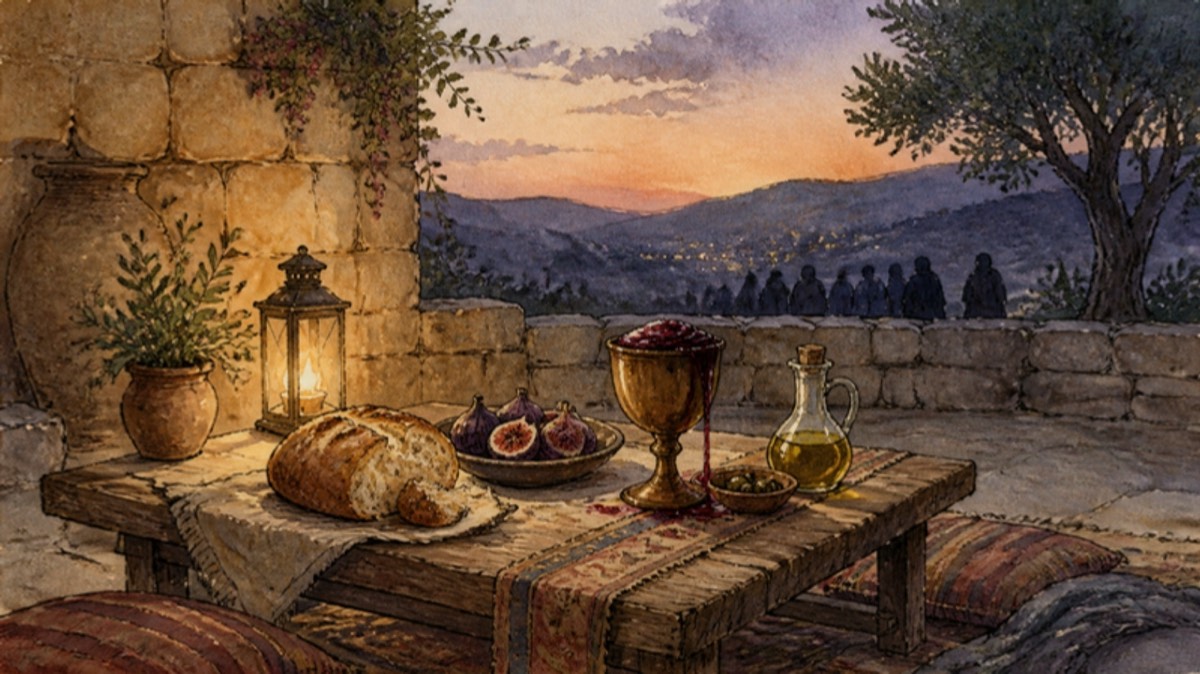
“You prepare a table before me in the presence of my enemies” (v. 5). Now the host picture. The enemies are still there; the table is set anyway. Enduring Word quotes Alexander Maclaren: “This is the condition of God’s servant — always conflict, but always a spread table.” And Spurgeon notices the word prepare: a soldier near enemies grabs food and runs, but here “nothing is hurried … the enemy is at the door and yet God prepares a table.”
“You anoint my head with oil; my cup overflows” (v. 5). Oil on a guest’s head was ancient hospitality, the welcome of an honored guest, and the overfilled cup is generosity past what was needed.
“Goodness and love will follow me” (v. 6). The word the NIV renders “love” is the covenant word hesed; Kidner calls it “the covenant-word rendered ‘steadfast love’ elsewhere,” suggesting “the steady kindness and support that one can count on in the family or between firm friends.” Spurgeon’s image is of two guards walking behind the believer while the shepherd walks in front.
“I will dwell in the house of the Lord forever” (v. 6). The psalm ends not in a pasture but at home.
Three things Psalm 23 never promises
It does not say there is no valley. The valley is in verse 4 of a six-verse psalm. The promise is presence inside it, not a detour around it. Enduring Word’s phrase: the shepherd’s presence “did not eliminate the presence of evil, but certainly the fear of evil.”
It does not say the enemies go away. Verse 5 has you eating with them in the room.
It is not written for the dying. It became the funeral psalm because it is honest about darkness, but the verbs are present tense. Spurgeon, quoted in the commentary: “It has an inexpressibly delightful application to the dying; but it is for the living, too.”
Fear, friction, flies, and hunger at bedtime
Keller’s four reasons sheep will not lie down (fear, friction, flies, hunger) are the most practical thing I found in a commentary all year. If a child will not settle, it is usually one of those four. And the switch from “he” to “you” in the valley is the line I would give a friend having a hard week: the psalm does not get louder in the dark; it gets closer.
Christians read the shepherd here as the same God who, in John 10, Jesus says he is. I am still working out what I think about that. But the psalm’s own structure, shepherd then host, danger then dinner, is something anyone can read and feel.
Six verses, two pictures, one switch from “he” to “you.” That is more than I expected from the psalm I only knew from funerals.
Sources
- Psalm 23 (NIV) — BibleGateway
- Enduring Word — Psalm 23 commentary (David Guzik)
- Blue Letter Bible — Psalm 23 with interlinear tools
- Blue Letter Bible — Strong’s H6757 צַלְמָוֶת (tsalmaveth)
- Blue Letter Bible — Strong’s H7462 רָעָה (ra’ah, “to shepherd”)
- GotQuestions — What does it mean that the Lord is my Shepherd?
In different seasons
The passage keeps its original setting, but the questions we bring to it can change. A tired afternoon and a grateful morning may lead us to notice different parts of the same verse.
Choose a season below for a short reflection. These are gentle applications drawn from public commentaries, not additional words from the verse.
When your thoughts won't settle
Sheep don't plan tomorrow's grass; the shepherd does. Commentators read this line as an invitation to stop managing what the shepherd has already taken on.
A question to carry: If God is the shepherd, what have I been trying to carry that was never mine to carry?
Questions moms ask
Who wrote Psalm 23?
Why does the NIV say 'the darkest valley' instead of 'the valley of the shadow of death'?
Is Psalm 23 only for funerals?
What do the rod and the staff mean?
Scripture references in this article
Each reference opens the full passage on BibleGateway (NIV).



Little helps for everyday faith
Start with a few quiet minutes.

Behind the notes
Hi, I'm Vega.
I'm a curious mom in Taiwan reading the Bible and writing down what I learn. I'm not a Christian — I grew up Buddhist — but after watching my aunt and the moms around me lean on these words through hard years, I wanted to understand why they carry so much weight. Every verse is quoted from the ESV or NIV and every interpretation links to a public commentary. I'm still learning; if you spot an error, tell me.
A little more about me