
Voicemails. That was the word a Christian friend used for a whole year of her prayers — “like leaving voicemails” — and what she felt wasn’t anger but loneliness. The verse she held onto was Psalm 46:10, the one line of that psalm everyone knows. I read the whole psalm, and then went looking for the other places in the Bible where people tell God he isn’t answering. There are more of them than I expected.
This is a short devotional in the form many Christian moms use — a verse, a reflection, a few practices, a prayer. I’ve written the notes; the prayer at the end is the kind many Christians pray, offered here for readers who want it.
Today’s Scripture
He says, “Be still, and know that I am God; I will be exalted among the nations, I will be exalted in the earth.” — Psalm 46:10 (NIV)
What the verse is sitting inside
Psalm 46 is attributed to “the Sons of Korah,” the temple singers, and it doesn’t begin calm:
God is our refuge and strength, an ever-present help in trouble. Therefore we will not fear, though the earth give way and the mountains fall into the heart of the sea, though its waters roar and foam and the mountains quake with their surging. — Psalm 46:1-3 (NIV)
Verse 6 has nations in uproar and kingdoms falling. Verse 9 has God breaking bows and burning shields. Then verse 10. “Be still” is not advice for a quiet morning; it’s spoken over a battlefield.
The Hebrew verb, which Blue Letter Bible lists as raphah (H7503), has an outline of usage that runs “to sink, relax, sink down, let drop… to let go, refrain.” Enduring Word’s commentary on the psalm hears verse 10 as God “calling us to stop our striving and simply surrender to His sovereignty” — to drop the thing you’re gripping — rather than a command to be quiet. That changed the verse for me. It isn’t “hush.” It’s “put it down.”
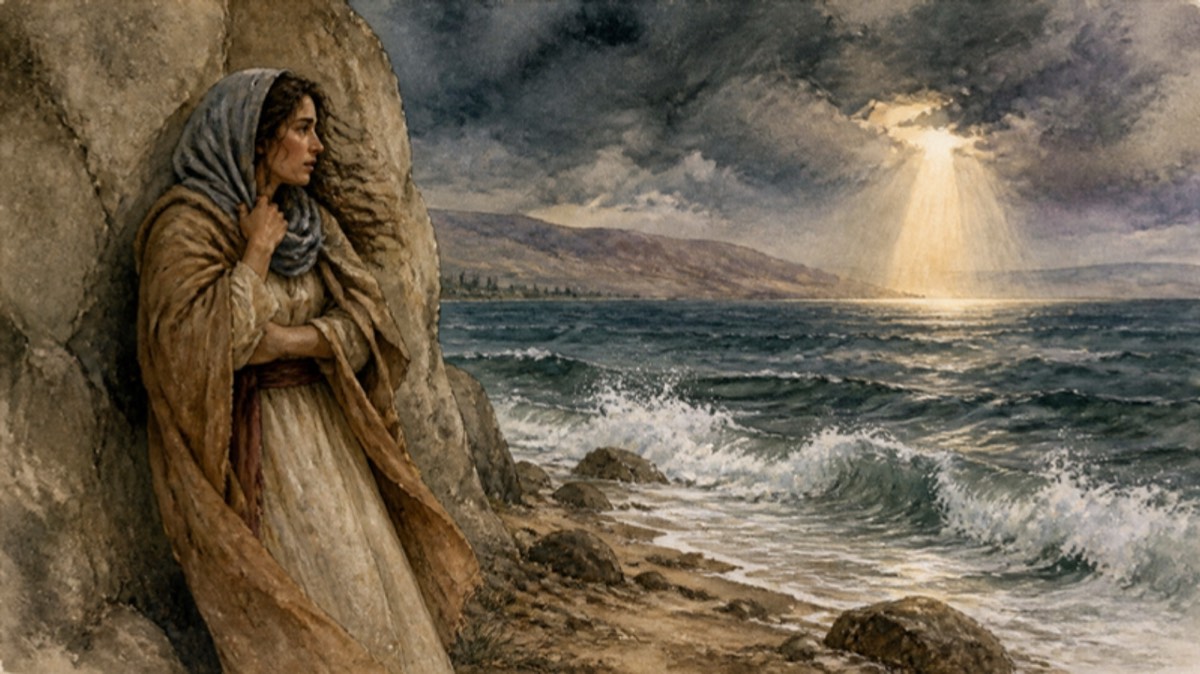
The people in the Bible who heard nothing
My friend’s year of voicemails has a lot of company.
Job, after losing everything, wants a hearing and can’t get one:
If only I knew where to find him; if only I could go to his dwelling! — Job 23:3 (NIV)
“But if I go to the east, he is not there; if I go to the west, I do not find him. When he is at work in the north, I do not see him; when he turns to the south, I catch no glimpse of him. — Job 23:8-9 (NIV)
God does eventually speak to Job (chapters 38-41), and famously never explains why. Enduring Word’s note on Job 23 is that Job’s confidence in God’s goodness survives even while God’s location is a mystery to him.
David, in Psalm 13, asks “How long?” four times in two verses — “Will you forget me forever? How long will you hide your face from me?” (Psalm 13:1-2, NIV). The psalm is six verses long, and by verse 5 he’s saying “But I trust in your unfailing love.” Nothing has changed in his circumstances between verse 2 and verse 5. That gap is the whole psalm.
Habakkuk, a prophet, opens his book with a complaint:
How long, Lord, must I call for help, but you do not listen? Or cry out to you, “Violence!” but you do not save? — Habakkuk 1:2 (NIV)
Jesus, on the cross, quotes Psalm 22:
About three in the afternoon Jesus cried out in a loud voice, “Eli, Eli, lema sabachthani?” (which means “My God, my God, why have you forsaken me?”). — Matthew 27:46 (NIV)
Christians read that as the center of their faith experiencing the silence from the inside. If their founder said it out loud, the feeling can’t be a failure of faith.
And Christians often point out that between the last Old Testament prophet, Malachi, and the first words of the Gospels there are roughly four hundred years with no recorded prophetic voice at all. The silence was long, and it wasn’t the end.
Elijah and the whisper
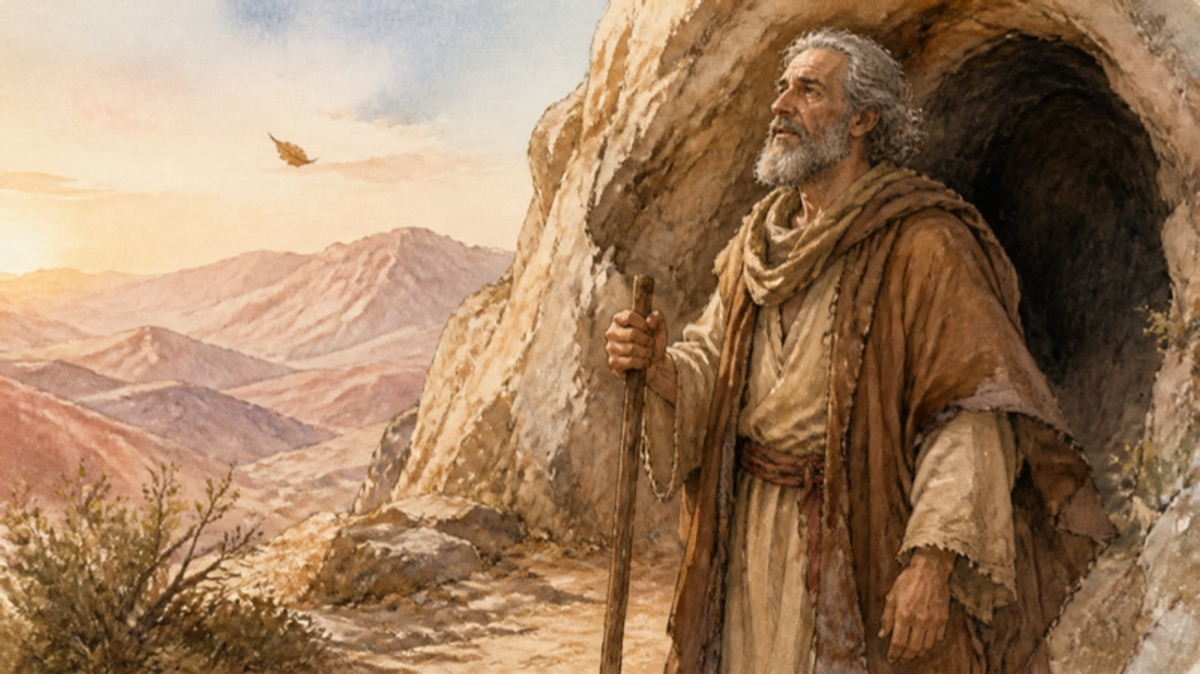
The passage I’d put beside Psalm 46 is 1 Kings 19. Elijah, burned out and hiding in a cave, is told to stand on the mountain:
The Lord said, “Go out and stand on the mountain in the presence of the Lord, for the Lord is about to pass by.” Then a great and powerful wind tore the mountains apart and shattered the rocks before the Lord, but the Lord was not in the wind. After the wind there was an earthquake, but the Lord was not in the earthquake. After the earthquake came a fire, but the Lord was not in the fire. And after the fire came a gentle whisper. — 1 Kings 19:11-12 (NIV)
Enduring Word’s summary of the chapter: “The still small voice, not the wind, earthquake, or fire, revealed God’s presence to Elijah — a lesson that quiet whispers to the heart accomplish more than spectacular displays of power.” Elijah had just seen fire from heaven on Mount Carmel; the whisper came after the noise, and it was easy to miss. For someone leaving voicemails, that’s a different way to think about “no answer.”
Applying this today
Practices my Christian friends actually use in a silent season, matched to the passages above:
- Read Psalm 46 end to end, out loud. Notice how much chaos comes before verse 10.
- Pray a complaint psalm as written. Psalm 13 takes under a minute. Many Christians find that praying “How long?” is more honest than pretending.
- Put one thing down. If raphah means “let go,” name the one thing you’re gripping — an outcome, a timeline — and write it in a journal as the thing you’re setting down today.
- Lower the volume. Ten minutes with no phone, no music, no podcast. Elijah’s whisper came after the noise stopped.
- Wait on purpose. “It is good to wait quietly for the salvation of the Lord” (Lamentations 3:26, NIV). Isaiah 30:15 says the same: “in quietness and trust is your strength.” Waiting that is chosen feels different from waiting that is imposed.
A prayer many Christian moms pray in this season
Lord, I don’t hear you right now. I’m not going to pretend I do. Job couldn’t find you and kept talking to you anyway, so I’ll do the same. Help me put down what I’m gripping. Let me recognize a whisper if that’s how you answer. And until then, keep me honest and keep me here. Amen.
Going deeper
- Psalm 46 (whole) and Psalm 13 (whole)
- Job 23, then Job 38:1-7
- Habakkuk 1:1-4 and 2:1-3 (“though it linger, wait for it”)
- 1 Kings 19:1-18
- Isaiah 30:15 and Lamentations 3:22-26
A note from me, as the person taking these notes: I am not a Christian, and the thing that struck me about this material is how much of the Bible’s prayer book is complaint. A tradition that keeps “darkness is my closest friend” and “why have you forsaken me?” in its hymnal has made room for my friend’s year of voicemails. She’s past it now, by the way. She says the whisper, when it came, sounded a lot like ordinary life.
Sources and further reading
- BibleGateway — Psalm 46 (NIV), Psalm 13 (NIV), 1 Kings 19:9-18 (NIV)
- Enduring Word — Psalm 46 commentary, Psalm 13, Job 23, 1 Kings 19, Habakkuk 1
- Blue Letter Bible — Psalm 46:10 with study tools and the lexicon entry for raphah (H7503)
- GotQuestions — How should a Christian deal with unanswered prayer? — its one-line answer is that God “will respond, but He will do so in His timing”
Questions moms ask
What does 'Be still, and know that I am God' mean in context?
Does the Bible say why God is sometimes silent?
Is it wrong to tell God I feel abandoned?
Scripture references in this article
Each reference opens the full passage on BibleGateway (NIV).



Little helps for everyday faith
Start with a few quiet minutes.

Behind the notes
Hi, I'm Vega.
I'm a curious mom in Taiwan reading the Bible and writing down what I learn. I'm not a Christian — I grew up Buddhist — but after watching my aunt and the moms around me lean on these words through hard years, I wanted to understand why they carry so much weight. Every verse is quoted from the ESV or NIV and every interpretation links to a public commentary. I'm still learning; if you spot an error, tell me.
A little more about me