
I pulled these together during a stretch when both kids were sick and I wasn’t sleeping, and what I wanted to know was simple: when the Bible talks about strength, does it mean the kind you have to produce, or the kind you’re given? Reading them in context, it’s almost always the second. The people saying these lines — Moses after the Red Sea, David in a cave, exiles, a prophet whose harvest failed — are not describing themselves as strong.
Fifty verses in the NIV, sorted by what kind of hard time you’re in. One or two lines of context on each, and the commentaries I leaned on at the end.
When you are exhausted
1. Isaiah 40:29
He gives strength to the weary and increases the power of the weak. — Isaiah 40:29 (NIV)
Isaiah 40 is addressed to exiles who felt forgotten. The promise is strength “to the weary” and power “to the weak” — the qualification for receiving it is being out of it.
2. Isaiah 40:31
but those who hope in the Lord will renew their strength. They will soar on wings like eagles; they will run and not grow weary, they will walk and not be faint. — Isaiah 40:31 (NIV)
Enduring Word notes that the eagle’s soaring is the measure of the strength and the running and walking are its purpose — “strength to go forward in,” not to show off. Walking without fainting is listed last.
3. Matthew 11:28
“Come to me, all you who are weary and burdened, and I will give you rest. — Matthew 11:28 (NIV)
Jesus to people “weary and burdened” — and the offer is rest, not a pep talk.
4. Psalm 73:26
My flesh and my heart may fail, but God is the strength of my heart and my portion forever. — Psalm 73:26 (NIV)
Asaph, who admits earlier in the psalm that his faith nearly collapsed (73:2). “My flesh and my heart may fail” — the strength he names is God, not himself.
5. 2 Corinthians 12:9-10
But he said to me, “My grace is sufficient for you, for my power is made perfect in weakness.” Therefore I will boast all the more gladly about my weaknesses, so that Christ’s power may rest on me. That is why, for Christ’s sake, I delight in weaknesses, in insults, in hardships, in persecutions, in difficulties. For when I am weak, then I am strong. — 2 Corinthians 12:9-10 (NIV)
Paul asked three times for his “thorn” to be removed and was told that God’s power “is made perfect in weakness.” His response is the strangest line on this list: “when I am weak, then I am strong.”
6. 2 Corinthians 4:16
Therefore we do not lose heart. Though outwardly we are wasting away, yet inwardly we are being renewed day by day. — 2 Corinthians 4:16 (NIV)
“Outwardly we are wasting away” — Paul does not deny it — “yet inwardly we are being renewed day by day.” The timescale is daily.
7. Psalm 119:28
My soul is weary with sorrow; strengthen me according to your word. — Psalm 119:28 (NIV)
“My soul is weary with sorrow” — the longest psalm includes this one-line admission, and the request that follows is for strength “according to your word.”
8. Psalm 138:3
When I called, you answered me; you greatly emboldened me. — Psalm 138:3 (NIV)
“When I called, you answered me; you greatly emboldened me.” David’s testimony is about timing: the strength came at the point of calling.
9. Isaiah 58:11
The Lord will guide you always; he will satisfy your needs in a sun-scorched land and will strengthen your frame. You will be like a well-watered garden, like a spring whose waters never fail. — Isaiah 58:11 (NIV)
The chapter is about true fasting — feeding the hungry and sheltering the poor (58:7). To those who do, the promise is to be “like a well-watered garden,” a picture of being supplied from underneath.
10. Lamentations 3:25-26
The Lord is good to those whose hope is in him, to the one who seeks him; it is good to wait quietly for the salvation of the Lord. — Lamentations 3:25-26 (NIV)
From the ruins of Jerusalem: “it is good to wait quietly.” Waiting is described as a strength, not a lack of one.
When you are afraid
11. Isaiah 41:10
So do not fear, for I am with you; do not be dismayed, for I am your God. I will strengthen you and help you; I will uphold you with my righteous right hand. — Isaiah 41:10 (NIV)
Five first-person promises to a frightened exile people — with you, your God, strengthen, help, uphold.
12. Deuteronomy 31:6
Be strong and courageous. Do not be afraid or terrified because of them, for the Lord your God goes with you; he will never leave you nor forsake you.” — Deuteronomy 31:6 (NIV)
Moses to the whole nation before crossing the Jordan; two verses later he says the same to Joshua personally (31:8).
13. Joshua 1:9
Have I not commanded you? Be strong and courageous. Do not be afraid; do not be discouraged, for the Lord your God will be with you wherever you go.” — Joshua 1:9 (NIV)
“Be strong and courageous” is said to Joshua three times in this chapter. The reason is “the Lord your God will be with you wherever you go.”
14. Psalm 27:1
The Lord is my light and my salvation— whom shall I fear? The Lord is the stronghold of my life— of whom shall I be afraid? — Psalm 27:1 (NIV)
Light, salvation, stronghold — and then, halfway through the psalm, David is pleading not to be abandoned (27:9). Confidence and fear in one psalm.
15. Psalm 23:4
Even though I walk through the darkest valley, I will fear no evil, for you are with me; your rod and your staff, they comfort me. — Psalm 23:4 (NIV)
The valley is walked “through,” and the shepherd’s rod and staff were real tools David had carried.
16. Isaiah 43:2
When you pass through the waters, I will be with you; and when you pass through the rivers, they will not sweep over you. When you walk through the fire, you will not be burned; the flames will not set you ablaze. — Isaiah 43:2 (NIV)
“When you pass through the waters” — not if. Written to a people headed into exile; the promise is presence in the water, not avoidance of it.
17. Psalm 46:1
God is our refuge and strength, an ever-present help in trouble. — Psalm 46:1 (NIV)
“An ever-present help in trouble” — the Sons of Korah start with God’s help rather than their crisis, and the crisis they then describe is the earth giving way.
18. Psalm 18:2
The Lord is my rock, my fortress and my deliverer; my God is my rock, in whom I take refuge, my shield and the horn of my salvation, my stronghold. — Psalm 18:2 (NIV)
David, after being delivered from Saul. Enduring Word counts the titles he piles up — rock, fortress, deliverer, shield, horn, stronghold — and reads them as a man who had learned God “by experience.”
19. Psalm 61:2-3
From the ends of the earth I call to you, I call as my heart grows faint; lead me to the rock that is higher than I. For you have been my refuge, a strong tower against the foe. — Psalm 61:2-3 (NIV)
“From the ends of the earth I call to you… as my heart grows faint; lead me to the rock that is higher than I.” A prayer for a strength that is explicitly not one’s own.
20. Proverbs 18:10
The name of the Lord is a fortified tower; the righteous run to it and are safe. — Proverbs 18:10 (NIV)
“The name of the Lord is a fortified tower; the righteous run to it” — the strength is in the tower, the person’s job is to run.
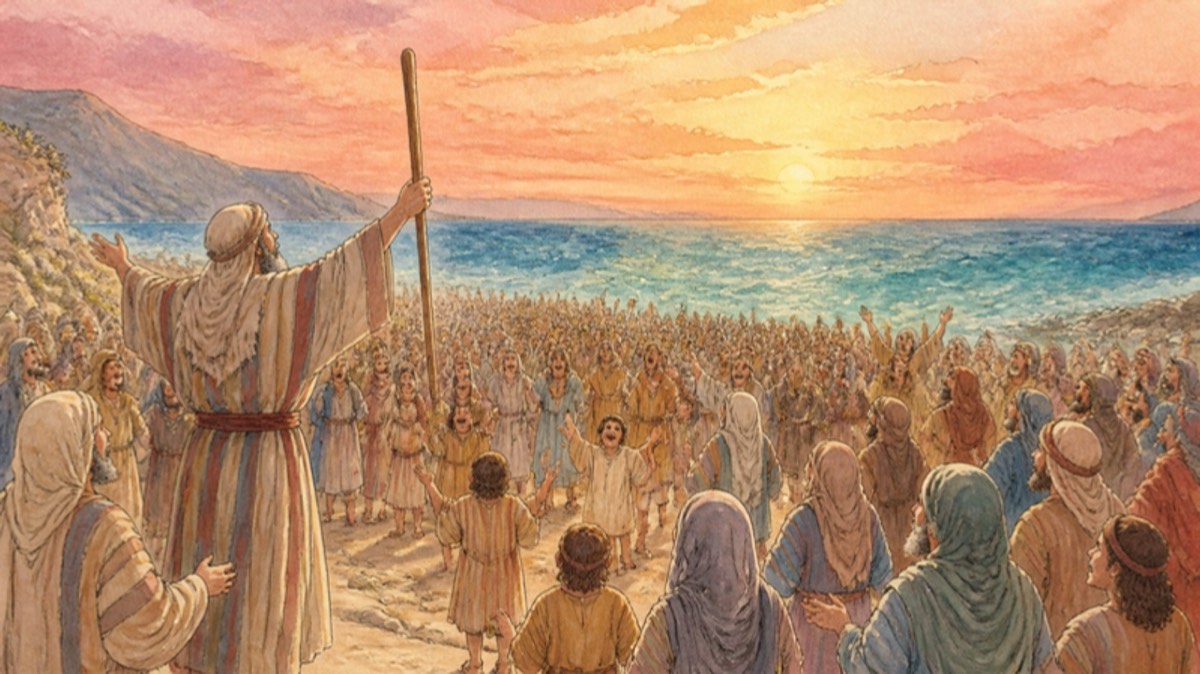
God as strength — the Bible’s own songs
21. Exodus 15:2
“The Lord is my strength and my defense; he has become my salvation. He is my God, and I will praise him, my father’s God, and I will exalt him. — Exodus 15:2 (NIV)
The first song in the Bible, sung by Moses and Israel on the far side of the Red Sea. “The Lord is my strength and my defense; he has become my salvation” — a line quoted twice more in the Old Testament.
22. Psalm 118:14
The Lord is my strength and my defense; he has become my salvation. — Psalm 118:14 (NIV)
Quotes Exodus 15:2 word for word. Psalm 118 was sung at Passover, so Jesus and the disciples would have sung this line the night before the crucifixion (Matthew 26:30).
23. Isaiah 12:2
Surely God is my salvation; I will trust and not be afraid. The Lord, the Lord himself, is my strength and my defense; he has become my salvation.” — Isaiah 12:2 (NIV)
The same line a third time, in Isaiah’s short song of thanksgiving. Three different writers across centuries reached for the same sentence.
24. Psalm 28:7
The Lord is my strength and my shield; my heart trusts in him, and he helps me. My heart leaps for joy, and with my song I praise him. — Psalm 28:7 (NIV)
“My heart leaps for joy” — David’s strength and his joy are reported in the same breath, after a prayer that began with fear of being ignored (28:1).
25. Nehemiah 8:10
Nehemiah said, “Go and enjoy choice food and sweet drinks, and send some to those who have nothing prepared. This day is holy to our Lord. Do not grieve, for the joy of the Lord is your strength.” — Nehemiah 8:10 (NIV)
The returned exiles wept when Ezra read the Law aloud. Nehemiah told them to stop, go eat and drink, send food to those who had none — and “the joy of the Lord is your strength.” Enduring Word reads the scene as leaders redirecting conviction toward joy.
26. Habakkuk 3:19
The Sovereign Lord is my strength; he makes my feet like the feet of a deer, he enables me to tread on the heights. — Habakkuk 3:19 (NIV)
The verse right after “though the fig tree does not bud… and the fields produce no food” (3:17). Strength to “tread on the heights” is claimed by a man describing total crop failure.
27. Psalm 29:11
The Lord gives strength to his people; the Lord blesses his people with peace. — Psalm 29:11 (NIV)
The psalm of the thunderstorm — seven times “the voice of the Lord” — ends by saying the God of the storm “gives strength to his people” and blesses them “with peace.”
28. 2 Samuel 22:33
It is God who arms me with strength and keeps my way secure. — 2 Samuel 22:33 (NIV)
David’s song near the end of his life (a version of Psalm 18): “God… arms me with strength and keeps my way secure.”
29. Psalm 59:16
But I will sing of your strength, in the morning I will sing of your love; for you are my fortress, my refuge in times of trouble. — Psalm 59:16 (NIV)
The heading says Saul had sent men to watch David’s house and kill him. “In the morning I will sing of your love” — sung by someone who had to get through a night first.
30. Psalm 121:1-2
I lift up my eyes to the mountains— where does my help come from? My help comes from the Lord, the Maker of heaven and earth. — Psalm 121:1-2 (NIV)
A song of ascents, sung by pilgrims walking up to Jerusalem; Enduring Word pictures them looking at the distant hills and trusting God for the journey, not just the destination.
Strength to keep going
31. Philippians 4:13
I can do all this through him who gives me strength. — Philippians 4:13 (NIV)
The most quoted verse here, and the most misread. The verses before it are about being content “whether well fed or hungry, whether living in plenty or in want” (4:12). “All this” is that — endurance, not achievement.
32. Galatians 6:9
Let us not become weary in doing good, for at the proper time we will reap a harvest if we do not give up. — Galatians 6:9 (NIV)
“Let us not become weary in doing good” — Paul assumes the weariness and tells the reader when the harvest is: “at the proper time,” which is not now.
33. Hebrews 12:1-2
Therefore, since we are surrounded by such a great cloud of witnesses, let us throw off everything that hinders and the sin that so easily entangles. And let us run with perseverance the race marked out for us, fixing our eyes on Jesus, the pioneer and perfecter of faith. For the joy set before him he endured the cross, scorning its shame, and sat down at the right hand of the throne of God. — Hebrews 12:1-2 (NIV)
A race with a crowd of witnesses (the people of chapter 11) and one person to look at. “Perseverance” is the word for the race, not speed.
34. James 1:2-4
Consider it pure joy, my brothers and sisters, whenever you face trials of many kinds, because you know that the testing of your faith produces perseverance. Let perseverance finish its work so that you may be mature and complete, not lacking anything. — James 1:2-4 (NIV)
Trials produce perseverance, and perseverance has to “finish its work.” James is writing to scattered, poor Christians (1:9), so the trials are not hypothetical.
35. Romans 5:3-5
Not only so, but we also glory in our sufferings, because we know that suffering produces perseverance; perseverance, character; and character, hope. And hope does not put us to shame, because God’s love has been poured out into our hearts through the Holy Spirit, who has been given to us. — Romans 5:3-5 (NIV)
Suffering, perseverance, character, hope — a chain, and the point is that hope at the end “does not put us to shame.”
36. 1 Peter 5:10
And the God of all grace, who called you to his eternal glory in Christ, after you have suffered a little while, will himself restore you and make you strong, firm and steadfast. — 1 Peter 5:10 (NIV)
“After you have suffered a little while” — Peter does not skip the suffering — God “will himself restore you and make you strong, firm and steadfast.”
37. Colossians 1:11
being strengthened with all power according to his glorious might so that you may have great endurance and patience, — Colossians 1:11 (NIV)
Paul prays the Colossians will be strengthened “so that you may have great endurance and patience.” The purpose of the strength is patience — not a thrilling answer, but an honest one.
38. Ephesians 3:16
I pray that out of his glorious riches he may strengthen you with power through his Spirit in your inner being, — Ephesians 3:16 (NIV)
“Strengthen you with power through his Spirit in your inner being” — the strength is located inside, where it is needed on an ordinary Tuesday.
39. Ephesians 6:10
Finally, be strong in the Lord and in his mighty power. — Ephesians 6:10 (NIV)
“Be strong in the Lord and in his mighty power” — the sentence that introduces the armor of God, and it locates the strength in God before describing any equipment.
40. 1 Corinthians 16:13
Be on your guard; stand firm in the faith; be courageous; be strong. — 1 Corinthians 16:13 (NIV)
Four military commands at the end of 1 Corinthians. Enduring Word notes that “be courageous” translates a word used only here in the New Testament, literally “to act like a man” — hold your ground.
Help when you are sinking
41. Psalm 55:22
Cast your cares on the Lord and he will sustain you; he will never let the righteous be shaken. — Psalm 55:22 (NIV)
David, betrayed by a close friend (55:12-14). The promise is that God “will sustain you,” not that the friend comes back.
42. Psalm 34:17
The righteous cry out, and the Lord hears them; he delivers them from all their troubles. — Psalm 34:17 (NIV)
“The righteous cry out, and the Lord hears them” — from a psalm David wrote after escaping a Philistine king by feigning madness.
43. Psalm 94:18-19
When I said, “My foot is slipping,” your unfailing love, Lord, supported me. When anxiety was great within me, your consolation brought me joy. — Psalm 94:18-19 (NIV)
“When I said, ‘My foot is slipping,’ your unfailing love, Lord, supported me” — the support arrives at the moment of saying it.
44. Psalm 62:1-2
Truly my soul finds rest in God; my salvation comes from him. Truly he is my rock and my salvation; he is my fortress, I will never be shaken. — Psalm 62:1-2 (NIV)
“Truly my soul finds rest in God” — “truly” (or “only”) is the key word of this psalm, repeated six times. “I will never be shaken.”
45. Micah 7:8
Do not gloat over me, my enemy! Though I have fallen, I will rise. Though I sit in darkness, the Lord will be my light. — Micah 7:8 (NIV)
“Though I have fallen, I will rise; though I sit in darkness, the Lord will be my light.” Said to an enemy who is gloating; the prophet is speaking for a nation that has, in fact, fallen.
46. Psalm 31:24
Be strong and take heart, all you who hope in the Lord. — Psalm 31:24 (NIV)
The last line of a psalm that includes “I am forgotten as though I were dead” (31:12). “Be strong and take heart” is the conclusion a man reached after writing that.
47. 1 Chronicles 16:11
Look to the Lord and his strength; seek his face always. — 1 Chronicles 16:11 (NIV)
From David’s song when the ark was brought to Jerusalem: “Look to the Lord and his strength; seek his face always.” The strength and the face are sought together.
48. Romans 8:37
No, in all these things we are more than conquerors through him who loved us. — Romans 8:37 (NIV)
“More than conquerors” sits in the middle of a list of trouble, hardship, persecution, famine, nakedness, danger, and sword (8:35). The conquering happens in those, not instead of them.
49. 2 Timothy 1:7
For the Spirit God gave us does not make us timid, but gives us power, love and self-discipline. — 2 Timothy 1:7 (NIV)
Paul, in a Roman prison, to Timothy: not timidity but “power, love and self-discipline.”
50. Zechariah 4:6
So he said to me, “This is the word of the Lord to Zerubbabel: ‘Not by might nor by power, but by my Spirit,’ says the Lord Almighty. — Zechariah 4:6 (NIV)
“Not by might nor by power, but by my Spirit” — said to Zerubbabel, who was trying to rebuild the temple with almost no resources. Four verses later the chapter asks, “Who dares despise the day of small things?”
Strength through weakness: Paul’s thorn
The verse that reorganized this whole list for me is 2 Corinthians 12:9. Paul asked three times for an affliction to be taken away, and the answer was no — with a reason: “my power is made perfect in weakness.” Enduring Word’s summary is that there are two ways to relieve a burden, removing the load or strengthening the shoulder, and that God chose the second. Paul’s conclusion — that he would boast about his weaknesses so Christ’s power could rest on him — is the opposite of the self-reliance most strength quotes assume.
When even this is too much: Elijah under the broom bush
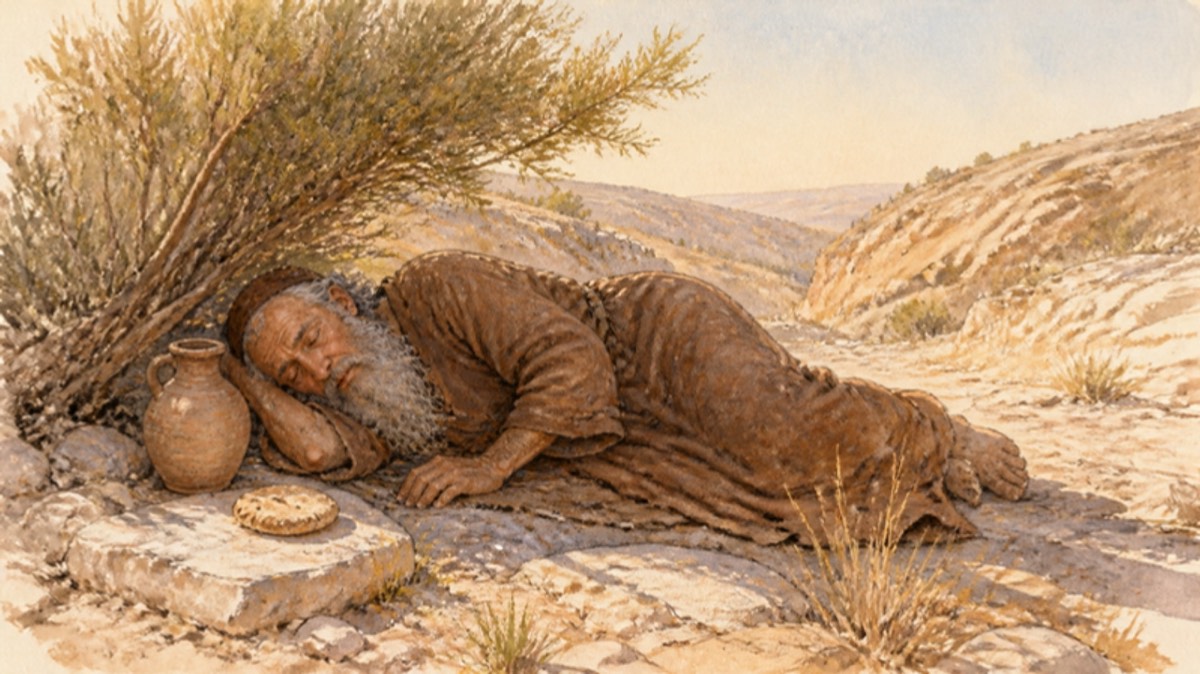
The day after his greatest public victory, the prophet Elijah walked into the desert, sat under a broom bush, and asked God to let him die (1 Kings 19:4). What he got was not a rebuke. He slept, an angel woke him with bread and water, he slept again, and he ate again because, the angel said, “the journey is too much for you” (19:7). Enduring Word calls the chapter “The Depressed Prophet” and reads the sleep and food as God’s mercy. For a parent running on empty, it’s the most practical passage on this page: the first prescription was rest.
If the exhaustion is constant, or the darkness isn’t lifting, that’s a doctor’s conversation, not a verse’s. In the US, 988 is available around the clock.
Sources
- Isaiah 40 (NIV) on BibleGateway
- Enduring Word — Isaiah 40 commentary
- Enduring Word — 2 Corinthians 12 commentary
- Enduring Word — Psalm 18 commentary
- Enduring Word — Nehemiah 8 commentary
- Enduring Word — 1 Kings 19 commentary
- Enduring Word — 1 Corinthians 16 commentary
- Blue Letter Bible — Isaiah 40:31 with study tools
- GotQuestions — What does the Bible say about strength?
Questions moms ask
What is the most popular Bible verse about strength?
What does Philippians 4:13 actually mean?
Where does “the joy of the Lord is your strength” come from?
Scripture references in this article
Each reference opens the full passage on BibleGateway (NIV).
- Isaiah 40:29
- Isaiah 40:31
- Matthew 11:28
- Psalm 73:26
- 2 Corinthians 12:9-10
- 2 Corinthians 4:16
- Psalm 119:28
- Psalm 138:3
- Isaiah 58:11
- Lamentations 3:25-26
- Isaiah 41:10
- Deuteronomy 31:6
- Joshua 1:9
- Psalm 27:1
- Psalm 23:4
- Isaiah 43:2
- Psalm 46:1
- Psalm 18:2
- Psalm 61:2-3
- Proverbs 18:10
- Exodus 15:2
- Psalm 118:14
- Matthew 26:30
- Isaiah 12:2
- Psalm 28:7
- Nehemiah 8:10
- Habakkuk 3:19
- Psalm 29:11
- 2 Samuel 22:33
- Psalm 59:16
- Psalm 121:1-2
- Philippians 4:13
- Galatians 6:9
- Hebrews 12:1-2
- James 1:2-4
- Romans 5:3-5
- 1 Peter 5:10
- Colossians 1:11
- Ephesians 3:16
- Ephesians 6:10
- 1 Corinthians 16:13
- Psalm 55:22
- Psalm 34:17
- Psalm 94:18-19
- Psalm 62:1-2
- Micah 7:8
- Psalm 31:24
- 1 Chronicles 16:11
- Romans 8:37
- 2 Timothy 1:7
- Zechariah 4:6
- 2 Corinthians 12:9
- 1 Kings 19:4



Little helps for everyday faith
Start with a few quiet minutes.

Behind the notes
Hi, I'm Vega.
I'm a curious mom in Taiwan reading the Bible and writing down what I learn. I'm not a Christian — I grew up Buddhist — but after watching my aunt and the moms around me lean on these words through hard years, I wanted to understand why they carry so much weight. Every verse is quoted from the ESV or NIV and every interpretation links to a public commentary. I'm still learning; if you spot an error, tell me.
A little more about me