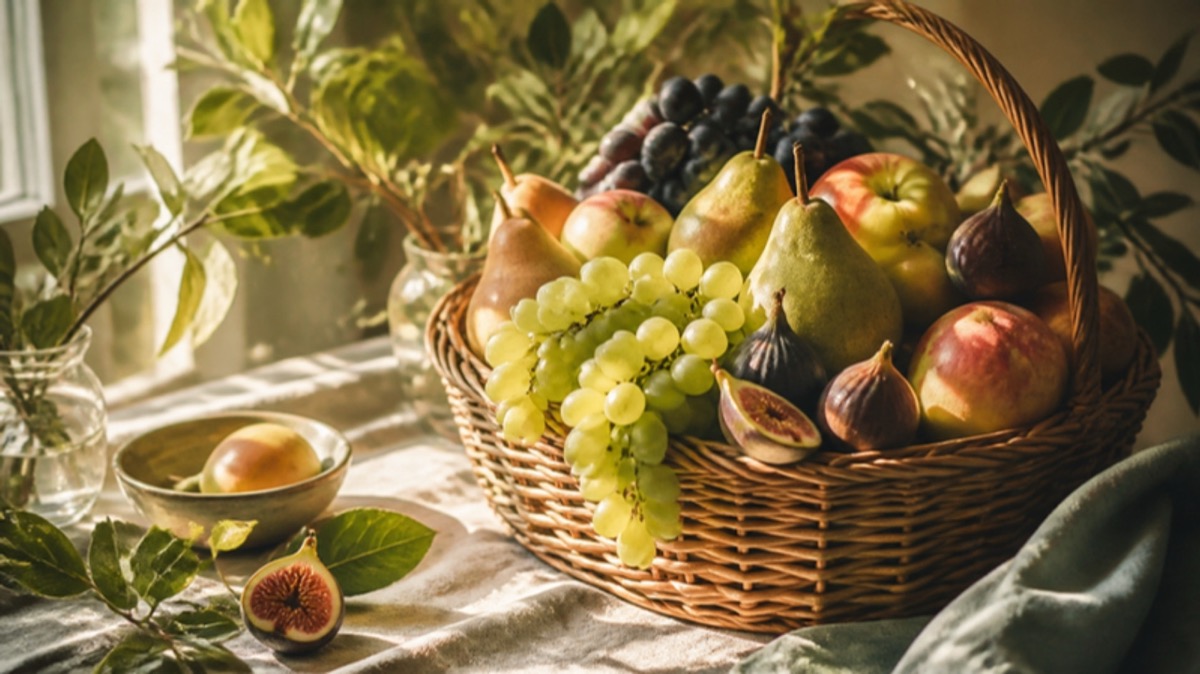
“But the fruit of the Spirit is love, joy, peace, patience, kindness, goodness, faithfulness, gentleness, self-control; against such things there is no law.”
The fruit of the Spirit shows up on classroom posters and nursery walls, nine nice words in a row. I read it that way too, as a list of virtues, until I read the chapter around it and realized Paul was in the middle of an argument when he wrote it. The list is not a poster; it is a counter-punch. These are my study notes, from a non-Christian mom who was surprised by how much the context changes the list.
The verse
But the fruit of the Spirit is love, joy, peace, forbearance, kindness, goodness, faithfulness, gentleness and self-control. Against such things there is no law. — Galatians 5:22–23 (NIV)
Who wrote it, to whom, and why he was upset
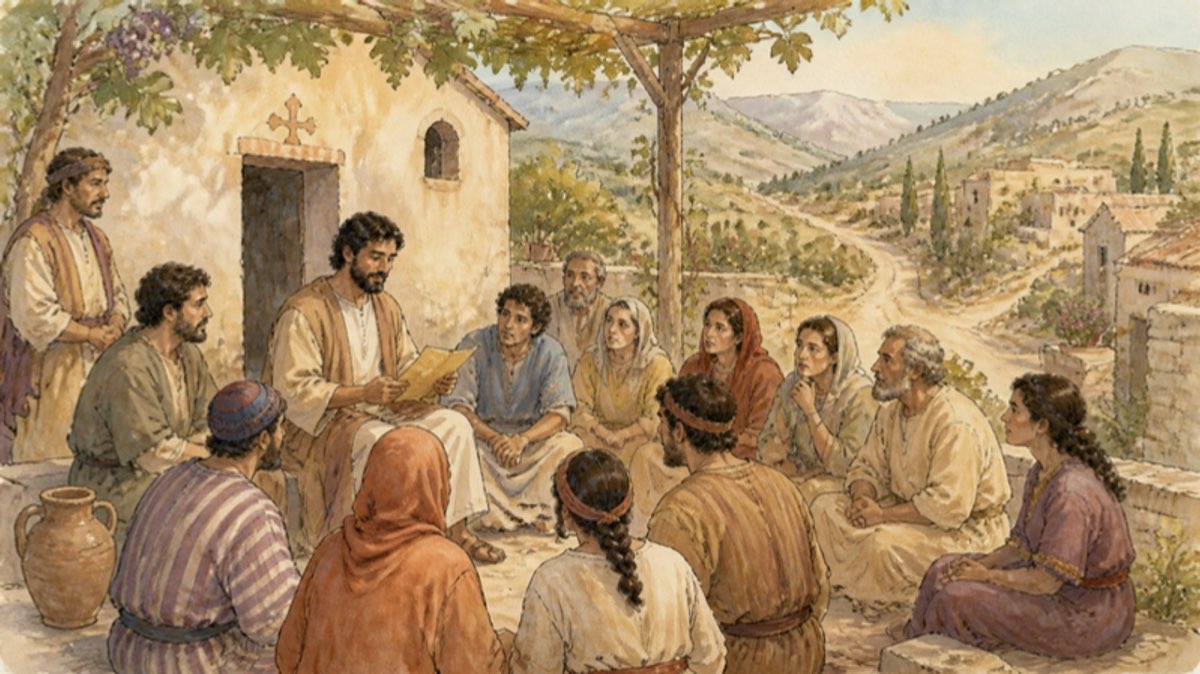
Galatians is a letter from Paul to “the churches in Galatia,” a Roman province in what is now central Turkey. Enduring Word dates it to roughly AD 50, which would make it one of Paul’s earliest surviving letters, possibly written before the council in Acts 15. Paul had planted churches there on his first missionary journey, in cities like Pisidian Antioch, Iconium, Lystra, and Derbe (the commentary notes the long scholarly debate about whether “Galatia” means those southern cities or a northern region, and calls the debate “mostly unimportant”).
What is not unimportant is why he wrote. Paul does not open with the usual thanksgiving. He opens with: “I am astonished that you are so quickly deserting the one who called you to live in the grace of Christ and are turning to a different gospel” (Galatians 1:6, NIV). Teachers had come in after him, usually called “Judaizers” today, insisting that non-Jewish converts be circumcised and keep the law of Moses to be fully right with God. By chapter 3 Paul is shouting: “You foolish Galatians! Who has bewitched you?” and “After beginning by means of the Spirit, are you now trying to finish by means of the flesh?” (Galatians 3:1, 3, NIV).
That last line is the whole letter in one question, and it is the question the fruit list answers.
How chapter 5 gets to the fruit
The flow of the chapter matters, because the list is the last stop:
- 5:1 “It is for freedom that Christ has set us free. Stand firm, then, and do not let yourselves be burdened again by a yoke of slavery” (NIV).
- 5:6 “neither circumcision nor uncircumcision has any value. The only thing that counts is faith expressing itself through love” (NIV).
- 5:16–17 “walk by the Spirit, and you will not gratify the desires of the flesh. For the flesh desires what is contrary to the Spirit, and the Spirit what is contrary to the flesh” (NIV).
- 5:19–21 The “acts of the flesh”: a blunt list of fifteen, from sexual immorality through “hatred, discord, jealousy, fits of rage, selfish ambition” to drunkenness.
- 5:22–23 The fruit of the Spirit.
- 5:25 “Since we live by the Spirit, let us keep in step with the Spirit” (NIV).
The legalists’ fear, Enduring Word explains, was that freedom from the law would produce license, people doing whatever they wanted. Paul’s answer is not “here are new rules.” It is “here is what grows when the Spirit is at work.” Freedom does not produce chaos; it produces fruit.
Why “fruit,” and why singular
Two word choices do most of the work in this verse.
Fruit, not works. The Greek is καρπός (karpos), which Blue Letter Bible glosses as fruit of trees and fields, and figuratively “that which originates or comes from something, an effect, result.” Paul sets “the fruit of the Spirit” directly against “the acts of the flesh” in verse 19. Enduring Word draws the contrast out: “Works are works, and fruit is fruit,” and lists what fruit is like: it “isn’t achieved by working, but is birthed by abiding,” it is fragile, it reproduces itself, it is attractive, and it nourishes. Jesus’ line in John 15:5 is the same picture: “If you remain in me and I in you, you will bear much fruit; apart from me you can do nothing” (NIV).
Fruit, not fruits. The acts of the flesh are plural; the fruit is singular. Enduring Word quotes Leon Morris: Paul “is not speaking of a series of fruits that would be shared around, so that one believer has one, another another. Rather he is referring to a cluster.” It also distinguishes this from the “gifts of the Spirit,” which are distributed individually. The fruit is one thing, with nine sides, and it is for everyone.
The nine words
Love. Greek ἀγάπη (agapē). Enduring Word explains that Greek had several words for love (eros for passion, philia for friendship, storgē for family affection) and that agapē is the one chosen here, a love of decision and action rather than feeling. It comes first because, in the commentary’s reading, it “encompasses all of the following”; it even quotes Luther: “It would have been enough to mention only the single fruit of love.”
Joy. Greek χαρά (chara). The commentary makes a sharp observation: one of the most successful ideas ever marketed is that God’s side is gloomy and the other side is where the fun is; Paul lists joy second.
Peace. Greek εἰρήνη (eirēnē). Enduring Word notes that Chara and Eirene (Cara and Irene) became common Christian names in the early church, which tells you how these two words landed.
Forbearance. Other translations: patience, longsuffering. The commentary’s definition is the most useful one I found: the ability to keep love, joy, and peace “over a period of time when people and events annoy them.”
Kindness and goodness. Enduring Word treats these as near-twins, with “goodness” adding “the idea of generosity.” Kindness is the attitude; goodness is kindness that costs something.
Faithfulness. Reliability, toward God and toward people. The commentary quotes Barclay: “It is the characteristic of the man who is reliable.”
Gentleness. Not weakness. The commentary describes it as “being teachable, not having a superior attitude, not demanding one’s rights,” and quotes Barclay’s line that it is the quality of someone “always angry at the right time and never at the wrong time.”
Self-control. Greek ἐγκράτεια (enkrateia), which Blue Letter Bible defines as “the virtue of one who masters his desires and passions.” Enduring Word adds a twist: the world knows self-control for selfish reasons (training, dieting), but this self-control “will also work on behalf of others.”
“Against such things there is no law”
The sentence sounds like a joke, and partly it is. No law forbids kindness. But Enduring Word reads a second layer: a person with this fruit “doesn’t need the Law. He already fulfills it.” That lands the whole argument. The Galatians were being told the law would make them good. Paul’s reply is that the law never produced one of these nine things in anyone, and the Spirit produces all of them. Morris, quoted there: “a masterly understatement.”
Three ways the poster version gets it wrong
It is not a checklist. Reading the fruit as nine things to grit your teeth and do turns it back into “works,” which is the exact thing the letter is written against. Enduring Word’s whole treatment hinges on fruit being grown, not manufactured.
It is not nine options. Singular. The cluster is the point.
It does not say Christians are already like this. The verse describes what the Spirit produces, and the next verses (“let us keep in step,” “let us not become conceited”) assume the readers are not there yet. Paul wrote it to people he had just called foolish.
Read the list at 5 p.m., not in the morning
Read the list at 5 p.m. instead of in the morning: love, joy, peace, patience, kindness, goodness, faithfulness, gentleness, self-control. It is a description of the parent I want to be at the exact hour I am least like her. What struck me, as an outsider, is that Paul’s answer to “how do I become this?” is not “try harder”; the whole letter says trying harder was the Galatians’ mistake. Christians say the mechanism is “walk by the Spirit.” I cannot vouch for the mechanism from the inside. But I can say the diagnosis rings true: the nine words do not come from effort, and anyone who has tried to be patient by force at bedtime knows it.
The one I keep coming back to is forbearance, defined as keeping love and joy “over a period of time when people and events annoy them.” That is the job description.
Paul wrote the nicest list in the New Testament to people he had just called bewitched. That, more than the poster, is what makes me trust it.
Sources
- Galatians 5:22–23 (NIV) — BibleGateway
- Enduring Word — Galatians 5 commentary (David Guzik)
- Enduring Word — Galatians 1 commentary, with the letter’s date and audience
- Blue Letter Bible — Galatians 5:22 with interlinear tools
- Blue Letter Bible — Strong’s G2590 καρπός (karpos)
- Blue Letter Bible — Strong’s G1466 ἐγκράτεια (enkrateia)
- GotQuestions — What is the fruit of the Holy Spirit?
- GotQuestions — Who were the Judaizers?
- GotQuestions — Summary of the Book of Galatians
In different seasons
The passage keeps its original setting, but the questions we bring to it can change. A tired afternoon and a grateful morning may lead us to notice different parts of the same verse.
Choose a season below for a short reflection. These are gentle applications drawn from public commentaries, not additional words from the verse.
When your thoughts won't settle
Peace and patience are on the list. They're grown, not gritted out.
A question to carry: Which fruit am I trying to produce by effort instead of letting it grow?
Questions moms ask
Why is it 'fruit' of the Spirit and not 'fruits'?
What are the nine fruits of the Spirit?
Is the fruit of the Spirit a list of things I should do?
What does 'against such things there is no law' mean?
Scripture references in this article
Each reference opens the full passage on BibleGateway (NIV).



Little helps for everyday faith
Start with a few quiet minutes.

Behind the notes
Hi, I'm Vega.
I'm a curious mom in Taiwan reading the Bible and writing down what I learn. I'm not a Christian — I grew up Buddhist — but after watching my aunt and the moms around me lean on these words through hard years, I wanted to understand why they carry so much weight. Every verse is quoted from the ESV or NIV and every interpretation links to a public commentary. I'm still learning; if you spot an error, tell me.
A little more about me