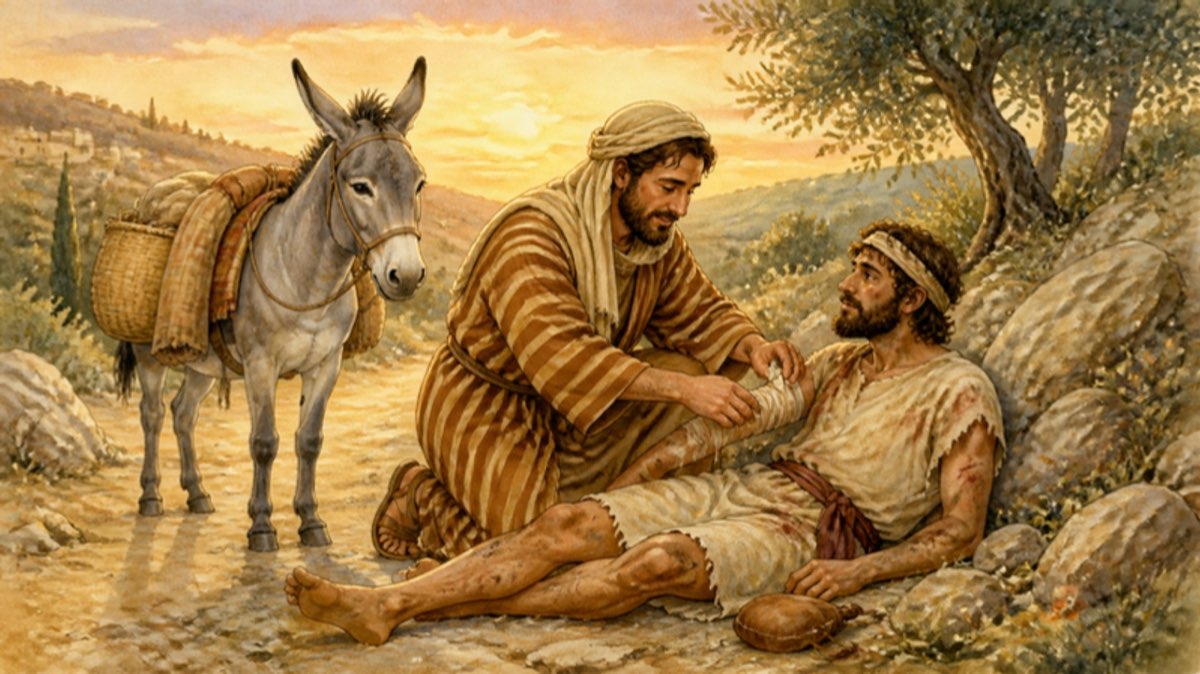
Where it is in the Bible: Luke 10:25–37. Read it on BibleGateway (NIV).
Age range for this retelling: about 3–8. About five minutes aloud.
The story (for ages 3–8)
One day a very clever man came to Jesus with a question. He wanted to test Jesus, to see how much he knew.
“Teacher,” the man said, “God tells us to love our neighbor. But who is my neighbor?”
Jesus didn’t give him a list. Instead, Jesus told him a story.
“There was once a man,” Jesus said, “walking down the long, rocky road from Jerusalem to Jericho. It was a steep road, winding down and down between big brown rocks, and it was a lonely road, with lots of hiding places. The man walked quickly. He wanted to get to Jericho before dark.
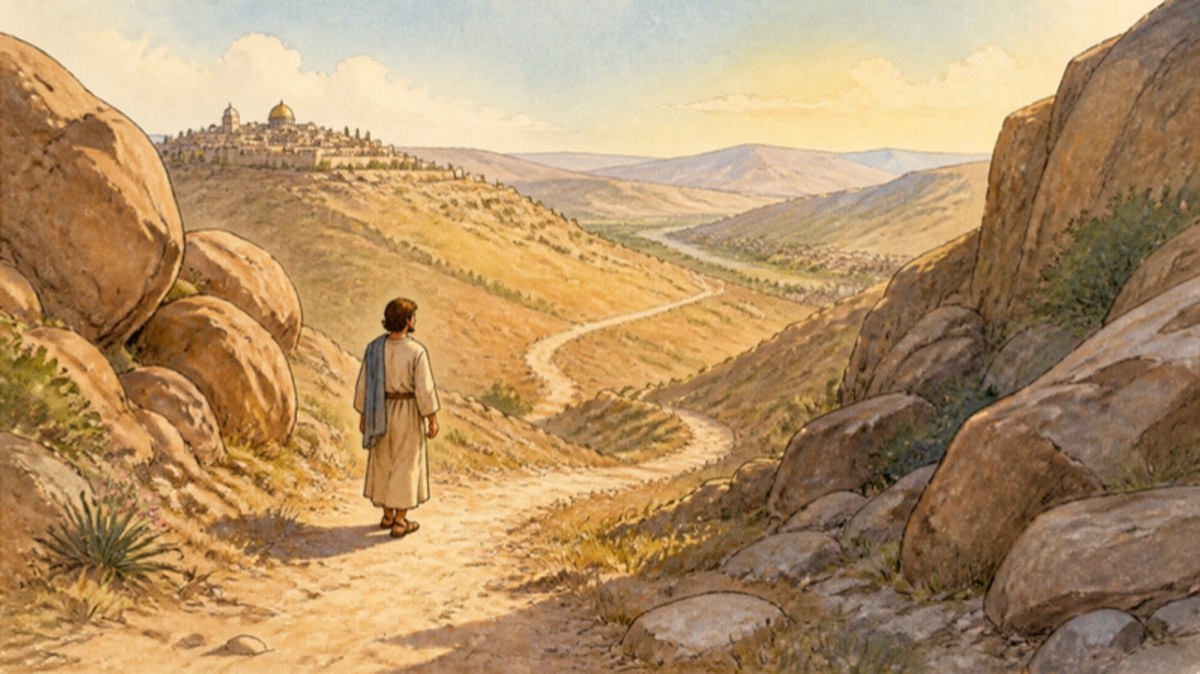
“But he didn’t make it. Robbers jumped out from behind the rocks! They grabbed his bag and took his money. They took his coat. They knocked him down and hit him, and then they ran off and left him lying in the dirt at the side of the road. He was bleeding, and he was too hurt to stand up. All he could do was lie there in the dust and hope that someone would come.
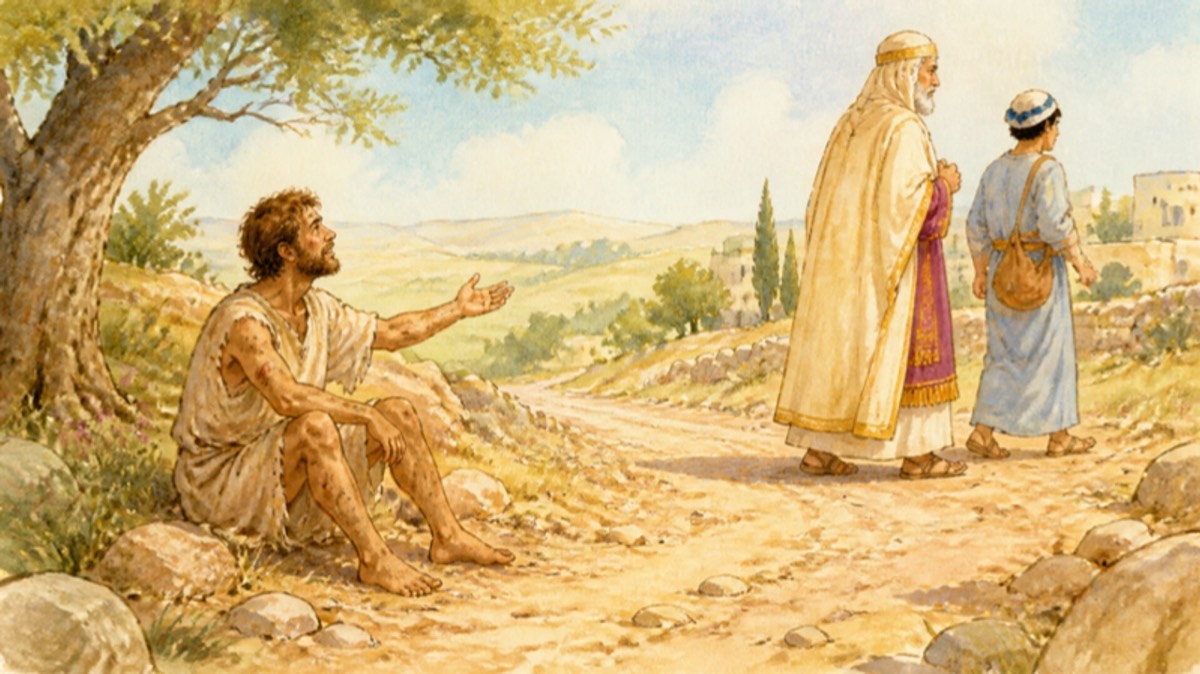
“After a while, the man heard footsteps. Someone was coming! It was a priest — a very important man who worked at the temple. The hurt man thought, He’ll help me. But the priest took one look, crossed to the other side of the road, and hurried on by.
“More footsteps. This time it was a Levite — a helper at the temple, another important person. He came closer and looked at the hurt man. Then he, too, crossed to the other side and kept walking.
“The hurt man lay in the hot sun. Nobody was going to help.
“Then he heard clip-clop, clip-clop. A donkey was coming, and riding on it was a Samaritan. Now, here is the surprising part: Samaritans and the hurt man’s people did not like each other. They didn’t talk to each other. They didn’t even want to be in the same place. If anyone was going to walk past, it would be the Samaritan.
“But the Samaritan stopped. He got down from his donkey. He knelt right in the dust next to the stranger — a stranger who, on any other day, might not even have said hello to him. He opened his bag and took out oil and wine, which is what people used for medicine back then, and he poured them on the man’s cuts to clean them. Ouch! Then he tore cloth into strips and wrapped up the wounds, gently, one by one.
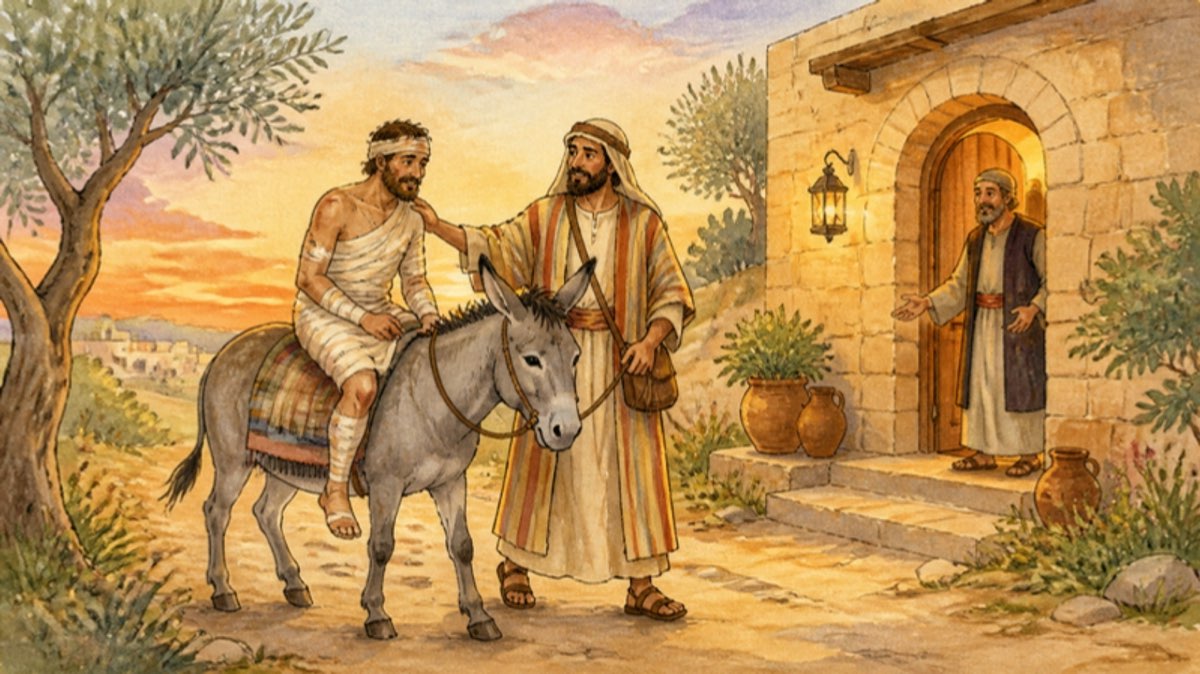
“The man still couldn’t walk. So the Samaritan lifted him up — carefully, carefully — and set him on his own donkey. And then the Samaritan walked. Step after step, holding the hurt man steady, down the long hot road, all the way to an inn, which is a place where travelers can sleep.
“At the inn, the Samaritan stayed up all night taking care of the man. In the morning, he gave the innkeeper two silver coins. ‘Look after him,’ he said. ‘If it costs more than this, I’ll pay you when I come back.’”
Jesus finished the story and looked at the clever man. “Three people saw the hurt man on the road,” Jesus said. “Which one was a neighbor to him?”
The clever man didn’t even want to say the word Samaritan. So he said, “The one who was kind to him.”
“Yes,” said Jesus. “Now go and do the same.”
Three questions to talk about
- Two important people walked right past the hurt man. Why do you think they didn’t stop? Have you ever walked past someone who needed help because you were busy or scared?
- The Samaritan helped someone who wasn’t supposed to be his friend. Is there anyone it feels hard to be kind to? What would “stopping” look like for you?
- Jesus answered a question with a story. Why do you think he did that instead of just giving a list of who counts as a neighbor?
What this story means in the Bible
The Good Samaritan is one of the best-known parables of Jesus, and the phrase has entered everyday English — “Good Samaritan laws” protect people who stop to help at accidents. In the Bible it does two things at once.
It flips the question. The lawyer asks, “Who is my neighbor?” — in other words, who am I required to love, and who can I leave out? Jesus ends by asking who was a neighbor (Luke 10:36). GotQuestions’ explanation of the parable puts it simply: the question isn’t who qualifies as your neighbor, but whether you are being one. The command to love your neighbor comes from Leviticus 19:18, and Jesus pairs it with loving God as the summary of the whole law (Luke 10:27).
It uses an enemy as the hero. Jews and Samaritans in the first century had centuries of religious and ethnic hostility (see John 4:9, “Jews do not associate with Samaritans,” NIV). Enduring Word’s commentary on Luke 10 points out that Jesus’ audience would have expected the third traveler to be an ordinary Israelite — a hero they could identify with — and instead got the person they least wanted to admire. The priest and the Levite, who had every reason to know God’s law, are the ones who fail it.
Christians also read it as a picture of God’s rescue. Some older commentators (going back to the early church) saw the Samaritan as a picture of Jesus himself, who comes to rescue people left for dead. Most modern commentaries treat that as a secondary reading, not what Jesus was mainly teaching; the sources below give both views. What everyone agrees on is the last line: go and do likewise.
For kids, that last line is the whole story. Being a neighbor isn’t a feeling. It’s stopping.
Sources and further reading
- BibleGateway — Luke 10:25–37 (NIV)
- GotQuestions — What is the meaning of the Parable of the Good Samaritan?
- Enduring Word — Luke 10 commentary
- Bible Study Tools — The Good Samaritan: Bible story and meaning
- Blue Letter Bible — Luke 10:25 with study tools
Questions moms ask
Where is the Good Samaritan in the Bible?
What is a Samaritan?
Is this story true, or made up?
Scripture references in this article
Each reference opens the full passage on BibleGateway (NIV).
David and Goliath: The Bible Story for Kids (With Questions to Talk About)
Jesus Calms the Storm: The Bible Story for Kids (With Questions to Talk About)
Noah's Ark: The Bible Story for Kids (With Questions to Talk About)
The Prodigal Son: The Bible Story for Kids (With Questions to Talk About)
Little helps for everyday faith
Start with a few quiet minutes.

Behind the notes
Hi, I'm Vega.
I'm a curious mom in Taiwan reading the Bible and writing down what I learn. I'm not a Christian — I grew up Buddhist — but after watching my aunt and the moms around me lean on these words through hard years, I wanted to understand why they carry so much weight. Every verse is quoted from the ESV or NIV and every interpretation links to a public commentary. I'm still learning; if you spot an error, tell me.
A little more about me