Where it is in the Bible: Luke 15:11–32. Read it on BibleGateway (NIV).
Age range for this retelling: about 3–8. About six minutes aloud.
The story (for ages 3–8)
Jesus once told a story about a father who had two sons.
The younger son was restless. He didn’t want to work on the family farm. He didn’t want to wait. One day he went to his father and said, “Father, someday the farm will be split between my brother and me. I want my half now.”
This was a very rude thing to say. It was like saying, “I wish you were already gone.” But the father didn’t shout. He divided everything he owned and gave the younger son his share.
The younger son packed his bags, took the money, and left for a faraway country. And there — oh, did he have fun! He bought fancy clothes. He threw big parties. He had lots of new friends, as long as he was paying. He spent, and spent, and spent.
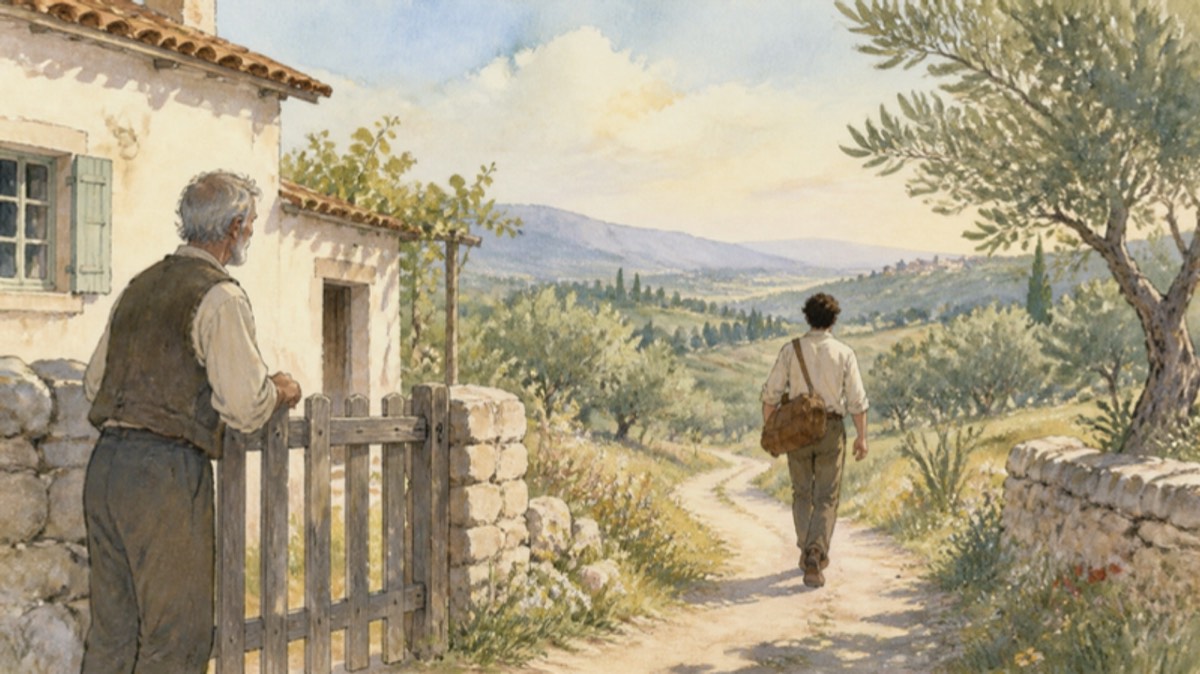
Until one morning he reached into his bag and found… nothing. The money was gone.
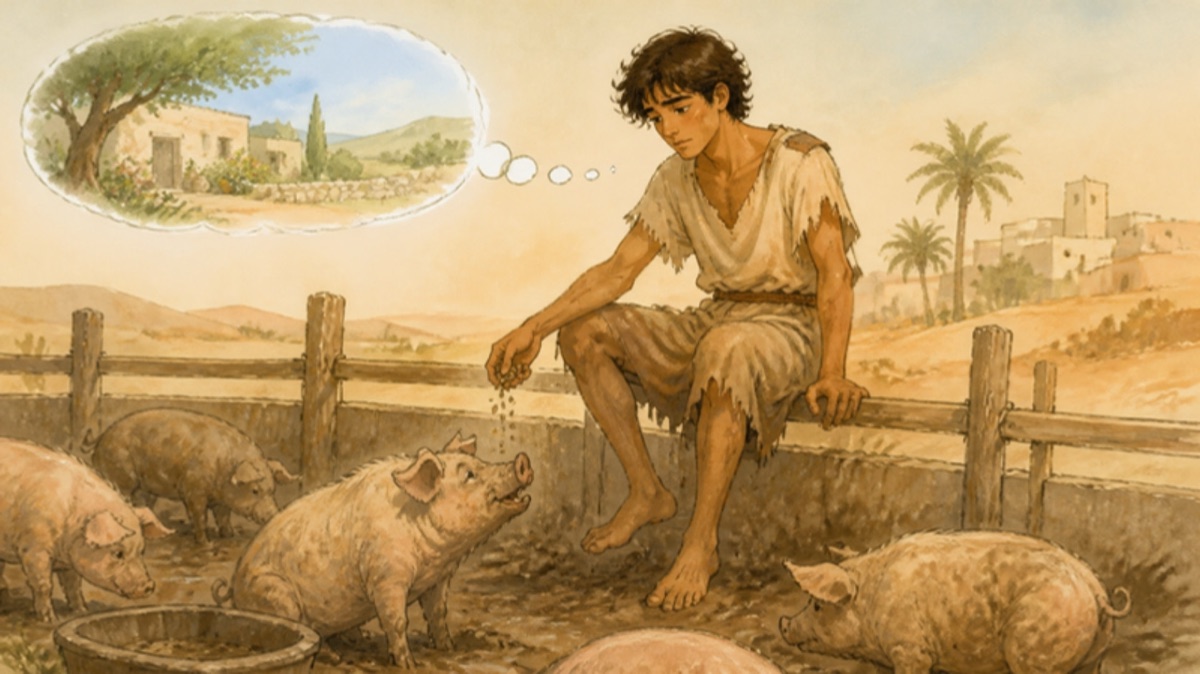
And just then, something terrible happened in that country: the rain stopped, the crops died, and there was no food anywhere. The new friends disappeared. The young man was hungry and alone. The only job he could find was feeding pigs — dirty, smelly pigs — and he was so hungry that even the pigs’ food started to look good to him.
Sitting in the mud, he finally thought clearly. My father’s workers have more bread than they can eat, he thought, and here I am starving. I’ll go home. I’ll tell my father I’m sorry. I don’t deserve to be his son anymore — but maybe he’ll let me be a worker.
So he got up and started the long walk home. He practiced his speech the whole way. “Father, I have done wrong. I’m not good enough to be your son…”
Now, here is the best part of the story.
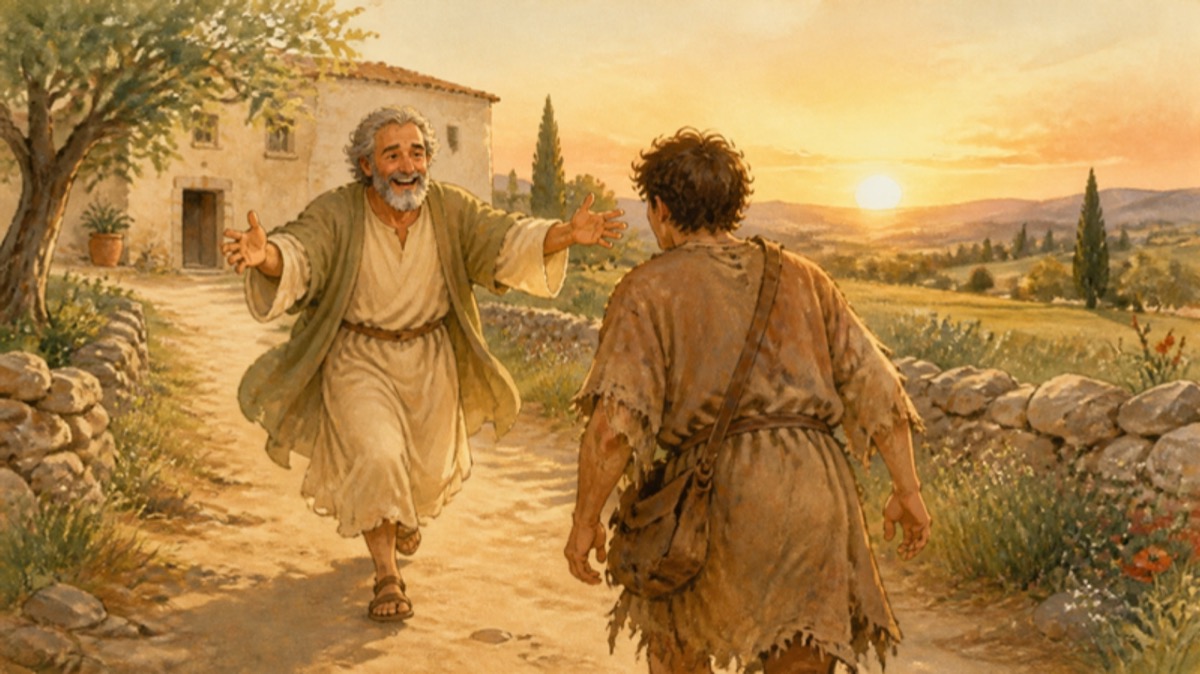
While the son was still far, far down the road — just a small, dusty figure in the distance — his father saw him. The father had been watching that road every single day. And when he saw his boy, the father didn’t fold his arms. He didn’t wait on the porch. He picked up his robe and ran — ran down the road, and threw his arms around his son, and kissed him.
The son started his speech. “Father, I have done wrong, I’m not good enough to be—”
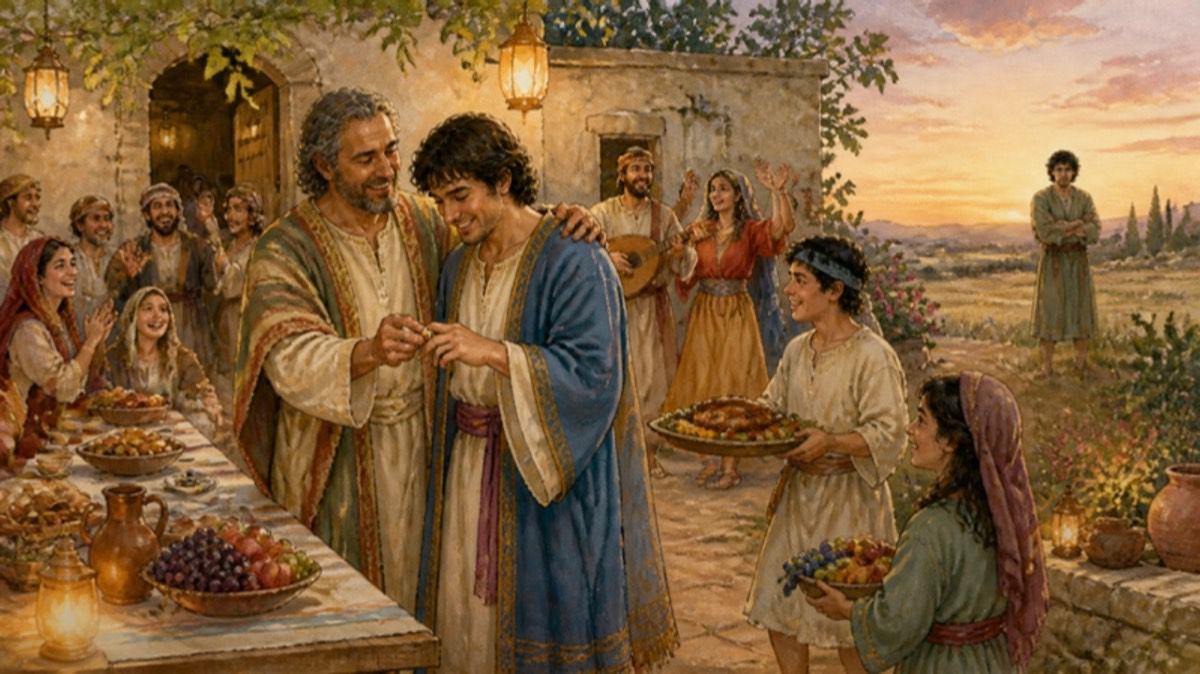
But the father was already calling to the servants. “Quick! Bring the best robe and put it on him! Put a ring on his finger and sandals on his feet! Get the fattest calf and cook a feast! My son was lost, and now he’s found! Let’s celebrate!”
And the music started, and the whole house filled up with dancing.
Out in the field, the older brother heard the party and asked what was going on. When he found out, he was angry. He wouldn’t go in. “I’ve worked for you all these years,” he told his father. “I never ran away. And you never threw me a party!”
The father went out to him, too — just like he’d gone out to the younger son. “My son,” he said gently, “you are always with me, and everything I have is yours. But we had to celebrate. Your brother was lost, and he’s been found.”
Jesus didn’t say whether the older brother went in. He left the door open.
Three questions to talk about
- The father ran to his son before the son could even finish saying sorry. How do you feel when you’ve done something wrong and have to tell Mom or Dad? What do you hope will happen?
- The younger son thought he’d have to be a worker, not a son. Have you ever felt like you had to earn being loved? What did the father do about that?
- The older brother was angry about the party. Was he right to feel that way? What would you have said to him?
What this story means in the Bible
Christians often call this the greatest short story ever told, and it’s told by Jesus to a specific audience: the religious leaders “muttered” that he welcomed sinners and ate with them (Luke 15:2, NIV). All three parables in Luke 15 answer that complaint.
The father is the point, not the son. Many commentators say the parable is misnamed — it should be called “the running father.” In a first-century Middle Eastern village, a dignified older man did not run; it was undignified. Enduring Word’s commentary on Luke 15 highlights that the father’s run, the robe, the ring, and the feast all restore the son to full sonship before he’s done a single thing to make up for what he did. For Christians, this is a picture of how God receives people who come back to him: the welcome comes first.
It’s a story about repentance — and about what repentance is not. The son “came to his senses” (Luke 15:17, NIV) and went home; that’s the turning. But GotQuestions’ summary of the parable notes that the son’s planned speech about becoming a hired worker is exactly what the father interrupts. Coming home isn’t a job application.
The older brother is the sting in the tail. The parable ends unresolved because the leaders listening to Jesus were the older brother, and Jesus was inviting them in. Christians have long read the second half as a warning that you can stay home, do everything right, and still miss the father’s heart. Different traditions emphasize the two halves differently; the sources below give a range.
For a child, the picture to keep is the father watching the road.
Sources and further reading
- BibleGateway — Luke 15:11–32 (NIV)
- GotQuestions — What is the meaning of the Parable of the Prodigal Son?
- Enduring Word — Luke 15 commentary
- Blue Letter Bible — Luke 15:11 with study tools
Questions moms ask
Where is the prodigal son in the Bible?
What does prodigal mean?
Why is the older brother in the story?
Scripture references in this article
Each reference opens the full passage on BibleGateway (NIV).

David and Goliath: The Bible Story for Kids (With Questions to Talk About)
The Good Samaritan: The Bible Story for Kids (With Questions to Talk About)

Jesus Calms the Storm: The Bible Story for Kids (With Questions to Talk About)
Noah's Ark: The Bible Story for Kids (With Questions to Talk About)
Little helps for everyday faith
Start with a few quiet minutes.

Behind the notes
Hi, I'm Vega.
I'm a curious mom in Taiwan reading the Bible and writing down what I learn. I'm not a Christian — I grew up Buddhist — but after watching my aunt and the moms around me lean on these words through hard years, I wanted to understand why they carry so much weight. Every verse is quoted from the ESV or NIV and every interpretation links to a public commentary. I'm still learning; if you spot an error, tell me.
A little more about me