
The Bible mentions tattoos exactly once. I learned that from a mother-in-law — a friend’s, not mine — who quotes the verse at her daughter-in-law’s tiny wrist cross every Thanksgiving. One verse sounded like a quick lookup. It was, and the interesting part turned out to be what’s around it.
Leviticus 19:28 forbids tattoos, in a list of laws given to ancient Israel that also forbids trimming the edges of your beard and wearing mixed fabrics. The New Testament never mentions tattoos. So the real question Christians argue about is which Old Testament laws still apply, and how to make decisions where the Bible is silent.
The one verse
You shall not make any cuts on your body for the dead or tattoo yourselves: I am the Lord. — Leviticus 19:28 (ESV)
Read the neighbors. One verse earlier:
You shall not round off the hair on your temples or mar the edges of your beard. — Leviticus 19:27 (ESV)
And nine verses earlier, in the NIV: “Do not plant your field with two kinds of seed. Do not wear clothing woven of two kinds of material” (Leviticus 19:19). Nobody in my moms’ group is checking the labels in her closet for poly-cotton blends.
The clue to what 19:28 was about is the phrase “for the dead.” Deuteronomy 14:1 repeats it: “You shall not cut yourselves or make any baldness on your foreheads for the dead” (ESV). Enduring Word’s commentary on Leviticus 19 says of the hair-trimming, cutting, and tattooing together: “These were also pagan practices God wanted Israel to be separate from… all connected with pagan rites of mourning.” GotQuestions reads it the same way, tying the verse to pagan practices to “mourn the dead.” The prohibition’s context is ritual, not body art as such.
Which laws carry over?
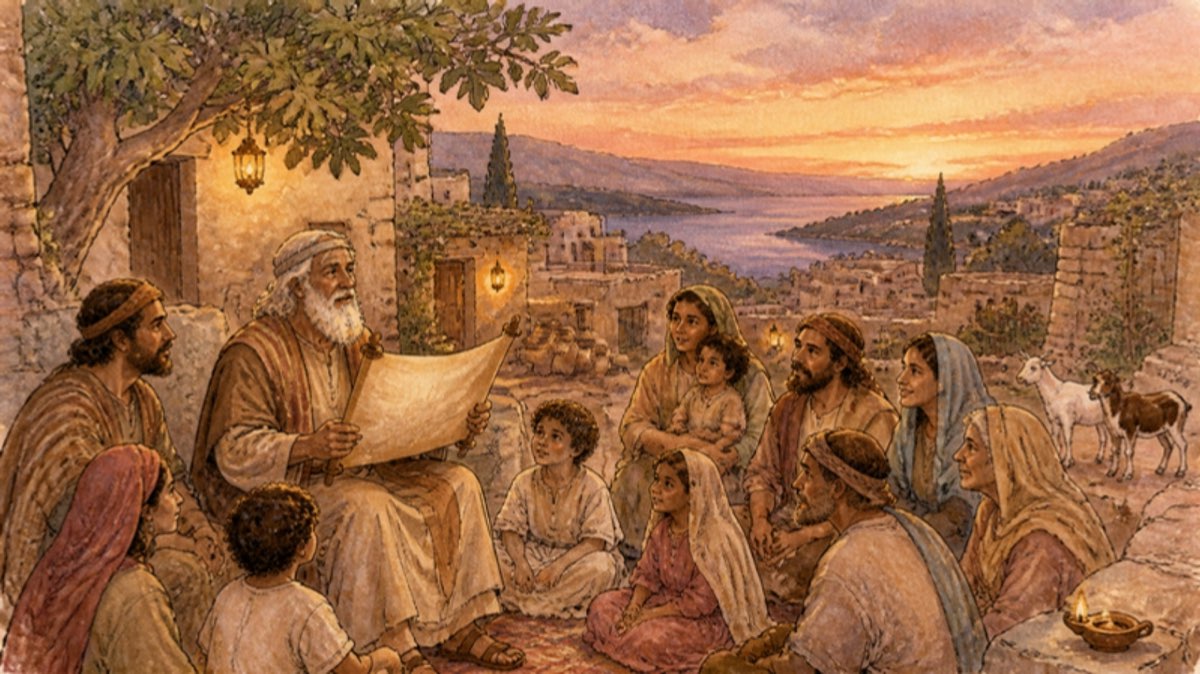
This is where the real disagreement is, and it’s bigger than tattoos. Christians generally sort the Old Testament law into categories: moral commands (don’t murder, don’t steal) that continue, and ceremonial or civil rules for Israel (sacrifices, food laws, clothing, the beard rule) that were fulfilled or set aside under the new covenant. Hebrews 8:13 says the first covenant is “obsolete”; in Acts 15 the early church decides that Gentile converts don’t have to keep the Mosaic law.
Most Protestant and Catholic teachers put Leviticus 19:28 in the second group, alongside 19:27 and 19:19. That’s why GotQuestions concludes, in its own words, that “getting a tattoo is not a sin in itself. It is permissible within the freedom a Christian has in Christ (Galatians 5:1; 1 Corinthians 10:23). Yet biblical principles should guide a person’s decision to get one.” A minority of Christians hold that the verse expresses a permanent principle about not marking God’s creation, and keep it. If that’s your conviction, Romans 14 says keep it — and says the rest of us shouldn’t sneer.
What the New Testament adds
Nothing about tattoos. But three passages shape how Christians decide:
Do you not know that your bodies are temples of the Holy Spirit, who is in you, whom you have received from God? You are not your own; you were bought at a price. Therefore honor God with your bodies. — 1 Corinthians 6:19-20 (NIV)
Both sides quote this one. The “no” side says you don’t graffiti a temple; the “yes” side says a Scripture verse on your arm is honoring God with your body. In context (Enduring Word points this out) Paul is talking about sexual immorality in Corinth, not decoration, so the verse is being applied by analogy either way.
“I have the right to do anything,” you say—but not everything is beneficial. “I have the right to do anything”—but not everything is constructive. — 1 Corinthians 10:23 (NIV)
Freedom, with the question “is it good for me and for others?” attached.
So whatever you believe about these things keep between yourself and God. Blessed is the one who does not condemn himself by what he approves. — Romans 14:22 (NIV)
Romans 14 is about food and holy days, but it’s the chapter Christians use for every “the Bible doesn’t say” question. Verse 13: stop passing judgment on one another. Verse 5: be fully convinced in your own mind.
One verse I didn’t expect to find in the tattoo discussion is Isaiah 49:16, where God says to Israel, “See, I have engraved you on the palms of my hands.” It’s a metaphor, and commentators don’t use it to license tattoos — but several Christians with tattoos told me it’s the verse they chose.
The questions Christians ask before getting one
Pulled from GotQuestions’ two tattoo pages (the second is specifically about Christian-themed tattoos, which it says can be “a conversation starter” but don’t escape the same questions) and from the women I talked to:
- Why do I want it? GotQuestions: “getting a tattoo itself may not be a sin, but the motivation for getting one can be” — it names conforming to the world and vanity as the motives to check. Most people I asked said wait months, not days.
- What will it say about me in twenty years? Permanence is the practical issue, not the theological one.
- Will it hurt anyone’s conscience I’m responsible for? Romans 14:13 again. That’s not a veto for every disapproving relative; it’s a question about people you actually lead.
- Can I do it “for the glory of God” (1 Corinthians 10:31)? If the honest answer is yes, the mainstream Christian view is that you’re free.
Where Christians land: three views
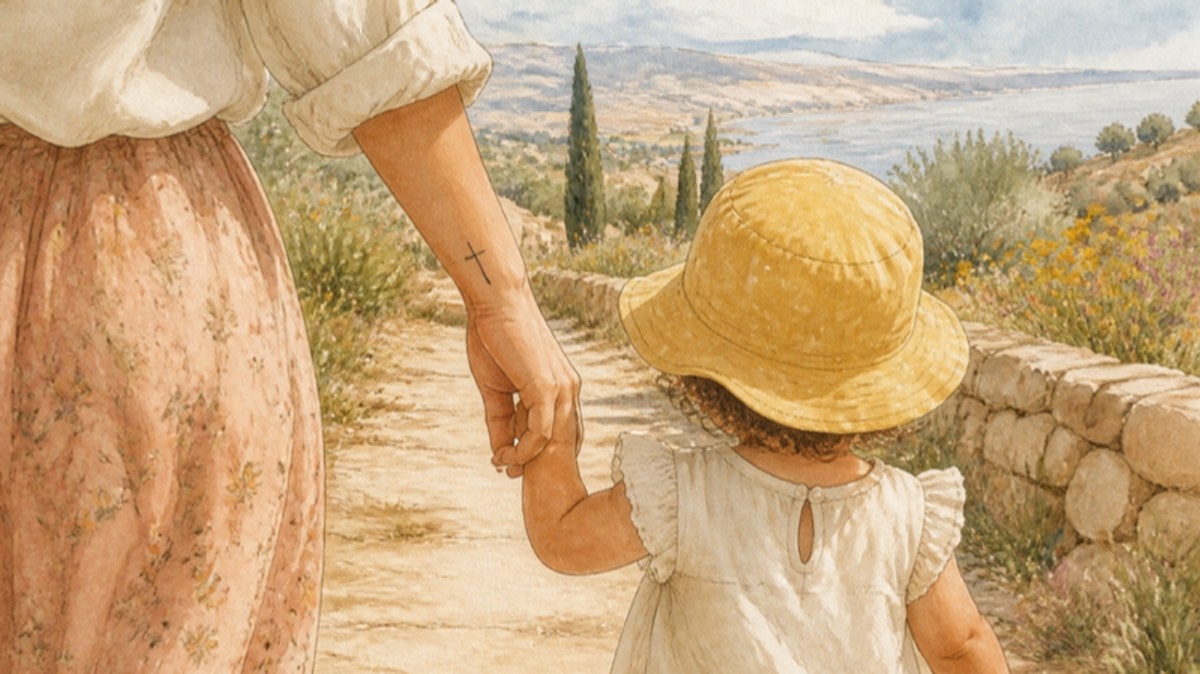
Reading across churches, the positions sort into three:
- Not permitted. Leviticus 19:28 is a standing command, and the body-as-temple passage reinforces it. Held by some conservative churches and, often, by older generations. The people I know who hold it are sincere, and Romans 14 asks the rest to respect them.
- Permitted with wisdom. The majority view in the sources above: the Levitical ban was tied to pagan ritual, the New Testament is silent, so the questions are motive, content, permanence, and conscience. GotQuestions lands here.
- Permitted and welcomed. Tattoos as testimony — a verse, a cross, a date of sobriety. Common among younger Christians and in churches that lean into “all things to all people” (1 Corinthians 9:22).
Notice that none of the three claims the Bible is explicit. That honesty is, to me, the most trustworthy part of the whole discussion.
A small verse, a big method
The tattoo question is a small window onto a big thing in Christianity: a book written to an ancient nation, read by people trying to live now. The way most Christians handle it — context first, then “which rules were for Israel and which are for everyone,” then conscience — is the same method they use for far weightier questions. Watching them apply it to a cross on a wrist taught me more about how they read than the verse itself did.
The mother-in-law, for what it’s worth, has started asking my friend what the cross means to her. That’s a better conversation than Leviticus 19:28 was ever going to produce on its own.
Sources and further reading
- BibleGateway — Leviticus 19:19-31 (ESV) and 1 Corinthians 6:12-20 (NIV)
- Enduring Word — Leviticus 19 commentary, 1 Corinthians 6, Romans 14
- GotQuestions — What does the Bible say about tattoos? and Should a Christian get a tattoo?
- GotQuestions — What are disputable matters (Romans 14:1)?
- Blue Letter Bible — Leviticus 19:28 with study tools
Questions moms ask
What does Leviticus 19:28 actually say?
Does the New Testament say anything about tattoos?
Why don't Christians keep the other rules in Leviticus 19?
Scripture references in this article
Each reference opens the full passage on BibleGateway (NIV).



Little helps for everyday faith
Start with a few quiet minutes.

Behind the notes
Hi, I'm Vega.
I'm a curious mom in Taiwan reading the Bible and writing down what I learn. I'm not a Christian — I grew up Buddhist — but after watching my aunt and the moms around me lean on these words through hard years, I wanted to understand why they carry so much weight. Every verse is quoted from the ESV or NIV and every interpretation links to a public commentary. I'm still learning; if you spot an error, tell me.
A little more about me