
Verses by Situation
What Does the Bible Say About Depression?
The Bible never uses the word, but Elijah under the broom bush, Psalm 42, Psalm 88, Jeremiah 20, and Paul in 2 Corinthians 1 describe it. What those passages say — and what they don't.
For when your mind won't switch off
These are the verses people reach for at 2 a.m. Each one was written by someone in a real bad situation — a prisoner, a fugitive, a widow — so I've kept the note under each card about who said it and why. If the anxiety is clinical, a doctor matters more than any of these.
30 verses · ESV and NIV · each linked to BibleGateway
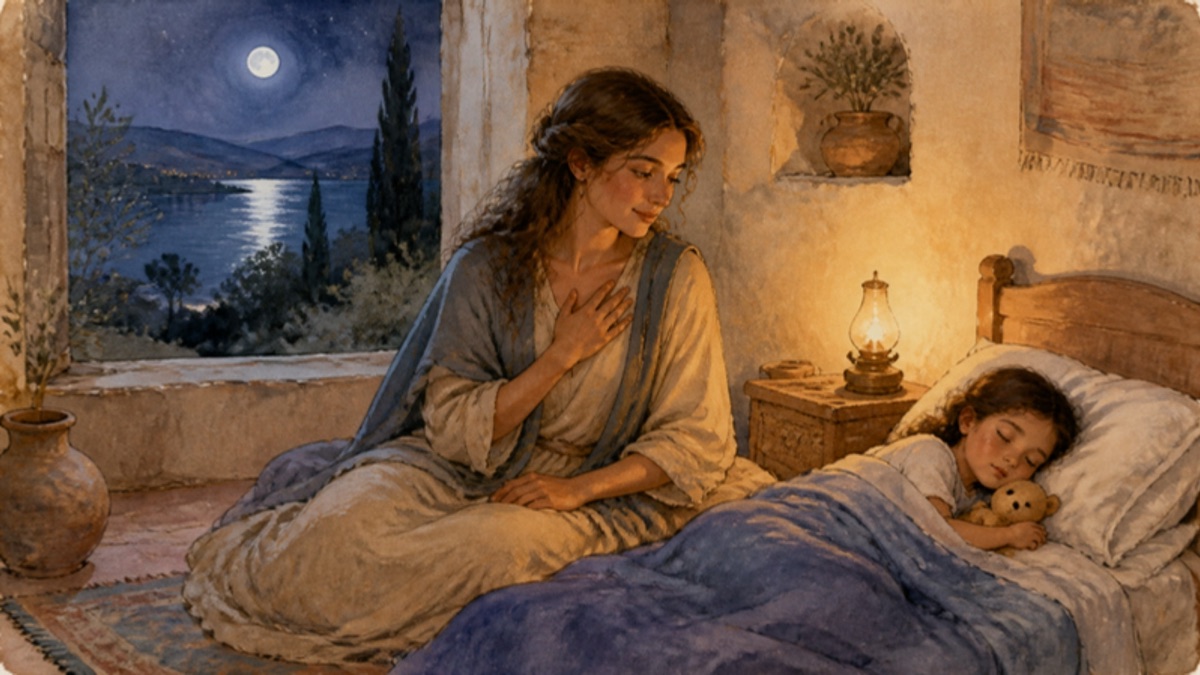
“God is our refuge and strength, a very present help in trouble.”
The verse doesn't promise the trouble will stop. It promises God is in it with you, findable, not far off. Anxiety says you're alone with it; this says you aren't.
“The Lord is near to the brokenhearted and saves the crushed in spirit.”
Anxiety often comes with shame about being anxious. This verse removes the shame: being crushed is where God is near, not where he leaves.
“When I am afraid, I put my trust in you.”
This is the clearest biblical answer to "is it a sin to feel afraid?" David feels it and keeps trusting. Fear and trust can happen in the same breath.
“Cast your burden on the Lord, and he will sustain you; he will never permit the righteous to be moved.”
The burden here is a real one — a betrayal. The verse doesn't minimize it; it tells you where to put its weight. Anxiety is often weight carried alone.
“fear not, for I am with you; be not dismayed, for I am your God; I will strengthen you, I will help you, I will uphold you with my righteous right hand.”
The verse answers fear with presence, not explanation. "I am with you" comes before any fix.
“But seek first the kingdom of God and his righteousness, and all these things will be added to you.”
The whole surrounding passage (Matthew 6:25–34) is about worry. The instruction isn't "stop worrying" but "seek first" — redirect the energy.
“Therefore do not be anxious about tomorrow, for tomorrow will be anxious for itself. Sufficient for the day is its own trouble.
The most practical anxiety verse in the Bible: you are only given grace for today, so borrowing tomorrow's trouble overdraws the account.
“But the Lord answered her, “Martha, Martha, you are anxious and troubled about many things, but one thing is necessary. Mary has chosen the good portion, which will not be taken away from her.””
Jesus diagnoses Martha: worried and distracted by many things. The cure isn't to stop serving; it's to stop being torn apart by it.
“do not be anxious about anything, but in everything by prayer and supplication with thanksgiving let your requests be made known to God. And the peace of God, which surpasses all understanding, will guard your hearts and your minds in Christ Jesus.”
The Bible's most direct anxiety instruction: replace anxious thought with specific, thankful prayer. The promised peace guards; it doesn't explain.
“for God gave us a spirit not of fear but of power and love and self-control.”
Often quoted against anxiety: the "spirit of fear" isn't from God; what he gives is power, love, and a sound mind — a reordered mind.
“casting all your anxieties on him, because he cares for you.”
The verse for anxiety, with the reason attached: he cares. The casting is active — throwing the weight off.
“For I, the Lord your God, hold your right hand; it is I who say to you, “Fear not, I am the one who helps you.””
The hand is held before the fear is addressed. Presence first.
“Let not your hearts be troubled. Believe in God; believe also in me.
Jesus says this into real trouble. The verse isn't denial; it's direction.
“When the cares of my heart are many, your consolations cheer my soul.”
The Bible's most direct verse about anxious thoughts: many cares, met by many consolations.
“Blessed is the man who trusts in the Lord, whose trust is the Lord. He is like a tree planted by water, that sends out its roots by the stream, and does not fear when heat comes, for its leaves remain green, and is not anxious in the year of drought, for it does not cease to bear fruit.”
The Bible's most direct picture of non-anxiety: a tree whose roots reach water. The drought isn't removed.
“Immediately the father of the child cried out and said, “I believe; help my unbelief!””
Belief and unbelief in the same breath are allowed. Jesus answered this prayer.
“Why, even the hairs of your head are all numbered. Fear not; you are of more value than many sparrows.”
The verse answers fear with being counted — down to the hairs.
“I sought the Lord, and he answered me and delivered me from all my fears.”
The verse does not say fears vanish on their own; it says he delivered from them when sought.
“When the righteous cry for help, the Lord hears and delivers them out of all their troubles. The Lord is near to the brokenhearted and saves the crushed in spirit.”
Nearness is promised exactly where anxiety assumes abandonment — in brokenness.
“Be merciful to me, O God, be merciful to me, for in you my soul takes refuge; in the shadow of your wings I will take refuge, till the storms of destruction pass by.”
The storm is not denied; the psalmist takes refuge 'till the storms pass by.' That is a model for an anxious day.
“from the end of the earth I call to you when my heart is faint. Lead me to the rock that is higher than I,”
'Higher than I' admits the rock is beyond your reach. Anxiety insists you climb; the psalm says 'lead me.'
“He is not afraid of bad news; his heart is firm, trusting in the Lord.”
Anxiety is often fear of bad news that hasn't come. The verse offers a firm heart, not a guarantee.
“Search me, O God, and know my heart! Try me and know my thoughts! And see if there be any grievous way in me, and lead me in the way everlasting!”
Anxious self-examination is endless. This prayer hands the searching to God and asks him to lead.
“Anxiety in a man's heart weighs him down, but a good word makes him glad.”
The proverb admits anxiety weighs you down. It also says a good word lifts — ask for one.
“The fear of man lays a snare, but whoever trusts in the Lord is safe.”
Much anxiety is fear of man — what others will think of your parenting. The proverb calls it a snare.
“Say to those who have an anxious heart, “Be strong; fear not! Behold, your God will come with vengeance, with the recompense of God. He will come and save you.””
This verse is addressed to 'those who have an anxious heart.' It does not shame the anxiety; it answers it with 'he will come.'
“Look at the birds of the air: they neither sow nor reap nor gather into barns, and yet your heavenly Father feeds them. Are you not of more value than they?”
Jesus prescribes looking at birds for anxiety. The argument is simple: if he feeds them, he will feed you.
“Are not two sparrows sold for a penny? And not one of them will fall to the ground apart from your Father. But even the hairs of your head are all numbered. Fear not, therefore; you are of more value than many sparrows.”
Nothing falls 'apart from your Father.' Anxiety assumes things slip past him; the verse says not even a sparrow.
“For you did not receive the spirit of slavery to fall back into fear, but you have received the Spirit of adoption as sons, by whom we cry, “Abba! Father!””
Fear is the spirit of slavery. The verse says you received a different spirit — one that cries 'Abba.'
“Little children, you are from God and have overcome them, for he who is in you is greater than he who is in the world.”
Anxiety is sometimes a sense that the world is stronger than you. The verse answers: he who is in you is greater.
The Bible never uses the word, but Elijah under the broom bush, Psalm 42, Psalm 88, Jeremiah 20, and Paul in 2 Corinthians 1 describe it. What those passages say — and what they don't.

Twenty-five Bible verses about anxiety and worry (NIV), each with a short note on who said it, to whom, and why it fits a worried mind — from Philippians 4:6-7 and 1 Peter 5:7 to the psalms David wrote on the run.
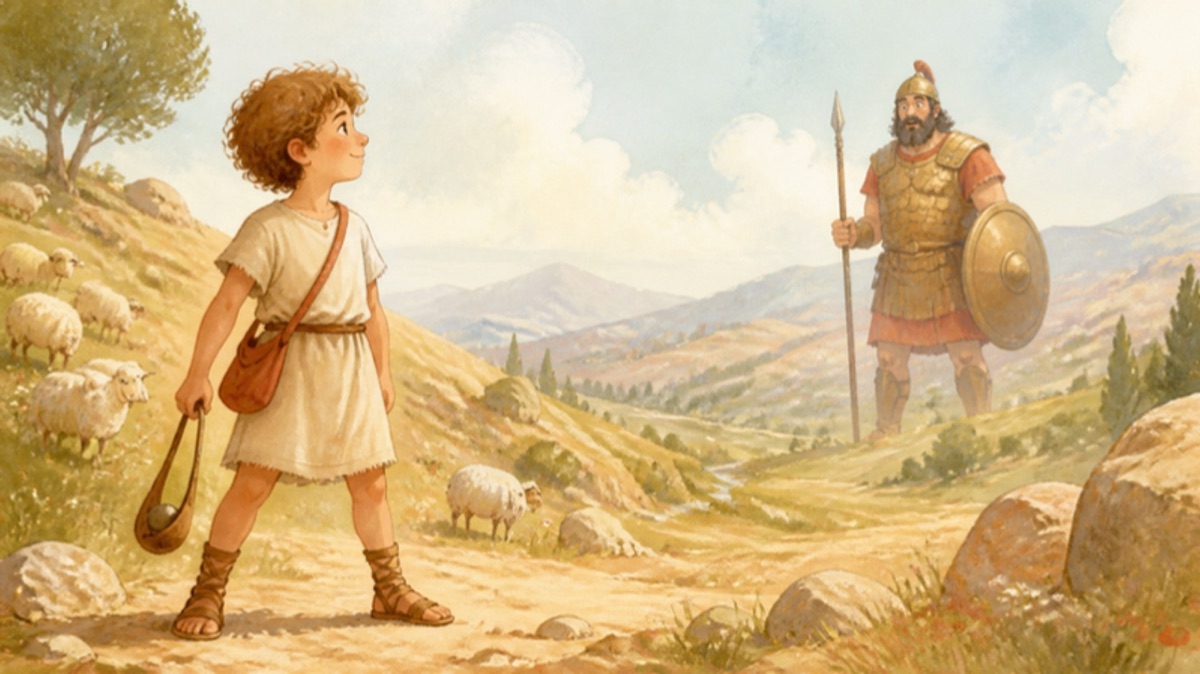
David and Goliath retold for ages 3–8 — the original passage in 1 Samuel 17, a bedtime-length version, three questions to talk about, and what the story means in the Bible.
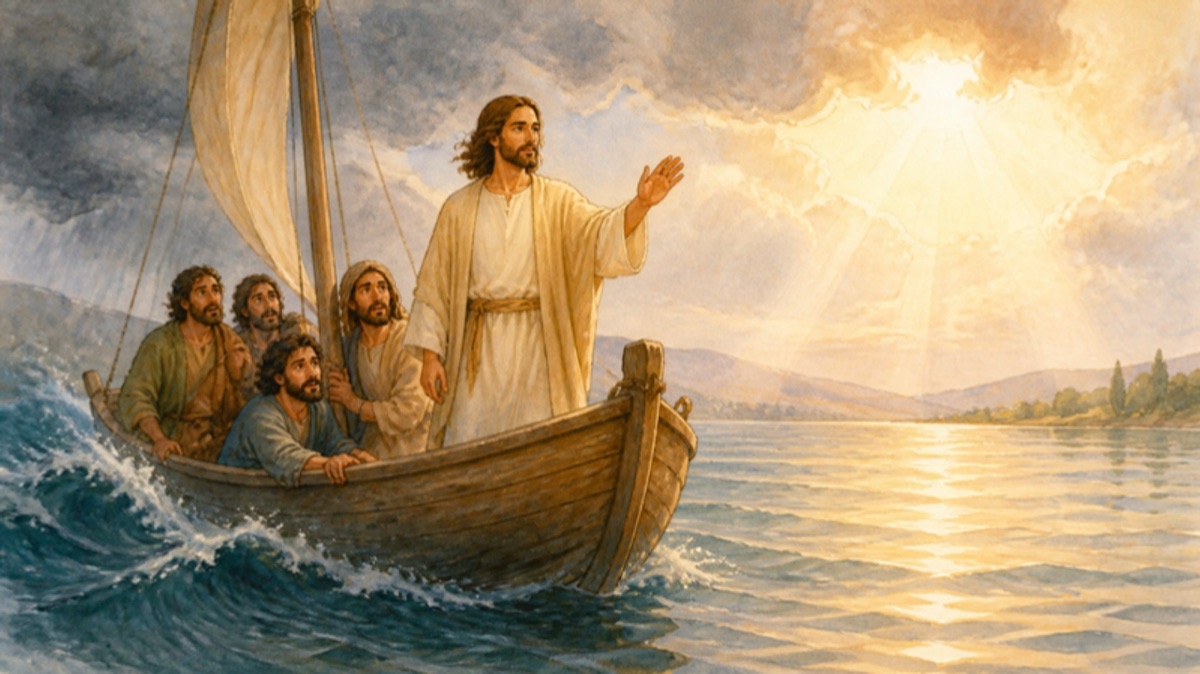
Jesus calming the storm retold for ages 3–8 — the original passage in Mark 4, a bedtime-length version, three questions to talk about, and what the story means in the Bible.

A daily devotion built on Psalm 46 — the whole psalm, not just “Be still” — with its setting, what the Hebrew “be still” actually means, the refrain the Sons of Korah repeat, Isaiah 30:15 and Philippians 4:6-7 alongside it, and a short practice and prayer many Christian moms use.
Save a verse, find another, or sit with it for a minute.