“I can do all things through him who strengthens me.”
Philippians 4:13 is Paul's statement that he can face every circumstance through the strength Christ gives, written under house arrest in Rome around AD 61. In context, the “all” points back to verses 11–12: being hungry or well fed, in need or in plenty. Commentators read it as a verse about learned contentment, not a promise of winning or success.
The NIV does not say “all things.” I had been seeing this verse on gym walls, teenage athletes’ cleats and the backs of race T-shirts for years, always as “I can do all things through Christ who strengthens me,” and when I finally looked it up in the NIV, it reads “I can do all this through him who gives me strength.” One small word, this, and the whole sentence turns around and points backwards at what Paul had just been talking about. Not being a Christian, I have no favourite translation to defend. I just wanted to know what “this” was.
The word the NIV changed
Here are the two versions side by side. The ESV: “I can do all things through him who strengthens me” (Philippians 4:13, ESV). The NIV:
I can do all this through him who gives me strength. — Philippians 4:13 (NIV)
The Greek word is pas, which Strong’s defines simply as “all, every, whole, entire.” Both translations are rendering the same word; the NIV’s “this” simply makes “all” point at something, and the something is the previous two verses. GotQuestions puts the context in one line: the verse “focuses on the God-given power to endure any circumstance.” Enduring Word says the same: it “refers to Paul’s ability to be content in all things.”
So before reading verse 13, you have to read 10 through 12. And before that, it helps to know where Paul was sitting.
What was Paul’s situation when he wrote Philippians 4:13?
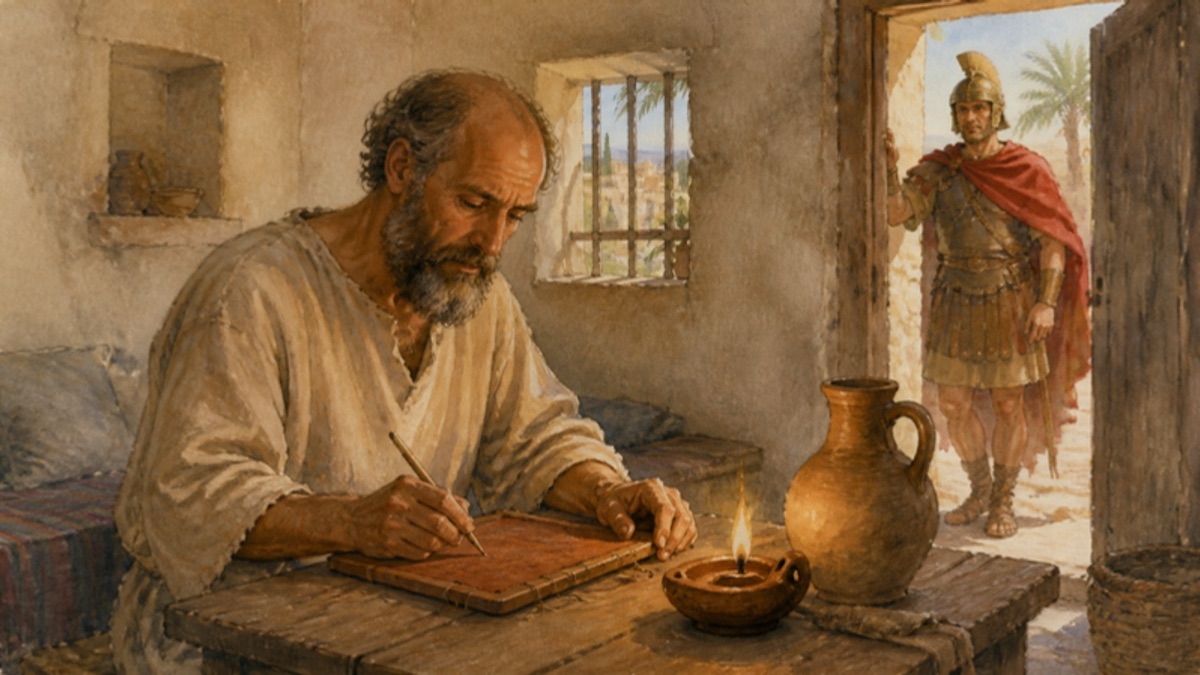
Enduring Word places the letter in Paul’s Roman house arrest, the arrangement Acts 28:30–31 describes, around AD 61, while he waited for a hearing before Caesar. Paul mentions his situation almost in passing: “it has become clear throughout the whole palace guard and to everyone else that I am in chains for Christ” (Philippians 1:13, NIV). A soldier was, quite literally, in the room.
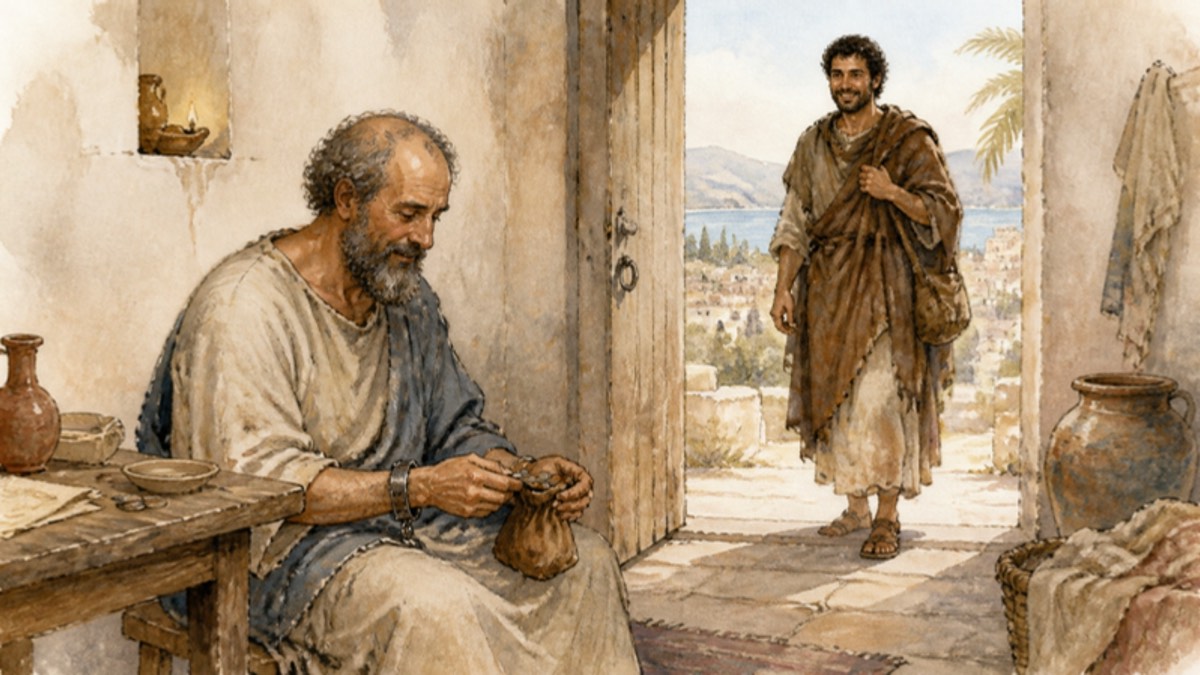
The last chapter is partly a receipt. The church in Philippi had sent money with a man named Epaphroditus (Philippians 2:25), and Paul acknowledges it: “I have received full payment and have more than enough. I am amply supplied, now that I have received from Epaphroditus the gifts you sent” (Philippians 4:18, NIV). The famous verse is embedded in his thank-you:
I rejoiced greatly in the Lord that at last you renewed your concern for me. Indeed, you were concerned, but you had no opportunity to show it. — Philippians 4:10 (NIV)
Enduring Word notes a detail I liked: Philippi was the city where Paul had once sat in a jail at midnight singing (Acts 16:25). Morgan, quoted there, calls this “Paul’s great singing letter,” written from a second prison to the people who remembered the first one.
What comes right before Philippians 4:13?
This is the paragraph the gym wall leaves off:
I am not saying this because I am in need, for I have learned to be content whatever the circumstances. I know what it is to be in need, and I know what it is to have plenty. I have learned the secret of being content in any and every situation, whether well fed or hungry, whether living in plenty or in want. I can do all this through him who gives me strength. — Philippians 4:11-13 (NIV)
Read as a unit, “all this” is obvious. It is hunger and fullness, plenty and want. Paul is not claiming he can do anything; he is claiming he can be content in anything, and he says twice that he learned it. Enduring Word underlines the verb: “Paul had to learn contentment; it isn’t natural to mankind.” The commentary also quotes Spurgeon on the half of the list people forget, that plenty is its own test: some who cope with the pit “when they are put on the top of a pinnacle, their heads grow dizzy, and they are ready to fall.”
Paul could say both halves from experience. GotQuestions lists his résumé from 2 Corinthians 11: beatings, a shipwreck, hunger, sleepless nights. He had also been, as Enduring Word puts it, “financially well-off.” The verse is written by someone who had tried both.
Two Greek words that pull in opposite directions
Two words in the passage are worth knowing. What follows is the lexicons’ account, not mine.
“Content” in verse 11 is autarkēs. Strong’s defines it as “self-sufficient, content.” It was a prized word in Greek philosophy for the person who needs nothing from outside. Paul borrows the word and then, two verses later, says his sufficiency comes “through him.” The self-sufficiency word ends up meaning the opposite of self-sufficiency. That reversal is my observation, not a commentary’s, but the two definitions sit right there in the text.
“Gives me strength” (ESV: “strengthens”) is endynamoō. Strong’s: “to empower, to strengthen, to make strong.” It is a word about being supplied with power from somewhere else, which fits the point: the strength to be content is received, not generated.
Is Philippians 4:13 about winning?
Enduring Word is direct about the popular use: “many people take this verse out of context and use it to reinforce a ‘triumphalist’ or ‘super-Christian’ mentality, instead of seeing that the strength of Jesus in Paul’s life was evident in his ability to be content when he did suffer need.” GotQuestions adds that it is “not a promise that Christians will have superpowers or that they will be invincible,” and explicitly says the passage “is not about having financial abundance,” pushing back on prosperity teaching.
None of this means a teenager should not write it on her shoes. It means the honest version of what she is writing is “I can be okay with how this ends,” which, if you have ever watched a fourteen-year-old lose, is a far braver sentence.
Three things the verse will not do
- It will not change the result. Paul stayed under arrest. The verse is spoken from inside the circumstance, not after escaping it.
- It will not make need disappear. Verse 14 is the giveaway: “Yet it was good of you to share in my troubles” (Philippians 4:14, NIV). Paul was content and in need and glad of the money. Contentment did not mean refusing help.
- It will not replace a plan. The letter is full of logistics: who is being sent where, who is sick, who is bringing what. Contentment in Philippians coexists with organising.
Other passages on strength are gathered in Bible verses about strength, and the closest cousin to this verse is Paul’s “my grace is sufficient” line, which I wrote up in God’s grace is enough.
A content mom is not a passive one
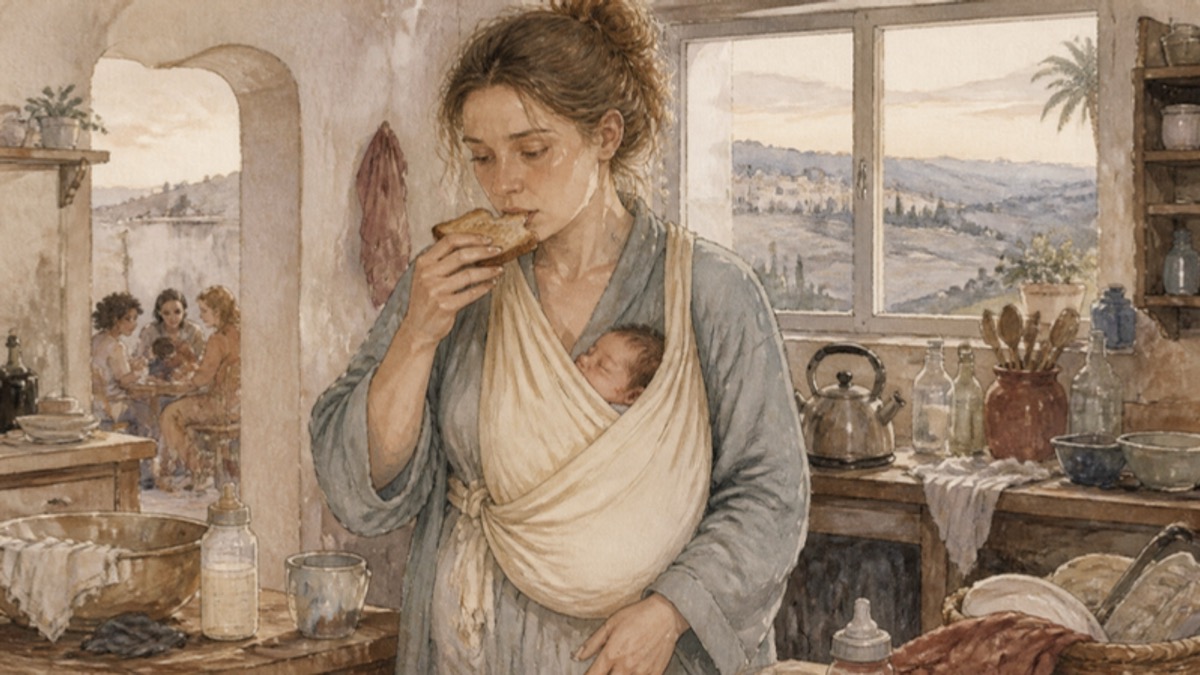
“Whether well fed or hungry” is not much of a metaphor for a lot of parents of a new baby, who eat cold food standing up for months. The thing I find useful in this verse, even without sharing Paul’s faith, is that it does not ask the hungry person to pretend she is full. It asks for a kind of steadiness that holds in both states, and it says plainly that the steadiness is learned, which means nobody is supposed to have it on day one.
Read with verses 11–12 attached, the verse works less like a pep talk and more like a floor. Not “I can do everything on this list,” but “I can be alright whether this list gets done or not.” If you want to memorise it with its context attached, the scripture memory cards on this site can hold verses 11–13 as one card, which is the only way I think it should be learned.
Read it next to verse 19
A few lines later Paul writes, “my God will meet all your needs” (Philippians 4:19, NIV). Needs, he says, from a room where he had just admitted to having them. The two verses bracket the same thank-you note: verse 13 is about strength to be content in want, verse 19 is about needs being met, and between them sits the receipt for Epaphroditus’s delivery (4:18). Neither line mentions a scoreboard. For a child who wants verse 13 to mean scoring, that pairing is an easier way in: a man under guard, sometimes hungry and sometimes comfortable, said he could get through either one because he was not getting through it alone, and then thanked his friends for the help they sent.
Sources
- Philippians 4:10–19 (NIV) — BibleGateway
- Enduring Word — Philippians 4 commentary (David Guzik)
- Enduring Word — Philippians 1 commentary, with the letter’s setting in Roman house arrest
- GotQuestions — Can I really do all things through Christ (Philippians 4:13)?
- GotQuestions — Summary of the Book of Philippians
- BibleHub — Strong’s Greek 842 autarkēs
- BibleHub — Strong’s Greek 1743 endynamoō
- Blue Letter Bible — Philippians 4:13 with interlinear tools
In different seasons
The passage keeps its original setting, but the questions we bring to it can change. A tired afternoon and a grateful morning may lead us to notice different parts of the same verse.
Choose a season below for a short reflection. These are gentle applications drawn from public commentaries, not additional words from the verse.
When your thoughts won't settle
The verse isn't about winning; it's about being content in need. Anxiety about not being enough meets a verse written about having nothing.
A question to carry: Have I used this verse as a motivational slogan? What does it mean in its real context of hunger and plenty?
Questions moms ask
What does 'all things' mean in Philippians 4:13?
Why does the NIV say 'all this' instead of 'all things'?
Where was Paul when he wrote Philippians 4:13?
Can I use Philippians 4:13 before a game or an exam?
Scripture references in this article
Each reference opens the full passage on BibleGateway (NIV).



Little helps for everyday faith
Start with a few quiet minutes.

Behind the notes
Hi, I'm Vega.
I'm a curious mom in Taiwan reading the Bible and writing down what I learn. I'm not a Christian — I grew up in a Taoist family — but after watching my aunt and the moms around me lean on these words through hard years, I wanted to understand why they carry so much weight. Every verse is quoted from the ESV or NIV and every interpretation links to a public commentary. I'm still learning; if you spot an error, tell me.
A little more about me