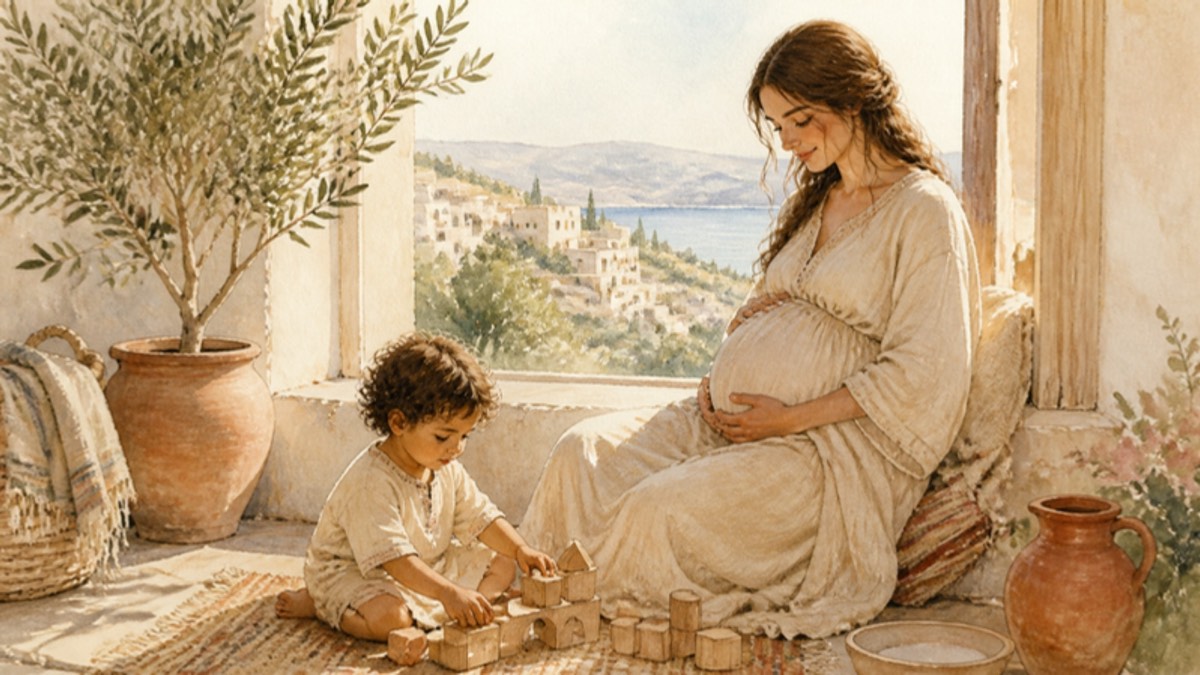
“For you formed my inward parts; you knitted me together in my mother's womb. I praise you, for I am fearfully and wonderfully made. Wonderful are your works; my soul knows it very well.”
Psalm 139, a psalm of David, says God knows him completely, is present anywhere he could go, and made him, knitting him together in his mother's womb. In verse 14, fearfully means made in a way that inspires awe, not fear. David wrote it while he had enemies, and the psalm ends with him asking God to search his heart and his anxious thoughts.
Psalm 139:14 is a baby-shower-card staple, usually hand-lettered, usually pink. So the first time I read the whole psalm I expected something soft. What I found was a man asking God to kill his enemies in verse 19 and then, in the same breath, asking God to check him for anything offensive. The “fearfully and wonderfully made” line is sandwiched between surveillance and warfare, and it reads differently once you know that. These are my notes on the whole chapter, written as a non-Christian mom who wanted to know what the card was actually quoting.
What was David facing when he wrote Psalm 139?
The heading on the psalm says “For the director of music. Of David. A psalm.” Enduring Word’s commentary takes that at face value: the author is David, the shepherd who became king, and the psalm was handed to whoever led music in his day. Nothing in the text dates it to a particular crisis, but verses 19–22 mention “the wicked,” “bloodthirsty” people, and enemies who “misuse your name,” so David was not writing from a nursery. He had people who wanted him dead for most of his adult life, and the psalm sounds like a man who has been thinking about who really knows him.
That is the frame for the famous verses. They are not primarily about babies. They are about a grown man concluding that the God who sees everything he does is also the God who made him, so being watched is not a threat.
How is Psalm 139 structured?
Psalm 139 is twenty-four verses and it is built in four blocks of six. Reading them in order is the single most useful thing I did.
Verses 1–6: you know me. It opens with “You have searched me, Lord, and you know me. You know when I sit and when I rise; you perceive my thoughts from afar” (Psalm 139:1-2, NIV). By verse 5 David says, “You hem me in behind and before, and you lay your hand upon me” (NIV). “Hem me in” could be a comfort or a complaint; the psalm does not settle it yet.
Verses 7–12: you are everywhere I could go. “Where can I go from your Spirit? Where can I flee from your presence? If I go up to the heavens, you are there; if I make my bed in the depths, you are there” (Psalm 139:7-8, NIV). The word flee is honest. David is at least considering what it would take to get away.
Verses 13–18: you made me. This is where the baby-shower verses live, and the logic matters: the reason it is safe to be completely known is that the knower is the maker.
Verses 19–24: deal with the wicked, and deal with me. The sudden violence of verse 19 and the sudden humility of verses 23–24, which I will come back to.
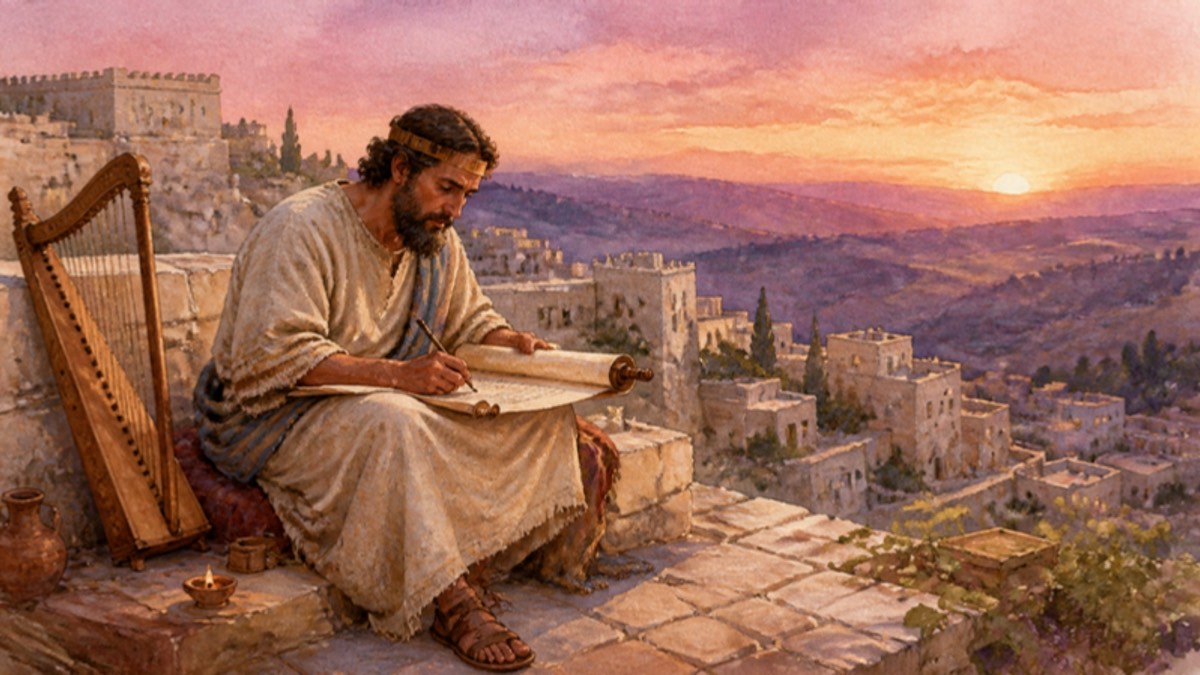
The two verses, in the NIV
For you created my inmost being; you knit me together in my mother’s womb. I praise you because I am fearfully and wonderfully made; your works are wonderful, I know that full well. — Psalm 139:13-14 (NIV)
The ESV has “you formed my inward parts; you knitted me together,” and ends “my soul knows it very well.” Either way, three verbs carry the passage: created (or formed), knit, and, two verses later, woven. Verse 15 adds, “My frame was not hidden from you when I was made in the secret place, when I was woven together in the depths of the earth” (Psalm 139:15, NIV).
What does ‘knit me together’ mean in Psalm 139?
I am wary of articles that announce “the original Hebrew means,” so here is only what the commentaries I could open actually say.
“Knit” and “woven.” Enduring Word quotes Matthew Poole on the phrase the NIV renders “woven together” (NKJV “skillfully wrought”): the Hebrew, Poole says, is “embroidered; exquisitely composed of bones, and muscles, and sinews, and veins, and arteries.” The picture both verbs give is needlework, not pottery. Something made stitch by stitch, from the inside.
“The depths of the earth.” This phrase confused me, because David was not made underground. Enduring Word explains that David used it “to refer to any mysterious, unseen place”; the formation of a baby “has always been as unseen and mysterious as that which happens in the lowest parts of the earth.” It quotes Maclaren: the point of comparison is “the mystery enwrapping both.” In other words, the womb was the most hidden place David could think of, and he reached for the only other one.
“Fearfully.” This is the word that trips people. In modern English it sounds like “in a scared way.” The commentaries read it as awe. Poole, again via Enduring Word, paraphrases: God’s power and wisdom in the human body “doth fill me with wonder and astonishment, and with the dread of thy majesty.” Spurgeon, in the same commentary, notes that David had “scarcely peered within the veil which hides the nerves, sinews, and blood-vessels,” knew no anatomy, “and yet he had seen enough to arouse his admiration of the work and his reverence for the Worker.”
“Wonderfully.” Blue Letter Bible’s lexicon lists Psalm 139:14 under the Hebrew verb palah, which it defines as “to be distinct, marked out, be separated, be distinguished” and, in this form, “to be wonderful.” I like that the root idea is set apart rather than pretty. The claim is not that David was handsome. It is that he was made distinct, on purpose.
“I know that full well.” Enduring Word’s note here is that we know far more than David did about how a body is made, and that it “should make us full of more awe and praise than David ever had.” David, with no biology at all, was more certain of the point than many people with a great deal of it.
The part the cards leave off
Right after verse 18 (“when I awake, I am still with you,” NIV), the psalm turns:
If only you, God, would slay the wicked! Away from me, you who are bloodthirsty! They speak of you with evil intent; your adversaries misuse your name. — Psalm 139:19-20 (NIV)
I will not pretend this is comfortable. Enduring Word’s reading is that David “abruptly shifted from a spirit of wonder and adoration to intense prayer against the wicked,” and that the reason was not personal grievance but that “they opposed God.” You can take or leave that explanation. What I find more interesting is what David does next, because the psalm does not end on verse 22. It ends here:
Search me, God, and know my heart; test me and know my anxious thoughts. See if there is any offensive way in me, and lead me in the way everlasting. — Psalm 139:23-24 (NIV)
The man who has just asked God to go after the wicked immediately asks God to check him. Maclaren, quoted by Enduring Word, says it better than I can: “It is easier to glow with indignation against evildoers than to keep oneself from doing evil.” The psalm opened with “You have searched me” as a fact; it closes with “Search me” as a request. David has decided he wants the thing he was, at verse 7, half considering running from.
Note the NIV’s phrase “my anxious thoughts.” A psalm that is quoted for self-esteem ends with a man admitting that his thoughts are anxious and asking for them to be looked at. That is the line I would put on a card.
What the verse does not say about your body
Because 139:14 gets used as a body-positivity verse, it is worth being precise about what it claims and does not.
It does not say your body works perfectly. David’s point is that the making was skilled and the maker is attentive; he says nothing about outcomes. A woman with a difficult pregnancy, a child with a diagnosis, a body that did not do what the books said it would: nothing in the psalm promises that those things will not happen. The verse is about being known and made, not about being spared.
It does not say “love yourself.” The object of the sentence is God: “I praise you.” David is not looking in a mirror. He is looking at the maker and concluding something about himself only as a consequence.
It does not stand alone. Pulled out of the chapter, verse 14 is a compliment. Inside the chapter, it is the hinge between “you know everything about me” (verses 1–12) and “so search me” (verse 23). The comfort of being made is what makes the request to be examined bearable.
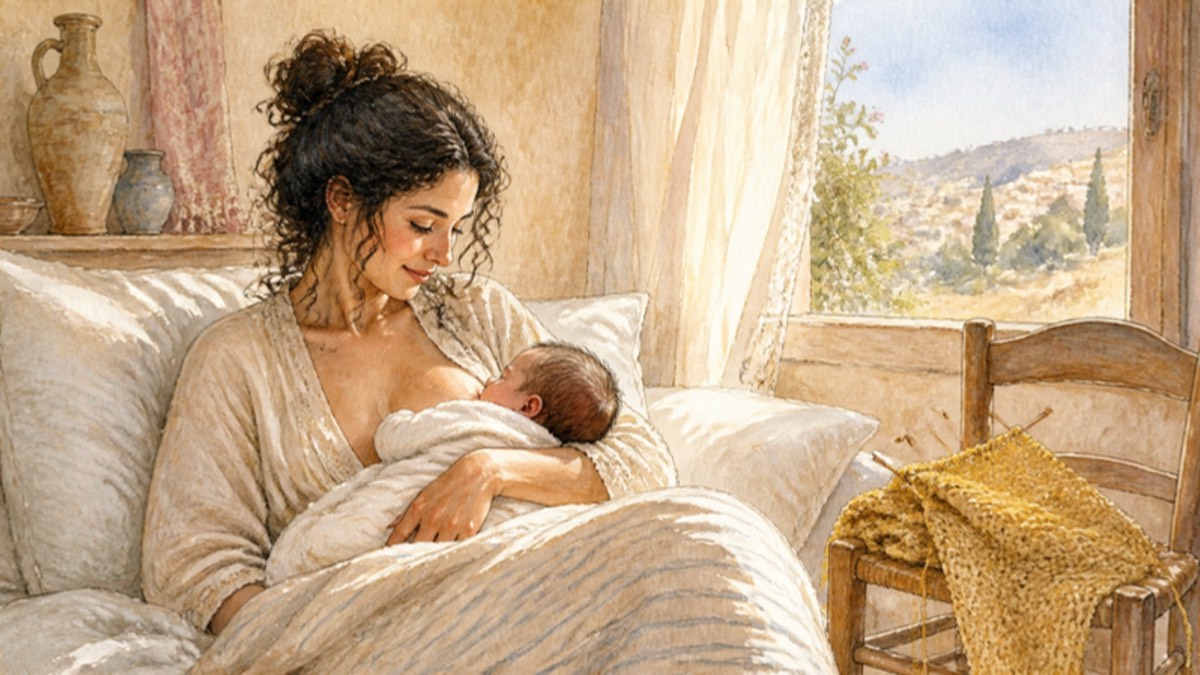
The hidden work in verse 15
For a lot of mothers in the months after a birth, when the body can feel like a rental returned damaged, verse 14 is not the line that helps. Verse 15 might be: the “secret place,” and the idea that the most important work of making a person is done where nobody can see it. That is also true of a baby’s first year, and of most of the work a parent does in it. The psalm says the hidden work is where the embroidery happens.
Verses 23–24 work the same way. “Test me and know my anxious thoughts” hands the inventory of the day to someone with better information, which is why the lines are so often prayed at night. The companion idea in Romans 8:28, that no single day has to make sense on its own, pairs well with it, and if the anxiety is the louder problem the verses about anxiety are a better list than this one psalm. And if what you are after is the wider question of where the Bible locates a person’s value (image of God, sparrows, adoption, and what it rules out), that is a list of its own in Bible verses about self-worth; this page stays inside David’s one psalm.
Explaining “fearfully” to a preschooler
Children tend to ask about this word because it sounds scary. One way to answer: it is the kind of word you use for a thunderstorm or a whale, something so big and carefully made that it makes you go quiet. Then point to the knitting. Any child who has watched someone knit, or looked closely at the loops in a sweater, gets “God knit you together” right away: slowly, one loop at a time, by someone paying attention. That is the picture David chose, and it holds up for a preschooler better than most theology.
For families who want to keep one line, verse 14 in the NIV is short enough to say over a crib. The whole psalm is better, and the verse-of-the-day tool will surface it in its other seasons: anxious, exhausted, grateful. If you are starting from zero with the Psalms, this beginner’s guide explains why they are a better entry point than Genesis.
Sources
- Psalm 139 (NIV) — BibleGateway
- Enduring Word — Psalm 139 commentary (David Guzik)
- GotQuestions — What does it mean that we are fearfully and wonderfully made?
- Blue Letter Bible — Strong’s H6395 פָּלָה (palah), “wonderfully”
- BibleRef — What does Psalm 139:14 mean?
In different seasons
The passage keeps its original setting, but the questions we bring to it can change. A tired afternoon and a grateful morning may lead us to notice different parts of the same verse.
Choose a season below for a short reflection. These are gentle applications drawn from public commentaries, not additional words from the verse.
When your thoughts won't settle
Anxiety about your body, your worth, or your child's development meets this: the one who knit you knows every stitch.
A question to carry: Do I talk about my own body and mind the way this verse does? What would it change if I did?
Questions moms ask
What does 'fearfully' mean in Psalm 139:14?
Who wrote Psalm 139 and when?
Is Psalm 139:13-14 about pregnancy or abortion?
What is the 'book' in Psalm 139:16?
Scripture references in this article
Each reference opens the full passage on BibleGateway (NIV).

Little helps for everyday faith
Start with a few quiet minutes.

Behind the notes
Hi, I'm Vega.
I'm a curious mom in Taiwan reading the Bible and writing down what I learn. I'm not a Christian — I grew up in a Taoist family — but after watching my aunt and the moms around me lean on these words through hard years, I wanted to understand why they carry so much weight. Every verse is quoted from the ESV or NIV and every interpretation links to a public commentary. I'm still learning; if you spot an error, tell me.
A little more about me