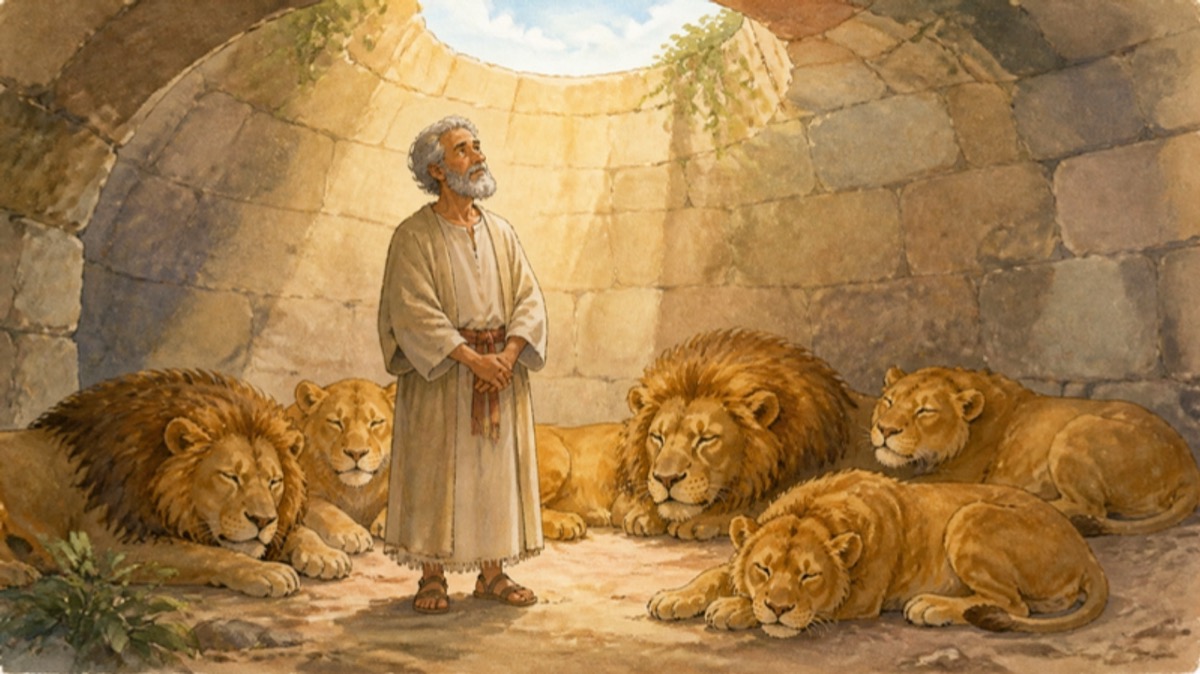
Daniel in the lions' den is told in Daniel 6. By then Daniel was an old man long in exile, and rivals who could find no fault in his work persuaded King Darius to sign an unchangeable thirty-day law against praying to anyone but the king. Daniel kept praying three times a day, and he says God sent an angel to shut the lions' mouths.
Most picture books draw Daniel as a young man in the lions’ den. He isn’t. He was taken to Babylon as a boy or a teenager in Daniel 1, served under one empire until it fell at the end of Daniel 5, and by chapter 6 a new king, Darius, is running things. Daniel has spent most of a lifetime in a foreign city, and he is still praying at the same window. Daniel 6 is on BibleGateway (NIV); about six minutes aloud.
Three times a day
When Daniel was young, soldiers took him far from home to a huge city called Babylon. He grew up there. He grew old there. Kings came and kings went. And every day of his life — every single day — Daniel did one thing exactly the same way.
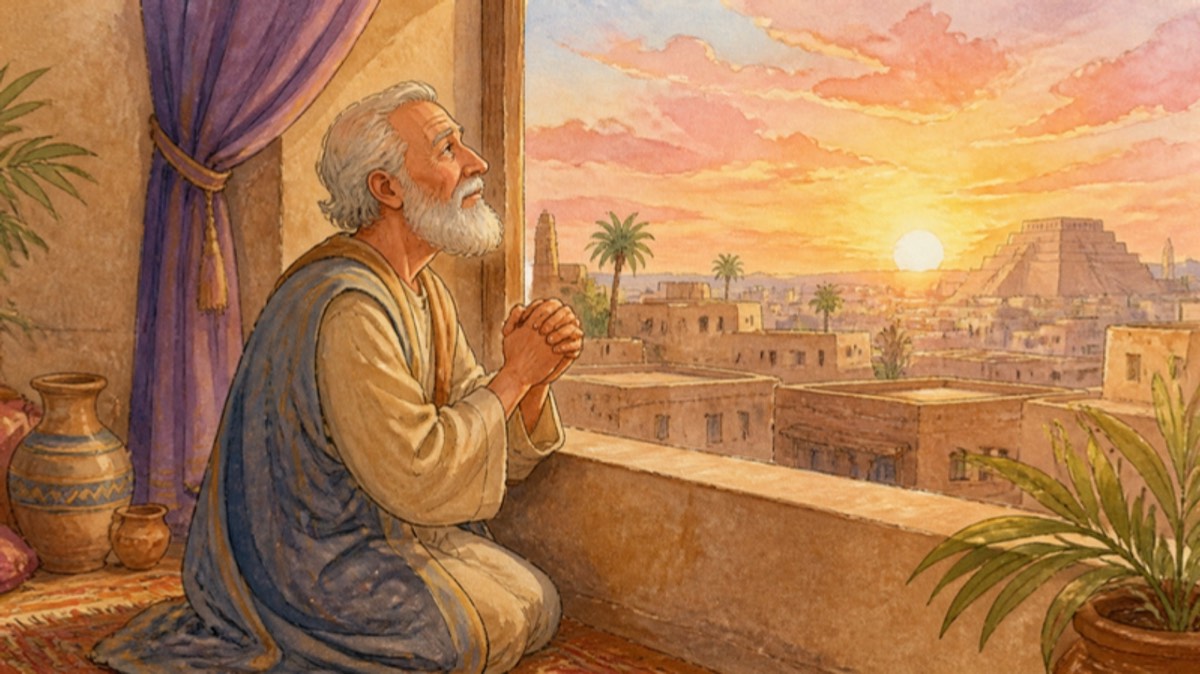
Morning: he went upstairs, opened the window that faced toward his old home, Jerusalem, knelt down, and prayed. Noon: upstairs, window, knees, prayer. Evening: upstairs, window, knees, prayer.
Three times a day. For years and years and years.
The king who ruled now was named Darius, and Darius thought the world of Daniel. Daniel was honest. Daniel was wise. Daniel never cheated and never lied. So the king made Daniel one of the three most important men in the whole kingdom, and then he started thinking about making him the most important of all.
The other important men did not like that one bit. “Why him?” they grumbled. “He’s not even from here.” So they watched Daniel. They watched him work. They went through his papers. They looked for one mistake, one little lie, one missing coin — anything.
They found nothing.
At last one of them said, “There’s only one way to catch Daniel. His God. He prays to his God three times every day, and he will never stop. We’ll make a law against it.”
So they went to King Darius, bowing and smiling. “May the king live forever! All of us agree: you should make a law. For thirty days, nobody may pray to any god or any man — only to you, O King. Anyone who breaks it gets thrown to the lions.” They didn’t say the word Daniel. They just said all of us agree, which wasn’t true. The king liked the sound of it, and he signed. And in that kingdom, once a king signed a law, nobody could ever change it. Not even the king.
Daniel heard about the new law. And what did he do?
He went home. He went upstairs. He opened the window toward Jerusalem. He knelt down. And he prayed — the same as that morning, the same as every day for years and years. He didn’t shout it. He didn’t hide it. He just didn’t stop.
The men were waiting outside. They saw him through the open window. They ran to the palace.
“O King! Didn’t you sign a law? Daniel is breaking it! He prays three times a day!”
The king’s heart sank. Now he saw the trick. He loved Daniel, and he had just signed the law that would hurt him. All day long he hunted for a way out — a loophole, a different reading, anything. There wasn’t one. The law was the law.
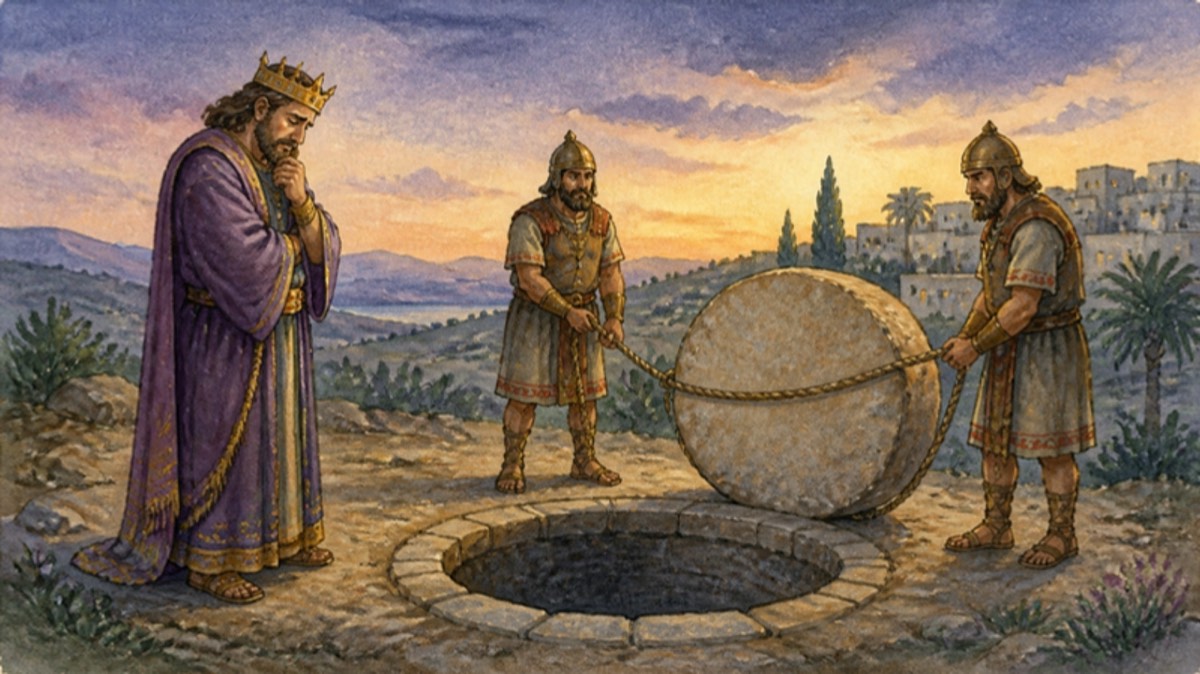
At sunset the soldiers took Daniel to the lions’ den — a deep pit in the rock, with lions pacing at the bottom. The king walked with them. Before they lowered Daniel down, Darius said, “Daniel, may your God — the one you serve so faithfully — rescue you.” Then a great stone was rolled over the mouth of the pit, and it was dark.
The king went home. He didn’t eat. He sent the musicians away. He lay on his bed all night with his eyes open.
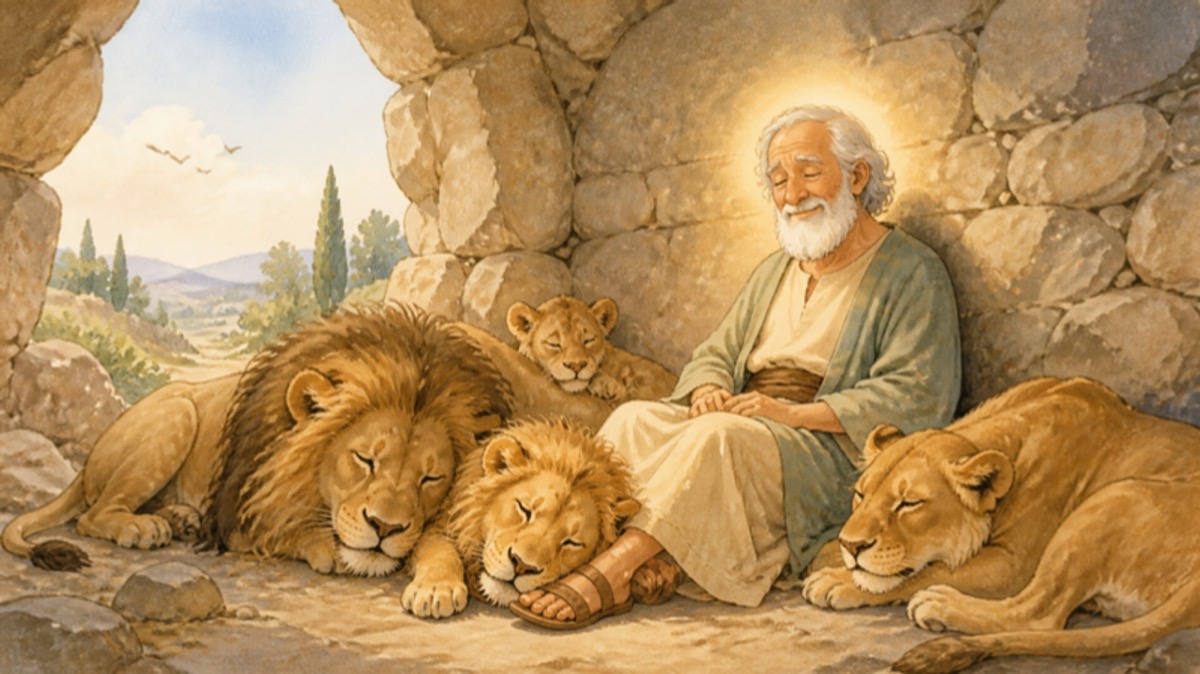
And down in the pit? The lions padded over to Daniel. They sniffed him. They circled. And then they lay down, one by one, and the pit went quiet. All night long, not one of them opened its mouth.
At first light the king jumped up and ran to the den. He didn’t wait for his guards. He leaned over the stone and called out in a voice that shook: “Daniel! Has your God been able to save you from the lions?”
And up from the dark came a calm voice. “May the king live forever! My God sent his angel, and he shut the lions’ mouths. They haven’t hurt me at all.”
The king was so happy he shouted. “Get him out!” They lifted Daniel up into the sunshine and looked him over. Not a scratch. Not one.
Then King Darius wrote a letter to every person in his kingdom. It said: Everyone must honor the God of Daniel. He is the living God, and his kingdom will never end.
And that evening, Daniel went home, climbed the stairs, opened the window, and knelt down.
What questions can you ask kids about Daniel?
- Daniel left the window open. He could have prayed with it shut and nobody would have known. Would that have been wrong? Why do you think he didn’t?
- The king couldn’t eat or sleep all night. Daniel was in a pit full of lions. Who do you think was more scared that night? Why?
- The first thing Daniel said from the pit was “May the king live forever!” — a polite greeting to the man who put him there. What would you have said? What does that tell you about Daniel?
What is the story of Daniel in the lions’ den about?
Daniel 6 is set inside the government of the most powerful empire on earth, and the whole plot turns on one old man’s daily routine.
The only charge they could find was his faith. Daniel 6:4 says his rivals “tried to find grounds for charges against Daniel in his conduct of government affairs, but they were unable to do so. They could find no corruption in him, because he was trustworthy and neither corrupt nor negligent” (NIV). Their conclusion: “We will never find any basis for charges against this man Daniel unless it has something to do with the law of his God” (Daniel 6:5, NIV). Then the verse the whole chapter rests on: when Daniel heard the decree, he went home to his upstairs room “where the windows opened toward Jerusalem. Three times a day he got down on his knees and prayed, giving thanks to his God, just as he had done before” (Daniel 6:10, NIV). Enduring Word’s commentary says it was “habitual faithfulness, not crisis heroics” that carried him, and reads the open window toward Jerusalem as an echo of Solomon’s prayer in 1 Kings 8 that God would hear his people when they prayed toward the temple — even though, by Daniel’s day, the temple was rubble.
The pagan king keeps using the right words. Darius says, “May your God, whom you serve continually, rescue you!” (Daniel 6:16, NIV), and at dawn he calls down to “Daniel, servant of the living God” (Daniel 6:20, NIV). By the end, the emperor is writing to his whole realm that Daniel’s God “is the living God and he endures forever; his kingdom will not be destroyed, his dominion will never end” (Daniel 6:26, NIV). Christians read the book of Daniel as a run of these reversals: human power looks absolute right up until it isn’t. GotQuestions’ article on the chapter draws the simpler lesson for families — God is worth trusting when trusting him costs something.
What the lions prove, according to Daniel. His own explanation is not “the lions weren’t hungry.” It’s “My God sent his angel, and he shut the mouths of the lions. They have not hurt me, because I was found innocent in his sight” (Daniel 6:22, NIV). The New Testament later lists people “who shut the mouths of lions” (Hebrews 11:33, NIV) among its examples of faith. I left out what happens to the accusers in Daniel 6:24 — it’s not a bedtime verse — and you can decide when your child is ready for it.
Daniel isn’t the only exile story in the Bible with a Persian king and a law that can’t be undone; Queen Esther is the other. If the “three times a day” part is what your child latches onto, the beginner’s post on how to pray explains what Christian families actually do, and the Bible quiz has a Daniel round.
Sources
Daniel 6, the whole chapter. Daniel’s arrival in Babylon as a young man is chapter 1; the fall of Babylon to Darius is the end of chapter 5.
- BibleGateway — Daniel 6 (NIV)
- Enduring Word — Daniel 6 commentary
- GotQuestions — What can we learn from Daniel in the lions’ den?
- Blue Letter Bible — Daniel 6 with study tools
Questions moms ask
Where is Daniel in the lions' den in the Bible?
Why was Daniel thrown to the lions?
Why couldn't the king just cancel the law?
Is this story too scary for a young child?
Scripture references in this article
Each reference opens the full passage on BibleGateway (NIV).
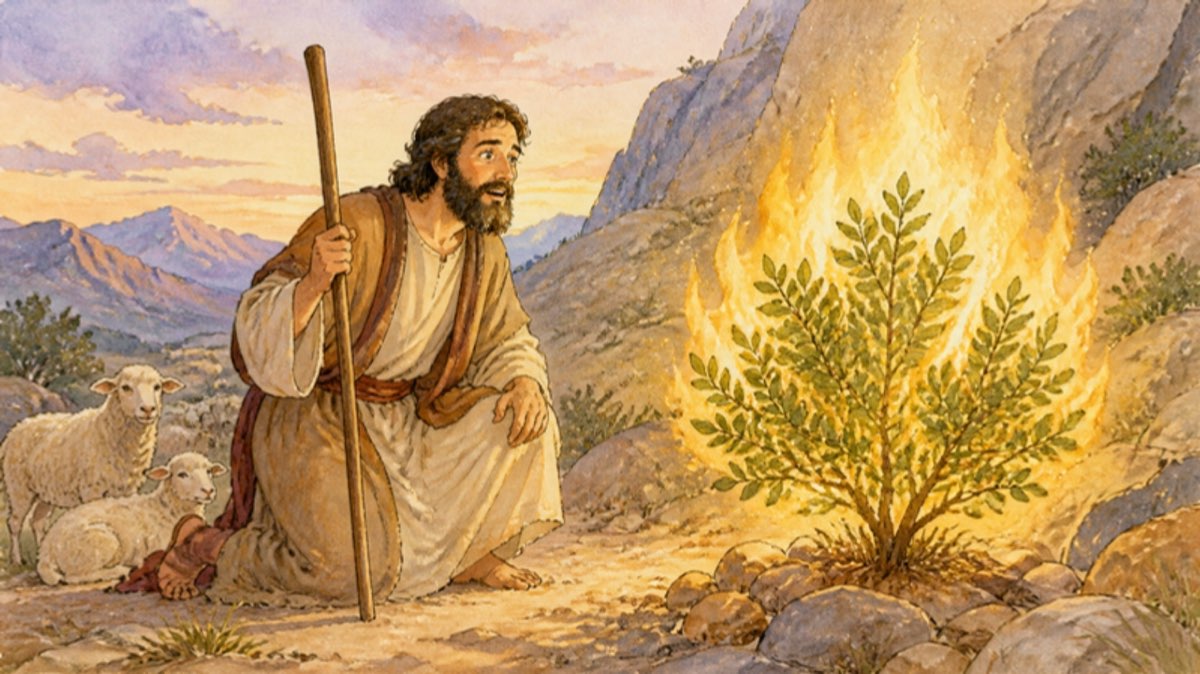
Moses and the Burning Bush: The Bible Story for Kids (With Questions to Talk About)
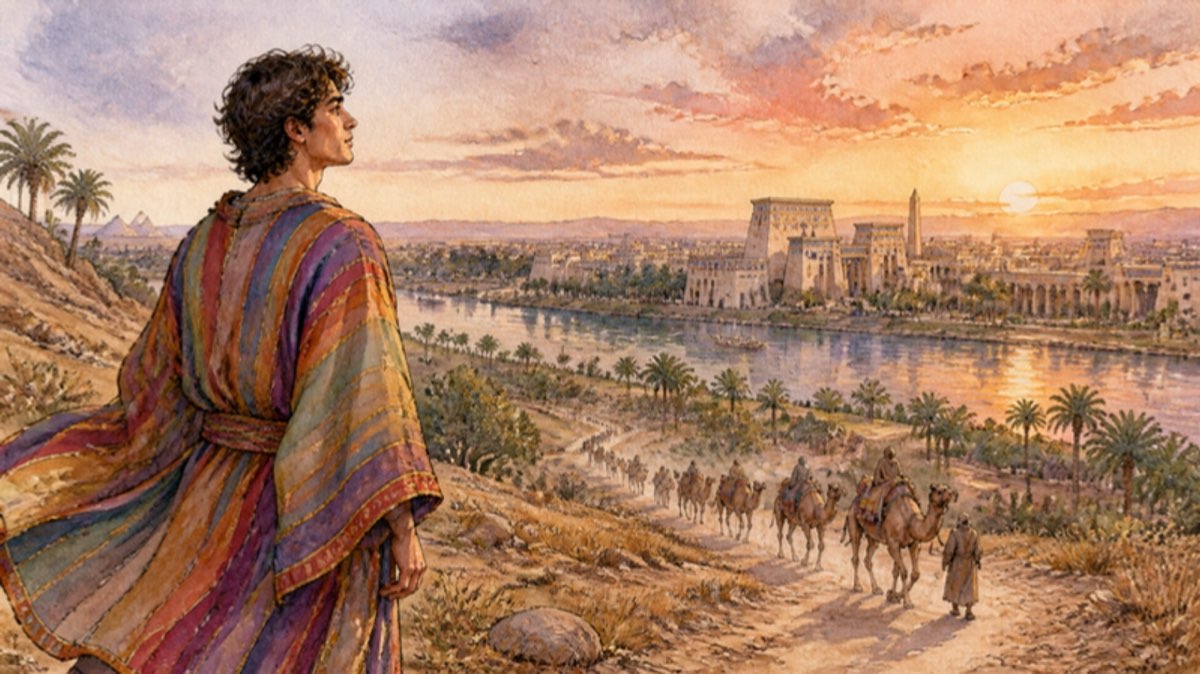
Joseph: The Whole Story, for Grown-ups (From the Pit to Pharaoh's Palace)

The Creation Story: The Bible Story for Kids (With Questions to Talk About)
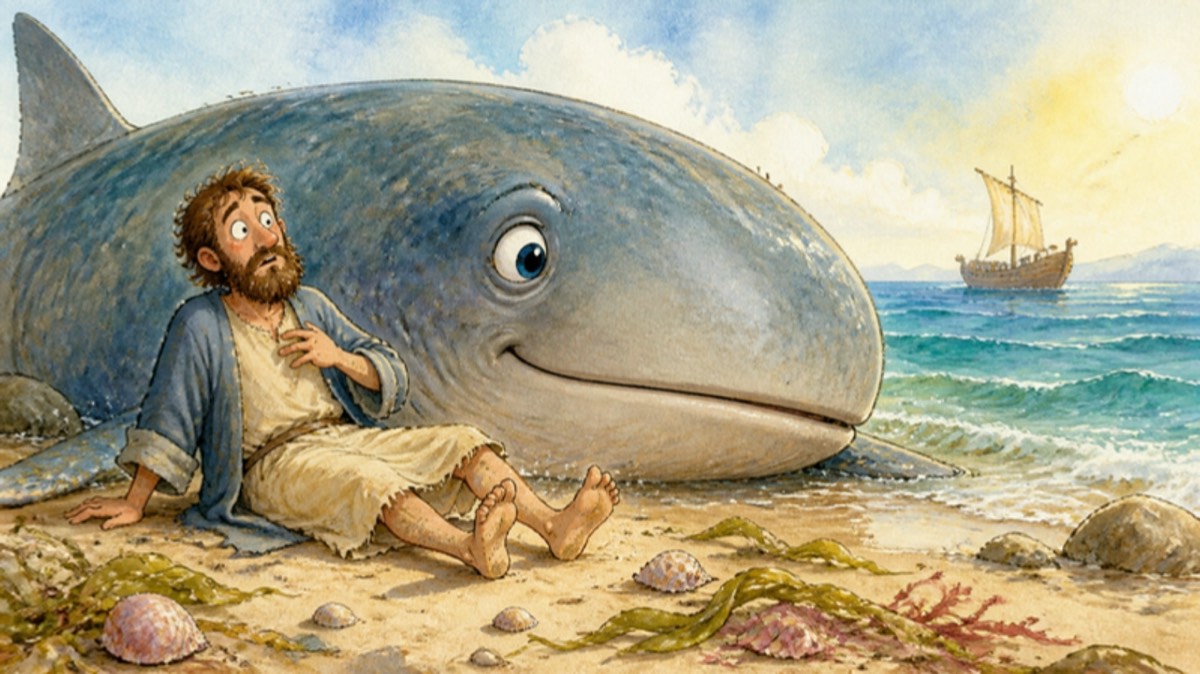
Jonah and the Big Fish: The Bible Story for Kids (With Questions to Talk About)
Little helps for everyday faith
Start with a few quiet minutes.

Behind the notes
Hi, I'm Vega.
I'm a curious mom in Taiwan reading the Bible and writing down what I learn. I'm not a Christian — I grew up in a Taoist family — but after watching my aunt and the moms around me lean on these words through hard years, I wanted to understand why they carry so much weight. Every verse is quoted from the ESV or NIV and every interpretation links to a public commentary. I'm still learning; if you spot an error, tell me.
A little more about me